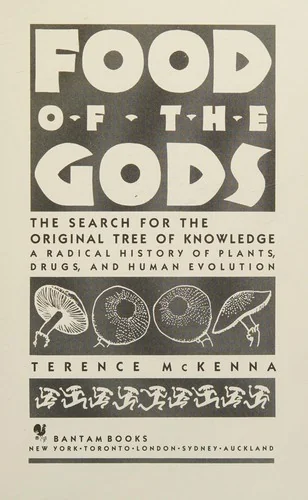
Food of the Gods: The Search for the Original Tree of Knowledge a Radical History of Plants, Drugs, and Human Evolution
✍️ McKenna, TerenceTerence McKenna, a visionary ethnobotanist, invites readers on an extraordinary journey through the entwined history of humanity and psychoactive substances. From prehistoric shamanic practices to the modern era, McKenna meticulously explores how plants like psilocybin, cannabis, and even cultural "drugs" such as sugar and television, have profoundly shaped our minds, societies, and spiritual understanding. He posits that our deep-seated attraction to altered states may hold the key to unlocking forgotten aspects of our origins and offer a path toward a more integrated, nature-reverent future.


Praise for this book
“The culture's foremost spokesperson for the psychedelic experience . . . Those who know and enjoy Joseph Campbell's work will almost certainly appreciate McKenna.”
“An eloquent proposal for recovering something vital--a sense of the sacred, the transcendent, the Absolute--before it's too late.”
“Terence McKenna is the most important--and most entertaining--visionary scholar in America.”
📝 Description: Food of the Gods: The Search for the Original Tree of Knowledge a Radical History of Plants, Drugs, and Human Evolution
💎 Expert review
📖 Why choose it
Why this book is worth reading
This book is essential for those intrigued by the profound connection between human consciousness and the plant kingdom. McKenna offers a visionary perspective that challenges conventional historical narratives, inviting readers to reconsider the role of psychoactive substances in shaping our minds and societies. It appeals to seekers of esoteric knowledge who wish to understand the ancient pacts with plants that influenced spiritual development. If you are drawn to the idea that altered states hold keys to forgotten origins and a nature-reverent future, this text provides a compelling, albeit radical, roadmap for exploring these deep evolutionary threads.
⭐ Reader reviews
Reader rating
McKenna’s work is a bold synthesis of ethnobotany and esoteric history, yet it demands an open mind. Readers expecting rigid academic citations or dry historical facts may find the speculative nature disorienting. The text thrives on visionary speculation rather than empirical proof, which might alienate skeptics or those preferring straightforward scientific analysis. However, for those willing to engage with its radical premise that plants like psilocybin and cannabis shaped human evolution, it offers a stimulating, if unconventional, narrative. It is best suited for readers comfortable with philosophical inquiry and esoteric traditions.
❓ Frequently asked questions
📖 Who should read this
If you're drawn to the fringes of history, the mysteries of consciousness, and the profound connection between humanity and the plant kingdom, this book is for you. Engage with a provocative re-evaluation of our origins and the untapped potential within altered states.
🎯 Key themes and symbolism
Ethnobotany & Evolution
McKenna radically reinterprets human evolution, proposing that our ancestors' symbiotic relationship with psychoactive flora, particularly psilocybin mushrooms, catalyzed the development of language, art, and complex thought. This perspective challenges conventional scientific narratives, suggesting a profound, biological impetus for spiritual and cognitive advancement deeply rooted in the natural world.
Altered States & Knowledge
The book champions altered states of consciousness not as escapism, but as vital doorways to deeper understanding and existential insight. McKenna argues that these experiences are fundamental to our quest for meaning, offering a unique lens through which to perceive our place in the cosmos and potentially revealing solutions for contemporary global challenges by reconnecting us with archetypal wisdom.
Shamanism & Modern Society
McKenna contrasts ancient shamanic traditions, which honored psychoactive plants as sacred teachers, with modern society's often problematic relationship with drugs. He advocates for a re-contextualization of these substances, shifting from abuse to mindful, communal, and nature-integrated exploration, emphasizing self-awareness and a profound reverence for the natural world as pathways to healing.
📜 Historical context
📚 Glossary
- Ethnobotany
- Symbiotic Relationship
- Shamanic Understanding
📔 Questions to reflect on
- How do you perceive the relationship between altered states of consciousness and human creativity or spiritual insight in your own life or observed history?
- McKenna suggests a 'shamanic understanding' of psychoactive substances. What might this look like in a modern context, and what societal challenges would it face?
- Consider McKenna's theory that plants have played a crucial role in human evolution. How might this perspective change your view of nature and our place within it?