US shipping Secure card payment Occult and esoteric books

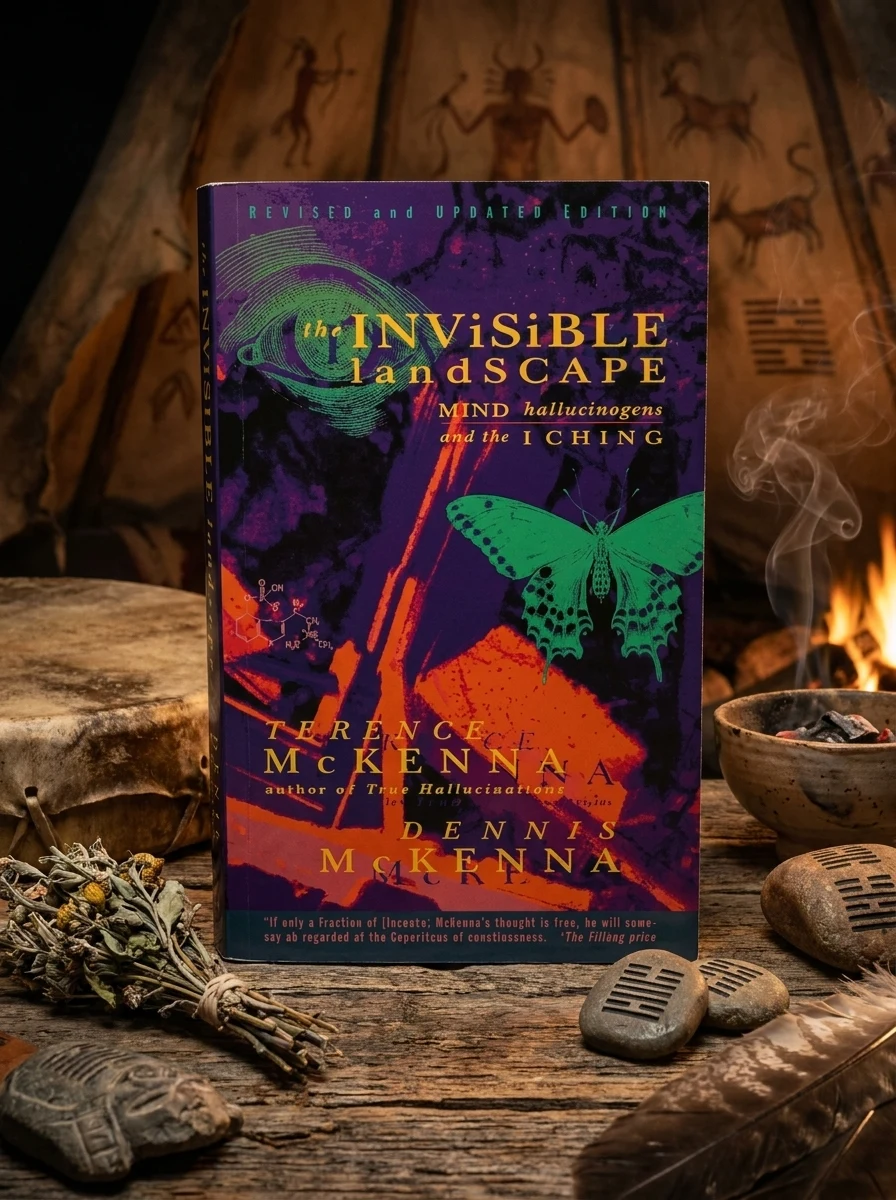
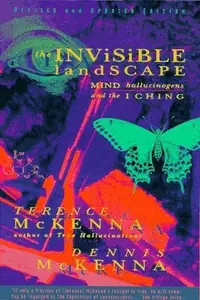
The Invisible Landscape: Mind, Hallucinogens, and the I Ching

McKenna, Terence
Reader rating
4.4
(2 reviews) 43 sold
In stock

Stock reported in the catalog; fulfillment is confirmed with your request.

📚 ABOUT THE BOOK

McKenna bridges psychedelic experience with ancient divination in this visionary exploration.

Terence McKenna reimagines the I Ching not as mere fortune-telling, but as a sophisticated interface for navigating the hidden architecture of consciousness. He argues that the hexagrams function like a shamanic map, guiding the practitioner through the labyrinth of the psyche. By intertwining his own encounters with entheogens with the binary logic of the ancient text, McKenna suggests that these ancient Chinese divination tools offer a structured way to decode the chaotic visions induced by altered states. This work is a profound synthesis of anthropology, psychology, and mysticism, urging readers to see the cosmos as a meaningful, communicative entity.

Key themes
Shamanic Individualism Binary Divination Logic Entheogenic Epistemology
Historical context

This work sits at the intersection of 20th-century psychedelic anthropology and ancient Chinese divination traditions, recontextualizing the I Ching through the lens of entheogenic exploration. It represents a synthesis of modern consciousness studies with esoteric mysticism.


Difficulty
●●● Demanding
Fans will love it
Carl Jung · Alan Watts · Robert Graves · The Tao Te Ching
🃏 Tarot & Divination
🏛 HarperOne 📖 256 pages 📔 Paperback 📐 Paperback ISBN: 9780062506351
Fun fact
McKenna brings his characteristic erudition and provocative flair to this dense text. He excels at weaving disparate threads of anthropology and quantum theory into a cohesive narrative. However, readers seeking straightforward divination instructions will be disappointed by the abstract, theoretical nature of the content. It remains a crucial, if challenging, text for understanding the philosophical underpinnings of psychedelic spirituality.

📝 Description: The Invisible Landscape: Mind, Hallucinogens, and the I Ching

Chapter OneThe Figure of the ShamanOf all the diverse religious institutions that humans have elaborated since before the beginning of recorded history, that of shamanism is one of the most singular and is probably one of the most archaic as well. The shaman is something of a maverick among religious practitioners. While shamanism occurs in virtually every culture on the planet, manifesting itself in religious traditions both ancient and modern, both "primitive" and sophisticated, the shaman remains eminently individualistic, idiosyncratic, and enigmatic, standing ever apart from organized ecclesiastical institutions while still performing important functions for the psychic and religious life of the culture. Comparable, but not identical, with such similar idiosyncratic practitioners as medicine men and sorcerers, the shaman is the possessor of techniques of proven efficacy and of powers bordering on the paranormal, the complete understanding of which still eludes modern psychology. It is this complex and fascinating figure of the shaman that we want to analyze from a standpoint at once sympathetic, interpretative, and psychological, with a view to answering the following questions: (1) What are the traditional aspects of shamanism as it is encountered in primitive cultures? (2) What is the nature of the shamanic personality and abilities, and what is the psychological role of the shaman in the society at large? And (3) Are there institutions analogous to shamanism in modern society? The vocation of shaman is found in nearly all archaic cultures, from the Australian aborigines to the Jivaro Indians of central Ecuador and Peru to the Yakut tribes of Siberia. It is believed to haveoriginated among these Siberian peoples, though its diffusion into other cultures must have taken place very early in prehistory for, along with sorcerers, magicians, and priests, shamanism can be counted among the oldest of professions. The word "shaman" is derived from the Tungusic term "saman, derived in its turn from the Pali "samana, indicating a possibly Southern (Buddhist) influence among these northern peoples (Eliade 1964, P. 4951). Eliade distinguishes the shaman from other types of religious and magical practitioners primarily on the basis of his religious function and techniques: ..". he is believed to cure, like all doctors, and to perform miracles of the fakir, like all magicians, whether primitive or modern. But beyond this, he is a psychopomp, and he may also be priest, mystic, and poet." He further defines the shaman as a manipulator of the sacred, whose main function is to induce ecstasy in a society where ecstasy is the prime religious experience. Thus, the shaman is a master of ecstasy, and the art of shamanizing is a technique of ecstasy (Eliade 1964, P. 4). In archaic societies, a person (either man or woman) may become a shaman in primarily one of two ways: hereditary transmission or spontaneous election. In either case, the novice shaman must undergo an initiatory ordeal before he can attain the status of a full shaman. The initiation generally has two aspects: an ecstatic aspect, which takes place in dreams or trance, and a traditional aspect, in which the shaman is given instruction in certain techniques, such as the use and significance of the shamanic costume and drum, the secret "spirit language," the names of the helping spirits, techniques of curing, theuses of medicinal plants, and so on, by an elder master shaman. These traditional techniques of shamanism are not invariably transmitted by an elder shaman but may be imparted to the neophyte directly through the spirits that come to him during his initiatory ecstasy. Lack of a public ritual in no way implies that such traditional instruction is neglected. The ecstatic part of the shaman's initiation is harder to analyze, for it depends on a certain receptivity to states of trance and ecstasy on the part of the novice: He may be moody, somewhat frail and sickly, predisposed to solitude, and may perhaps have fits of epilepsy or catatonia, or some other psychological aberrance (though not always, as some writers on the subject have asserted [cf. Eliade 1964, PP. 23ff. and below]). In any case, his psychological predisposition to ecstasy forms only the starting point for his initiation: The novice, after a history of psychosomatic illness or psychological aberration that may be more or less intense, will at last begin to undergo initiatory sickness and trance; he will lie as though dead or in deep sleep for days on end. During this time, he is approached in dreams by his helping spirits and may receive instructions from them. Invariably during this prolonged trance the novice will undergo an episode of mystical death and resurrection: He may see himself reduced to a skeleton and then clothed with new flesh; or he may see himself boiled in a caldron, devoured by the spirits, and then made whole again; or he may imagine himself being operated on by the spirits, his organs removed and replaced with "magical stones," and then sewn up again. Although the particular motifs may vary betweencultures and even individuals, the general symbolism is clear: The novice shaman undergoes a symbolic death and resurrection, which is understood as a radical transformation into a superhuman condition. Henceforth, the shaman enjoys access to the supernatural plane; he is a master of ecstasy, can travel in the spirit-realm at will, can cure and divine, can touch red-hot iron with impunity, and so on. In short, the shaman is transformed from a profane into a sacred state of being. Not only has he effected his own cure through this mystical transmutation, he is now invested with the power of the sacred, and hence can cure others as well. It is of the first order of importance to remember this, that the shaman is not merely a sick man, or a madman; he is a sick man who has healed himself, who is cured, and who must shamanize to remain cured.

💎 Expert review

💎
Esoterica Books editorial team
Occult literature desk
McKenna’s visionary approach transforms the I Ching from a simple fortune-telling tool into a sophisticated map for navigating consciousness. While intellectually stimulating for those familiar with both shamanic traditions and psychedelic anthropology, this work may alienate readers seeking straightforward divinatory instructions or those skeptical of entheogenic experiences. It requires patience to engage with its dense synthesis of binary logic and mystical insight. Those who prefer empirical science over esoteric speculation might find the claims about a communicative cosmos unconvincing. However, for the open-minded occultist, it remains a compelling, if demanding, exploration of the psyche's labyrinth.
✓ EDITOR'S REVIEW

📖 Why choose it

📖

Why this book is worth reading

Readers deeply interested in the architecture of consciousness will find this text indispensable. McKenna offers a unique perspective for those who view altered states not as chaotic escapes, but as structured journeys through the psyche's hidden geography. It is ideal for practitioners of divination seeking a philosophical framework that honors the binary logic of the I Ching while embracing its shamanic potential. If you are drawn to the idea that the cosmos communicates meaningfully and wish to decode the visions induced by entheogens through ancient wisdom, this book provides a profound synthesis of psychology and mysticism that validates your explorations.

⭐ Reader reviews

The starting rating comes from the team Esoterica Books —
⭐ Esoterica editorial review Editorial rating 4.7/5
★★★★
Readers fascinated by the intersection of anthropology, psychoactive substances, and ancient Chinese philosophy. It appeals to those seeking a rational framework for mystical experiences and those interested in the shamanic roots of consciousness exploration.

Reader rating

4.4
Based on 2 reviews
5
0
4
1
3
1
2
0
1
0
N
Nora D.
April 3, 2025
Mixed feelings

Was skeptical at first. You can tell why this work has endured. Plenty of passages worth underlining; my copy is already full of margin notes. Delivery took a bit longer than quoted. Still worth having on the shelf.

E
Esoterica Books editorial team

McKenna’s visionary approach transforms the I Ching from a simple fortune-telling tool into a sophisticated map for navigating consciousness. While intellectually stimulating for those familiar with both shamanic traditions and psychedelic anthropology, this work may alienate readers seeking straightforward divinatory instructions or those skeptical of entheogenic experiences. It requires patience to engage with its dense synthesis of binary logic and mystical insight. Those who prefer empirical science over esoteric speculation might find the claims about a communicative cosmos unconvincing. However, for the open-minded occultist, it remains a compelling, if demanding, exploration of the psyche's labyrinth.

❓ Frequently asked questions

No, it is a philosophical and psychological exploration. While it uses the I Ching as a framework, it focuses on the meaning behind the divination rather than providing step-by-step casting instructions.
Not necessarily. While McKenna draws heavily on his own entheogenic experiences, the book is accessible to anyone interested in the mechanics of consciousness and the symbolic logic of the I Ching.

📖 Who should read this

Readers fascinated by the intersection of anthropology, psychoactive substances, and ancient Chinese philosophy. It appeals to those seeking a rational framework for mystical experiences and those interested in the shamanic roots of consciousness exploration.

🎯 Key themes and symbolism

Shamanic Individualism

McKenna portrays the shaman not as a priestly figure, but as an eccentric outlier who operates outside institutional religion. This archetype represents the raw, unmediated confrontation with the spirit world, emphasizing personal gnosis over dogmatic structure.

Binary Divination Logic

The book treats the I Ching's yin and yang as a fundamental computational language of the universe. McKenna suggests that casting the coins or yarrow stalks is a way to tap into the quantum probability fields that shape our reality and perception.

Entheogenic Epistemology

Hallucinogens are presented as keys to unlock the 'invisible landscape' of the mind. The text argues that these substances do not create new realities but reveal the underlying patterns of consciousness that are usually obscured by mundane sensory input.

💬 Quotes from the book

“The shaman is the possessor of techniques of proven efficacy and of powers bordering on the paranormal.”

“The I Ching is a mirror of the cosmos, reflecting the binary dance of creation and dissolution.”

📜 Historical context

Published during the late 20th century's resurgence of interest in indigenous wisdom and psychedelic therapy, this work bridges the gap between Western counterculture and Eastern esoteric traditions. It sits alongside other texts that attempt to demystify shamanism through psychological and systemic lenses, reflecting a broader cultural shift toward experiential spirituality.

📚 Glossary

Entheogen
Hexagram
Shaman

📔 Questions to reflect on

  1. When have you felt most disconnected from institutional structures and most aligned with your own inner authority?
  2. How might the binary nature of yes/no or yin/yang apply to a current dilemma in your life?
  3. What patterns do you notice recurring in your dreams or visions that might serve as a personal 'divination'?

🏛 Books from this publisher HarperOne

All books from this publisher →
You might also like

See more →
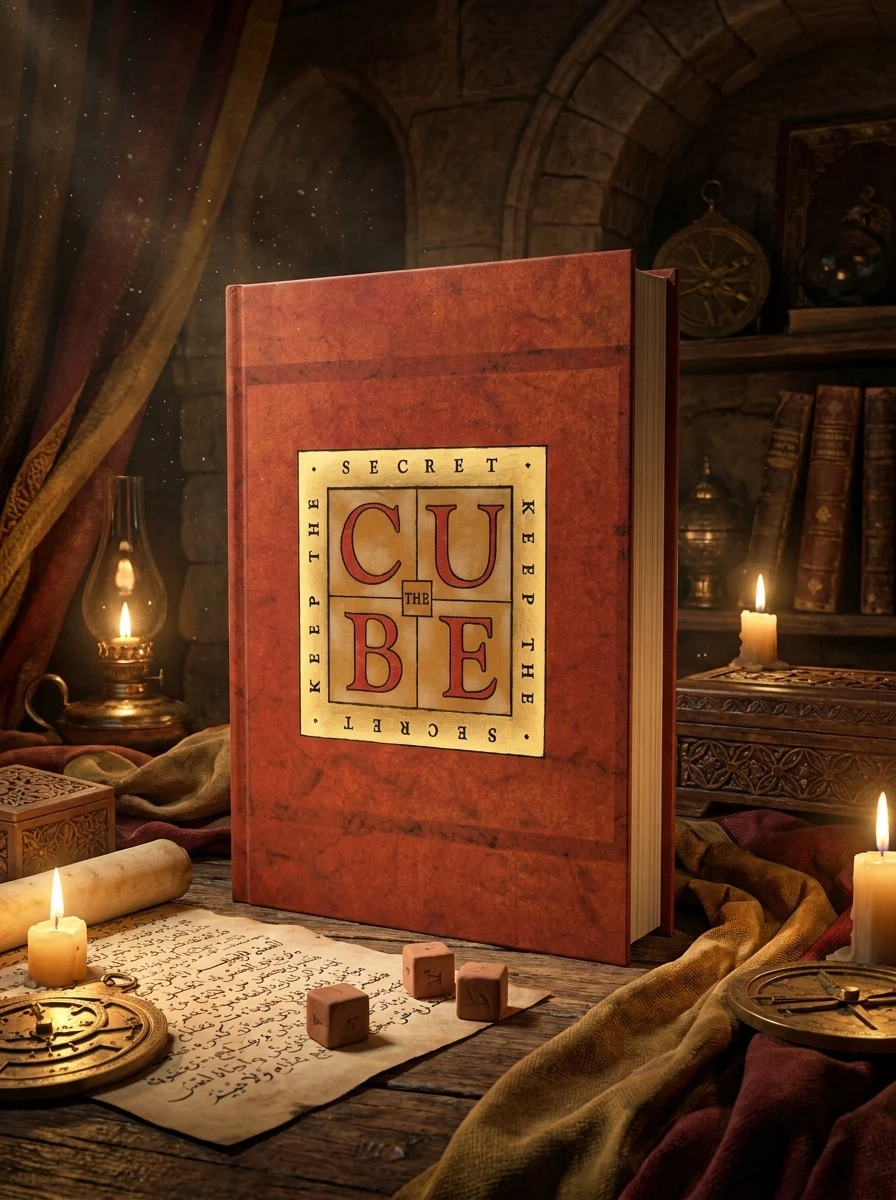
Cover unavailableThe CubeGottlieb, Annie; , Pesic, Slobodan The Cube
Gottlieb, Annie; , Pesic, Slobodan
The Cube
$18.00
88