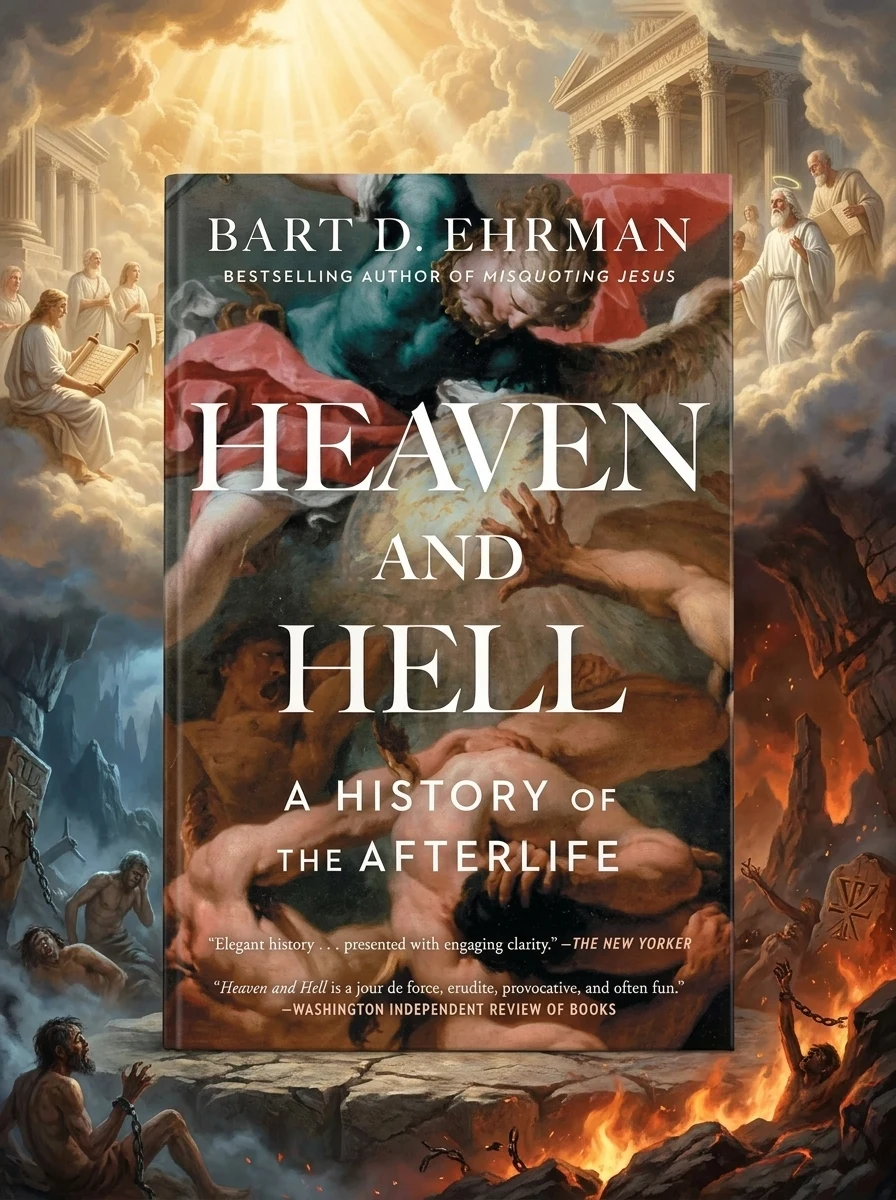
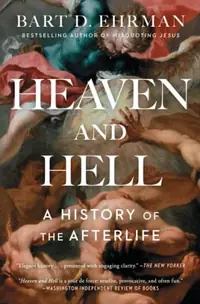
Heaven and Hell: A History of the Afterlife
Stock reported in the catalog; fulfillment is confirmed with your request.
Unearth the astonishing, hidden history behind humanity's most enduring afterlife beliefs.
Bart Ehrman, a renowned historian, meticulously uncovers the surprising evolution of humanity's most enduring beliefs: heaven and hell. Challenging the widespread assumption that these concepts are ancient biblical tenets, he traces their true origins from diverse ancient traditions, including The Epic of Gilgamesh, through early Christian thought, up to Augustine. This compelling work reveals how our understanding of the afterlife has been shaped and transformed over millennia, offering a profound re-examination of what we believe happens after death and why these ideas persist.
This work sits firmly within the intersection of historical scholarship and esoteric history, challenging traditional theological narratives through rigorous academic inquiry into ancient texts and beliefs.


📝 Description: Heaven and Hell: A History of the Afterlife
💎 Expert review
📖 Why choose it
Why this book is worth reading
Readers fascinated by the hidden architectures of belief will find this text illuminating. It appeals to those who suspect that modern religious concepts are not static but evolved from diverse ancient sources. By tracing the lineage from The Epic of Gilgamesh through early Christian thought to Augustine, Ehrman provides a necessary corrective to the assumption that heaven and hell are simple biblical tenets. This book is essential for anyone seeking to understand why these ideas persist in our collective consciousness. It offers a profound re-examination of death beliefs, revealing how they were shaped over millennia. If you crave intellectual depth regarding the origins of spiritual dogma and wish to uncover the astonishing history behind enduring myths, this scholarly yet accessible journey will satisfy your curiosity about the human condition.
⭐ Reader reviews
Reader rating
Bart Ehrman delivers a meticulous historical account that effectively dismantles the notion of heaven and hell as immutable doctrines. His tracing of origins from The Epic of Gilgamesh to Augustine is compelling for those willing to engage with complex theological evolution. However, this book does not suit readers seeking devotional comfort or those who require strict adherence to traditional biblical literalism. It may disappoint individuals expecting a defense of conventional faith rather than a critical historical analysis. While the scholarship is robust, it lacks narrative flair, potentially alienating casual readers looking for entertainment over education. It is best suited for the intellectually curious historian or skeptic.
❓ Frequently asked questions
📖 Who should read this
If you are a seeker intrigued by the historical origins of spiritual beliefs, or if you wish to critically examine the foundations of Christian eschatology, this book offers a scholarly, eye-opening journey. Prepare to have your assumptions about eternal reward and damnation thoughtfully challenged.
🎯 Key themes and symbolism
Historical Evolution of Afterlife
This book meticulously charts the development of heaven and hell, demonstrating how these concepts were not static but evolved significantly over centuries. It explores their roots in various ancient cultures and mythologies, illustrating how beliefs about post-mortem existence shifted dramatically before coalescing into the familiar Christian doctrines many hold today.
Challenging Biblical Assumptions
Ehrman rigorously examines the Old and New Testaments, revealing that the explicit, distinct notions of eternal heaven and hell, as commonly understood, are conspicuously absent from early Jewish scripture and even from Jesus's direct teachings. The book exposes popular misconceptions, showing how these ideas emerged much later than commonly presumed within Christian tradition.
Ancient Journeys to the Beyond
The text delves into fascinating historical accounts of 'guided tours' through the afterlife, including early forms of near-death experiences. These narratives, predating and influencing later Christian visions, offer vivid glimpses into ancient perceptions of divine rewards and infernal punishments, providing crucial context for understanding the eventual formation of Christian eschatology.
💬 Quotes from the book
“The common perception of eternal reward and damnation as foundational to all scripture simply doesn't hold up under historical scrutiny.”
“Before the Christian era, concepts of a post-mortem journey often focused on shadowy underworlds or communal ancestral realms, far removed from the distinct heaven and hell we envision today.”
📜 Historical context
📚 Glossary
- Eschatology
- Old Testament
- Afterlife
📔 Questions to reflect on
- Reflect on your own preconceived notions of heaven and hell. How might their historical evolution influence your current understanding?
- Consider how the 'guided tour' narratives of ancient times compare to contemporary near-death experiences. What parallels or divergences do you observe?
- If the Old Testament and Jesus's direct teachings did not explicitly detail heaven and hell as we know them, what implications does this have for traditional Christian theology?
🏛 Books from this publisher Simon & Schuster
All books from this publisher →
 81
81
 83
83

You might also like
See more →

 91
91