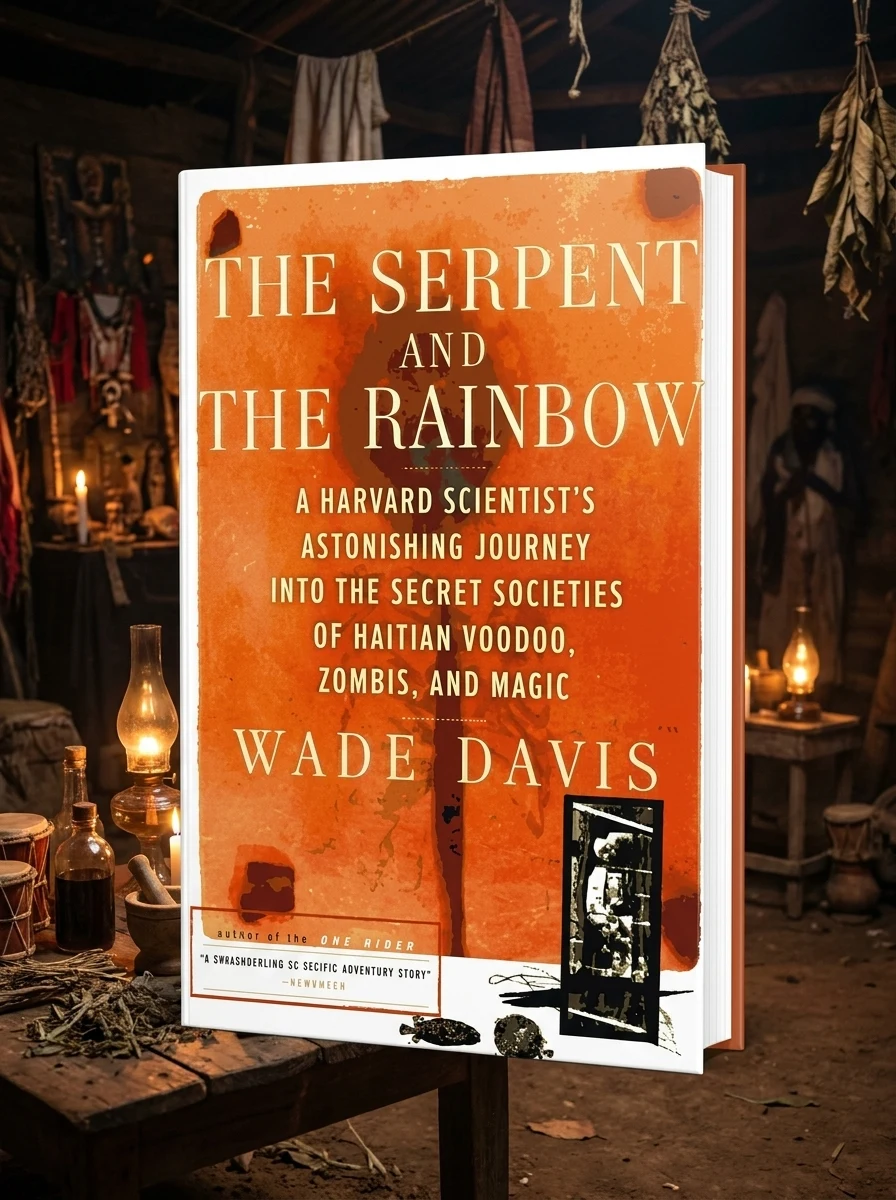
The Serpent and the Rainbow
Stock reported in the catalog; fulfillment is confirmed with your request.
Unearth the truth behind Haitian zombies, a journey into science and spirit.
In 1982, ethnobotanist Wade Davis embarked on a perilous quest to unravel the mystery of Haitian zombification. Driven by documented cases of individuals returning from the grave, he delved deep into the vibrant, complex world of Vodoun. His pioneering investigation transcends mere sensationalism, revealing how zombis are inextricably linked to a profound cultural fabric. Davis masterfully demonstrates Vodoun's central role in Haiti's history, from its African roots to the island's struggle for independence, presenting it not as dark magic but as the very lifeblood of its people and countryside.
This work sits at the intersection of ethnobotany and Haitian Vodoun, challenging sensationalist narratives by grounding zombie lore in rigorous scientific investigation and deep cultural history. It serves as a pivotal text for understanding how esoteric practices function within the broader struggle for independence and national identity in Haiti.


📝 Description: The Serpent and the Rainbow
💎 Expert review
📖 Why choose it
Why this book is worth reading
Readers fascinated by the intersection of anthropology, botany, and spiritual history will find this book profoundly rewarding. Wade Davis invites you to look past Hollywood horror tropes to discover the human reality behind Haitian zombification. It is ideal for those seeking to understand Vodoun not as dark magic, but as the lifeblood of a resilient culture. By tracing the path from African roots to independence, Davis reveals how these traditions sustain community and identity. If you crave a journey that blends scientific inquiry with spiritual depth, offering a respectful and illuminating look at a misunderstood practice, this book provides exactly that perspective.
⭐ Reader reviews
Reader rating
Wade Davis delivers a compelling, science-based dissection of Haitian Vodoun that effectively debunks sensationalist myths. His approach is respectful and historically grounded, making it an essential read for serious students of ethnobotany and Caribbean history. However, readers expecting lurid ghost stories or purely supernatural explanations will likely be disappointed by the rigorous academic tone. The text prioritizes cultural context and botanical facts over mystical wonder, which may feel dry to those seeking atmospheric horror. It is a necessary corrective to pop culture misconceptions, but demands patience from casual readers looking for quick thrills rather than deep understanding.
❓ Frequently asked questions
📖 Who should read this
If you're drawn to the intersection of science and spirituality, fascinated by global cultures, or seeking to understand the deep roots of esoteric practices, this book offers a gripping and enlightening journey. Prepare to have your perceptions challenged and your understanding of life and death expanded.
🎯 Key themes and symbolism
Ethnobotany & Zombification
This book meticulously explores the pharmacological basis of zombification, moving beyond supernatural explanations. Davis, an ethnobotanist, details the specific plant and animal compounds used to induce a death-like state, demonstrating how traditional knowledge of natural substances plays a crucial role in this profound cultural practice within Haitian Vodoun.
Vodoun as Governance
Far from a simple religion, Vodoun is presented as the foundational social and political structure of rural Haiti. The narrative illustrates how its rituals, beliefs, and community leadership effectively function as an indigenous form of governance, shaping societal norms, justice, and community cohesion, reflecting centuries of Haitian history and resistance.
Cultural Immersion & Science
The author's personal adventure forms the backbone of this scientific inquiry. Davis doesn't merely observe; he fully immerses himself in Haitian life and Vodoun ceremonies, bridging the gap between rigorous scientific method and profound cultural understanding. This blend illuminates a phenomenon often misunderstood, offering a rare, intimate perspective.
💬 Quotes from the book
“To truly understand the zombi, one must shed the cloak of Western skepticism and embrace the intricate dance between pharmacology and spiritual conviction.”
“The true magic of Vodoun lies not in the supernatural, but in its sophisticated embrace of nature's power and its profound role as the living history of a resilient people.”
📜 Historical context
📚 Glossary
- Ethnobotany
- Vodoun
- Zombification
📔 Questions to reflect on
- Reflect on a belief you once held that was later challenged by scientific or cultural understanding. How did that shift impact your worldview?
- Consider how spiritual or cultural practices in your own society might be misunderstood or misrepresented by outsiders. What are the implications of such misinterpretations?
- How does the book's exploration of zombification redefine your understanding of life, death, and consciousness beyond conventional Western perspectives?
🏛 Books from this publisher Simon & Schuster
All books from this publisher →
 81
81

You might also like
See more →