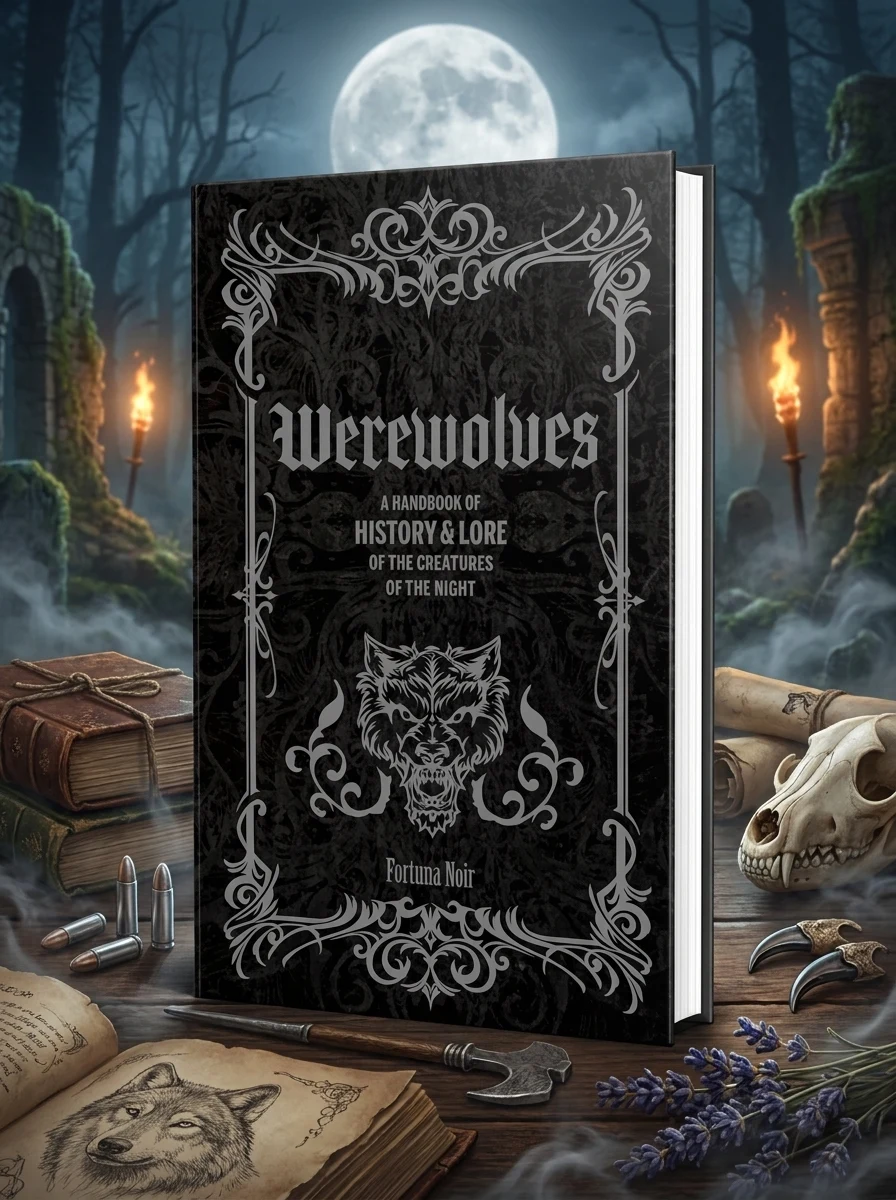
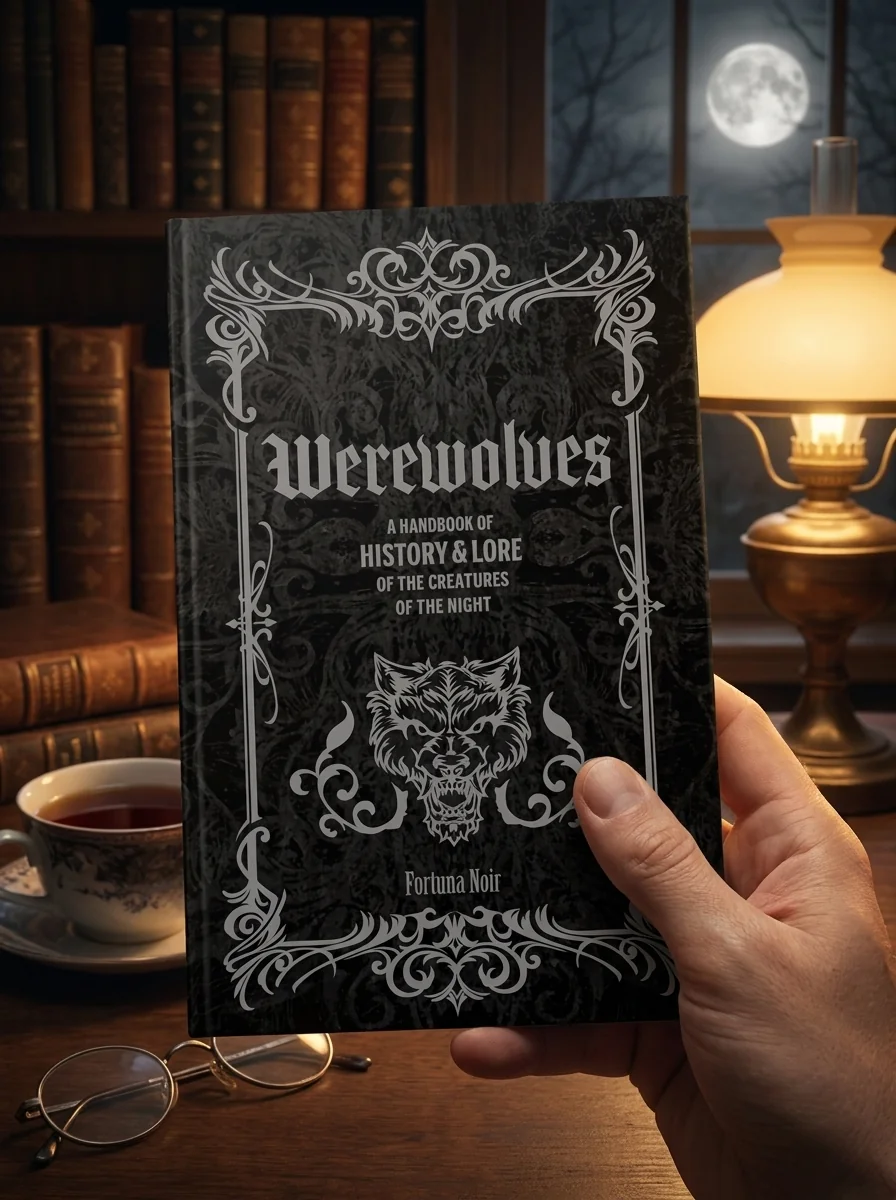
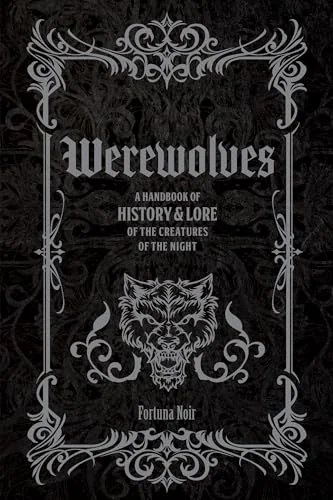
Werewolves: A Handbook of History & Lore of the Creatures of the Night
✍️ Noir, FortunaA illustrated hardcover guide examining the history, lore, and cultural evolution of lycanthropy.
Castle Books presents a historical overview of werewolf mythology written by practicing witch Fortuna Noir. The text breaks down ancient transformation myths, the symbolic link to silver and full moons, and the overlap between werewolf and vampire lore. Arriving alongside director Robert Eggers's film Werewulf, the volume combines well-researched folk history with dark woodcut artwork and tea-stained paper design.
The book places lycanthropy lore within ancient folktales and modern media, coinciding with director Robert Eggers's 2026 film Werewulf.


📝 Description: Werewolves: A Handbook of History & Lore of the Creatures of the Night
💎 Expert review
📖 Why choose it
Why this book is worth reading
This book is an essential companion for any devoted student of the night who seeks to understand the primal terror and ancient allure of the werewolf. It offers a meticulous dissection of the creature's fearsome journey through human history, tracing its origins from forgotten ancient curses to its iconic symbolism in modern times. Readers will appreciate how the text explores cross-cultural manifestations and the enduring significance of elements like the full moon and silver. By uncovering how perceptions of this shapeshifting beast have transformed across millennia, the volume provides a rich, evocative understanding that goes beyond simple horror tropes. It is perfect for those who wish to delve into the shadows and grasp the complex evolution of one of history's most enduring myths.
⭐ Reader reviews
Reader rating
Noir’s handbook stands as a meticulously researched guide to lycanthropic lore, effectively tracing the werewolf from ancient curses to contemporary pop culture. The inclusion of evocative illustrations enhances its value as a compendium for students of the night. However, this volume may not suit readers seeking purely fictional narratives or immediate supernatural action; it is strictly an analytical exploration of history and myth. Those looking for quick, superficial entertainment might find its academic tone dry, as it prioritizes the transformation of perceptions across millennia over sensationalism. It is best approached by those willing to engage with the cultural context and symbolic weight of the beast rather than just its monstrous appearance.
❓ Frequently asked questions
📖 Who should read this
If the moon calls to your wilder side, or if you're a scholar of mythical beasts and their cultural impact, this volume is an essential addition to your arcane library. Delve into the shadows and uncover the truth behind the howl, satisfying your curiosity about one of folklore's most enduring figures.
🎯 Key themes and symbolism
Ancient Lycanthropic Roots
This book embarks on a fascinating excavation of the werewolf's earliest appearances, spanning diverse global mythologies. It reveals how the concept of human-to-wolf transformation emerged independently in various cultures, examining the foundational narratives that cemented the creature's place in our collective imagination, from arcane rituals to cautionary village tales.
Evolving Monstrosity
Witness the dramatic shifts in the werewolf's portrayal across historical epochs. From its initial role in ancient folklore and fairy tales, often intertwined with primal fears of the wild, to its modern cinematic interpretations, the book illustrates how societal anxieties and cultural values have continually reshaped the very essence of this legendary beast, mirroring human evolution itself.
Symbolic Attributes
Explore the profound symbolic weight carried by elements inextricably linked to the werewolf legend. The book dissects the mystical connection to the full moon, the protective power of silver, and the inherent duality of human and beast. It unearths how these iconic attributes became woven into the fabric of lycanthropic lore, deepening its mystique and terror.
📜 Historical context
📚 Glossary
- Lycanthropy
- Transmogrification
- Folklore
📔 Questions to reflect on
- How do modern interpretations of werewolves reflect contemporary fears or desires, compared to ancient tales of the beast?
- Consider the concept of 'transformation' in folklore. What other creatures or myths share this theme, and what universal truths about human nature might it reveal?
- If the werewolf embodies a wild, untamed aspect of humanity, what societal structures or norms might it inherently challenge or represent a rebellion against?