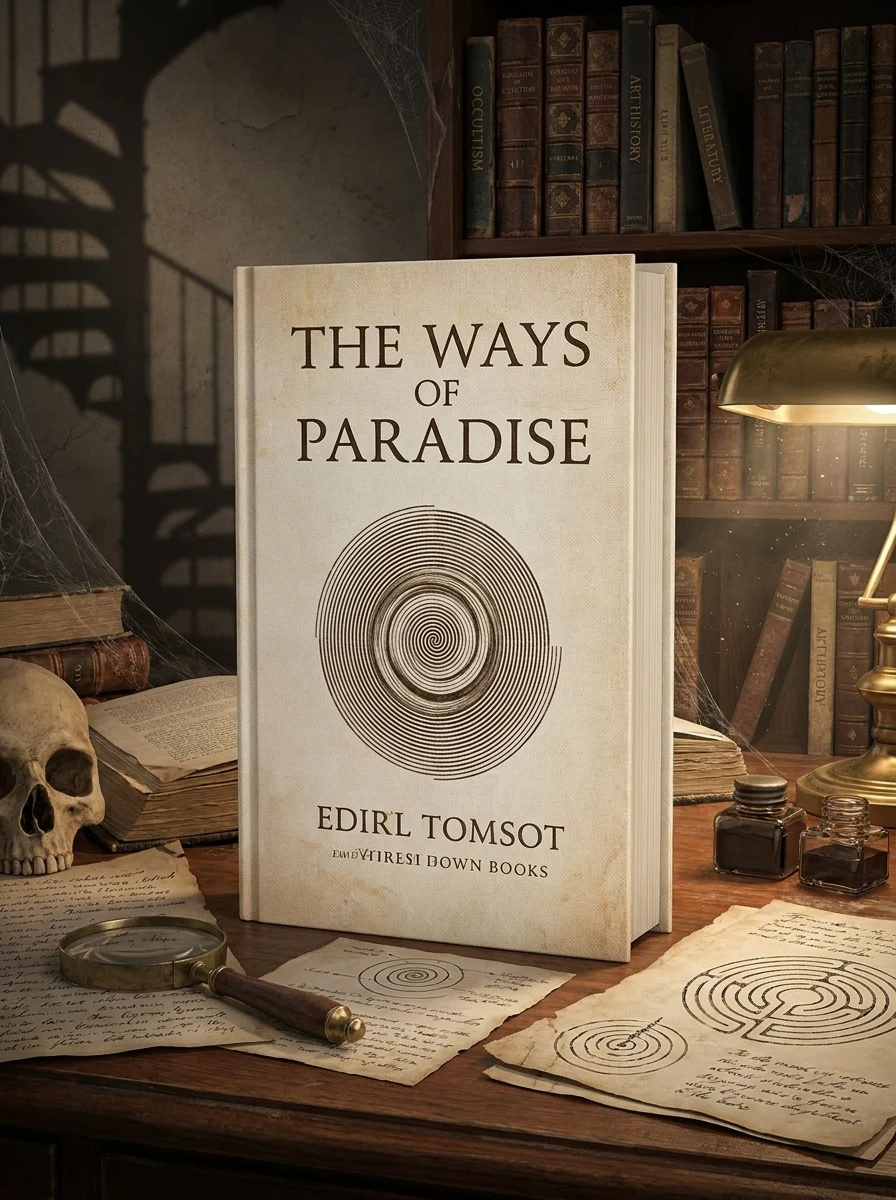

The Ways of Paradise
This edition can be ordered. No arrival date is confirmed.
Unearth a forgotten scholar's quest, mapping hidden connections between art, spirit, and the esoteric.
Dive into the enigmatic legacy of an anonymous researcher whose life's work, salvaged from fragments, illuminates the profound interplay between artistic expression, spiritual inquiry, and occult traditions across history. This unique collection explores diverse subjects, from medieval crusades to modernism, all through the recurring, symbolic motifs of spirals and labyrinths. Originally a Swedish cult classic, this first English translation invites readers to ponder the unseen threads binding seemingly disparate fields of human endeavor, revealing a vast, interconnected tapestry of knowledge.
This work emerges from the rich vein of esoteric history, bridging medieval occultism with modernist thought through the lens of symbolic geometry. It reflects the tradition of hidden knowledge transmission, originally gaining status as a cult classic in Sweden before reaching an English-speaking audience.


📝 Description: The Ways of Paradise
💎 Expert review
📖 Why choose it
Why this book is worth reading
This book is a treasure for the curious mind seeking to understand the invisible threads that bind human endeavor across centuries. Readers fascinated by the intersection of art, spirit, and occult traditions will find profound satisfaction in unraveling the enigmatic legacy of an anonymous researcher. By exploring recurring motifs like spirals and labyrinths, the text illuminates how disparate fields from medieval crusades to modernism share a common symbolic language. It is ideal for those who appreciate deep, intellectual dives into esoteric history and enjoy piecing together fragments of lost knowledge to reveal a vast, interconnected tapestry of meaning.
⭐ Reader reviews
Reader rating
Peter Cornell’s translation offers a compelling glimpse into a unique scholarly quest, mapping hidden connections between artistic expression and spiritual inquiry. The book succeeds in revealing the profound interplay between diverse historical periods through symbolic motifs. However, it is not for readers seeking straightforward historical narratives or simple moral lessons. Those preferring linear plots or explicit dogmatic instruction may find the fragmented, associative nature of the work frustrating. It demands patience and a willingness to engage with abstract, esoteric concepts without clear resolutions, making it a niche but rewarding experience for the dedicated occultist.
❓ Frequently asked questions
📖 Who should read this
If you're drawn to the fringes of academic inquiry, enjoy multidisciplinary explorations, or seek to understand the hidden currents linking art, history, and the esoteric, then this compelling work is for you. Prepare for a non-linear, thought-provoking journey through the mind of a truly unique scholar.
🎯 Key themes and symbolism
Interconnectedness of Knowledge
The book masterfully weaves together disparate fields such as art history, literary criticism, spiritual practices, and occult philosophy. It suggests that these domains are not isolated but rather facets of a larger, unified human experience, revealing how ancient esoteric principles often manifest in creative output and cultural movements throughout time.
Symbolism of Form
A central focus is the profound and recurring significance of spirals and labyrinths. Far from mere decorative elements, these ancient symbols are explored as primal expressions of consciousness, journey, and initiation, appearing in everything from sacred architecture and ancient rituals to modern art and psychological theories, offering a key to deeper understanding.
Esoteric Roots of Creativity
This work uncovers the often-overlooked influence of occult and spiritual traditions on major artistic and literary movements. From surrealist automatic writing to the abstract expressions of Pollock and Duchamp, the text traces how artists and thinkers have drawn inspiration from hidden knowledge, dreams, and the subconscious to forge new paths in creative thought.
💬 Quotes from the book
“The spiral is not merely a form, but a memory, an echo of the universe's breath inscribed across time and consciousness.”
“To truly see the tapestry of human endeavor, one must follow the thread that binds the alchemist's dream to the painter's brush.”
📜 Historical context
📚 Glossary
- Occultism
- Labyrinth
- Automatic Writing
📔 Questions to reflect on
- Consider a recurring symbol or motif in your own life. What hidden meanings or historical echoes might it carry?
- How might the concept of a 'found manuscript' alter your perception of a work's authority or truthfulness?
- Reflect on a creative act you've witnessed or performed. What unconscious or esoteric influences might have shaped its outcome?
You might also like
See more →
 91
91