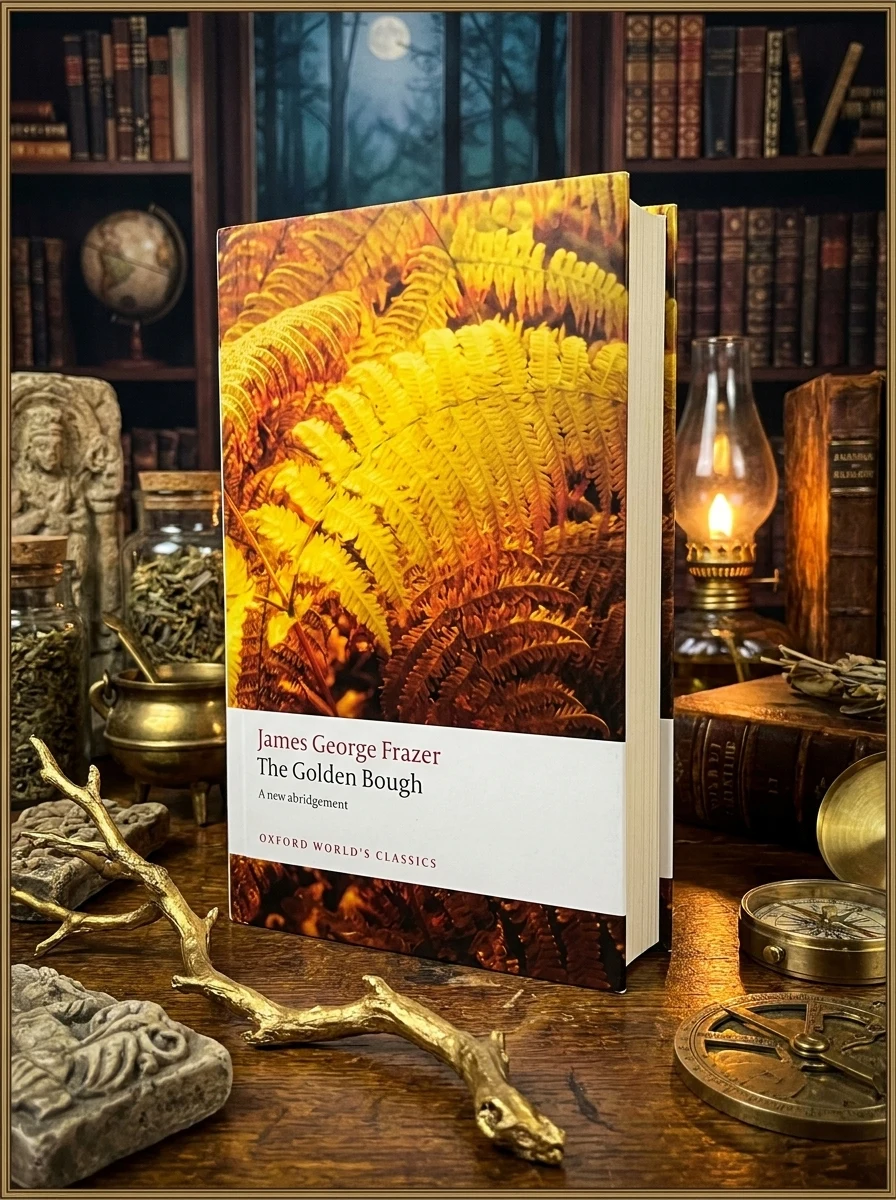

The Golden Bough: A Study in Magic and Religion
✍️ Frazer, James GeorgeJames George Frazer's monumental work offers a sweeping examination of human beliefs and institutions, tracing their evolution from archaic magical practices through the development of religious systems to the eventual emergence of scientific reasoning. This groundbreaking study fundamentally shaped modern anthropology and comparative religion. This particular edition is vital as it restores Frazer's original, more audacious theories, including previously omitted discussions concerning the Crucifixion, making available the complete intellectual journey for a contemporary audience. It's an indispensable volume for any serious scholar or curious mind exploring the origins of human spiritual and intellectual life.


📝 Description: The Golden Bough: A Study in Magic and Religion
💎 Expert review
📖 Why choose it
Why this book is worth reading
This edition is indispensable for the serious scholar or the deeply curious mind eager to explore the origins of human spiritual and intellectual life. By restoring Frazer's original, more audacious theories—including previously omitted discussions concerning the Crucifixion—it offers a complete intellectual journey that previous versions lacked. Readers will gain a sweeping examination of how beliefs evolved from primal magic through religious systems to scientific thought. It is vital for those seeking to unearth humanity's ancient spiritual roots and understand the fundamental structures of comparative religion. This work provides a monumental framework for anyone interested in the trajectory of human thought, making it an essential addition to any library focused on esoteric history and the development of cultural institutions.
⭐ Reader reviews
Reader rating
Frazer’s monumental study fundamentally reshaped anthropology by tracing the evolution from archaic magic to scientific reasoning. This Oxford University Press edition is particularly valuable for its restoration of omitted content, offering a more complete view of his controversial theories. However, it does not suit casual readers seeking light entertainment or those uncomfortable with dense, 19th-century academic prose. The text demands patience and an interest in comparative religion rather than narrative fiction. While groundbreaking, its exhaustive nature may overwhelm those looking for quick insights. It is best approached by dedicated students of esoteric history who appreciate the rigor of foundational scholarly works that define modern anthropological discourse.
❓ Frequently asked questions
📖 Who should read this
If you're fascinated by the origins of human belief, the intersection of magic and religion, or the intellectual history of our species, this book is essential. Scholars of anthropology, comparative religion, and cultural studies will find it foundational reading.
🎯 Key themes and symbolism
Progression of Thought
Frazer meticulously charts humanity's intellectual journey, illustrating how societies transitioned from belief in magical manipulation to the complex doctrines of religion, ultimately paving the way for scientific inquiry. The book argues for a grand evolutionary path of human understanding.
Comparative Mythology & Ritual
This study delves into countless myths, rituals, and customs from diverse cultures across the globe, revealing common threads and universal patterns in human responses to nature, death, and the divine. It highlights the shared foundations of human spiritual experience.
Restored Controversial Theories
Crucially, this edition reinstates Frazer's bolder, once-censored speculations, notably his provocative interpretations surrounding the Crucifixion. It offers readers an unfiltered look at the more daring aspects of his original scholarship, essential for a complete understanding of his work.
📜 Historical context
📚 Glossary
- Comparative Religion
- Magick Studies
- Abridgement
📔 Questions to reflect on
- Reflect on Frazer's proposed progression from magic to religion to science. Can you identify contemporary examples where these distinct modes of thought still intersect or conflict?
- Consider how Frazer's study of ancient rituals might illuminate your understanding of modern holidays or cultural practices. What underlying beliefs might they share?
- Frazer suggested universal patterns in human myths. Choose a myth from your own cultural background and compare it to a myth from a vastly different culture. What common themes emerge?