
Bushido
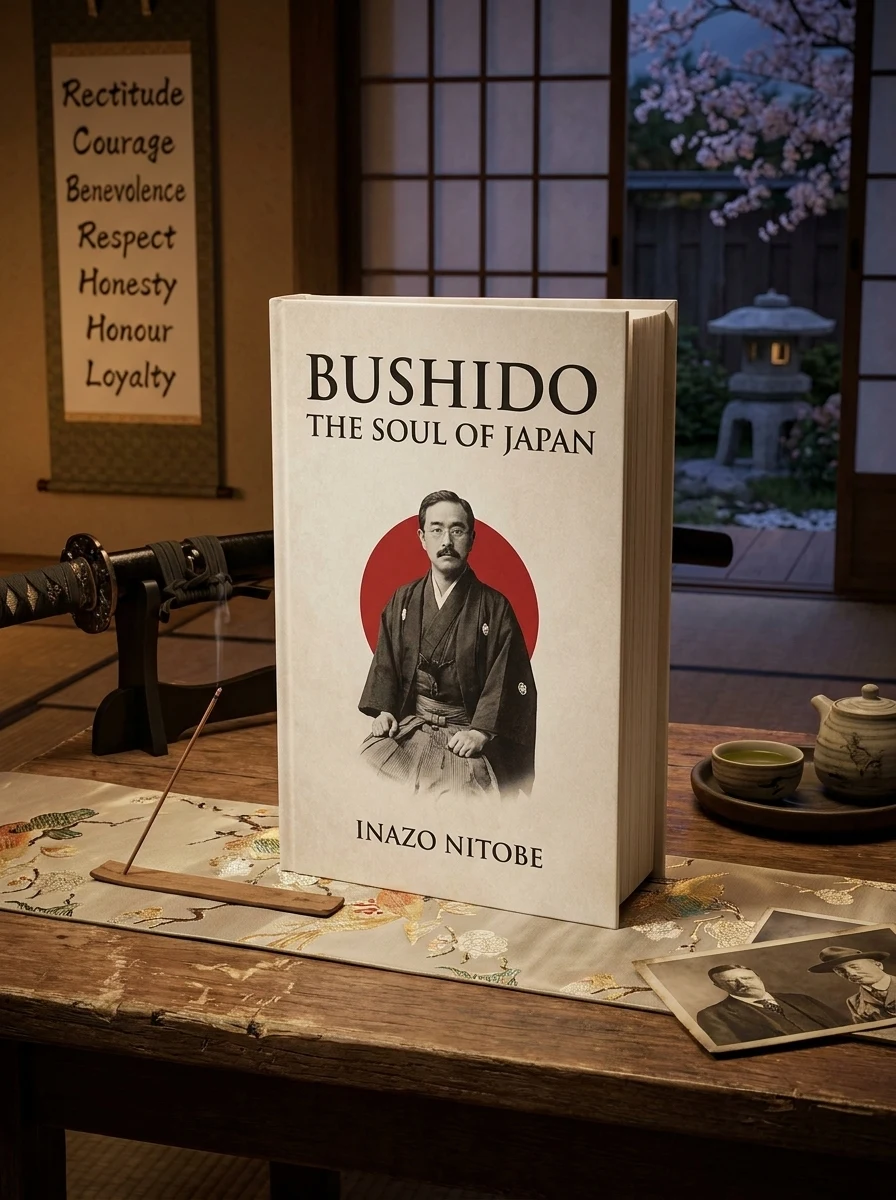
Inazo Nitobe's seminal 1900 work delves into Bushido, the profound ethical framework guiding Japan's samurai. This influential text, which captivated figures like Theodore Roosevelt, meticulously articulates the warrior's moral path, emphasizing virtues such as rectitude, courage, and unwavering loyalty. Nitobe masterfully intertwines influences from Confucianism, Shinto, and Zen Buddhism, showcasing how this chivalric code balanced martial prowess with serene wisdom. More than just a historical account, it draws compelling parallels between Eastern and Western societal values, asserting a shared human foundation beneath cultural divergences.


📝 Description: Bushido
💎 Expert review
📖 Why choose it
Why this book is worth reading
Readers seeking a deep understanding of moral integrity and disciplined living will find profound value here. Nitobe’s narrative offers more than historical insight; it provides a timeless guide to balancing martial prowess with serene wisdom. Those interested in the intersection of Eastern philosophy and Western chivalry will appreciate the compelling parallels drawn between diverse cultural foundations. It is ideal for individuals who admire figures like Theodore Roosevelt or wish to explore how shared human virtues manifest across different societal structures. This book serves as a compass for rectitude, courage, and loyalty, offering spiritual depth to those navigating their own ethical paths in a complex world.
⭐ Reader reviews
Reader rating
Nitobe’s meticulous articulation of the samurai code is intellectually stimulating, yet its philosophical density may alienate casual readers seeking light entertainment. The text does not suit those uninterested in comparative religion or historical ethics, as it demands engagement with Confucian and Zen concepts. While the parallel to Western values is intriguing, some may find the argument for shared human foundations overly idealistic. It is best suited for scholars of esoteric history or philosophy enthusiasts who appreciate structured moral frameworks. Readers expecting dramatic battle narratives or simplified self-help advice will likely find this work too abstract and academically rigorous for their preferences.
❓ Frequently asked questions
📖 Who should read this
If you seek profound insights into ethical leadership, the intersection of spirituality and martial discipline, or a deeper understanding of Japanese cultural identity, this book is essential. It offers a timeless blueprint for personal integrity and societal order, relevant for anyone navigating complex moral landscapes.
🎯 Key themes and symbolism
The Samurai's Moral Compass
Nitobe meticulously dissects the core ethical principles that defined the samurai's existence. He illustrates how virtues like unwavering rectitude, profound courage, compassionate benevolence, and absolute loyalty formed a rigorous personal and social standard. This exploration reveals Bushido not merely as a set of rules, but as a holistic philosophy for living honorably and purposefully within society.
Universal Human Virtues
A central tenet of Nitobe's work is his assertion of deep-seated commonalities between seemingly disparate cultures. He skillfully draws analogies between the chivalric ideals of the West and Bushido, arguing that despite surface differences, fundamental human experiences and ethical aspirations resonate universally. This perspective fosters a bridge of understanding across cultural divides.
Spiritual Underpinnings of Bushido
Nitobe elucidates how the warrior's path was profoundly shaped by Japan's spiritual traditions. He explores the synergistic influence of Confucian principles on social order, Shinto's reverence for nature, and Zen Buddhism's emphasis on discipline and enlightenment. These combined philosophies provided the ethical depth and serene wisdom necessary to temper the inherent violence of the samurai's profession.
📜 Historical context
📚 Glossary
- Bushido
- Samurai
- Rectitude
📔 Questions to reflect on
- How might applying the principles of rectitude and loyalty change your daily interactions or professional decisions?
- Consider Nitobe's assertion of universal human similarities. Where do you observe these common threads in cultures vastly different from your own?
- If you were to define your own personal "code of conduct," what core virtues would you prioritize and why?