
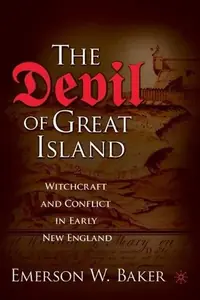
The Devil of Great Island: Witchcraft and Conflict in Early New England
Baker, Emerson W

Stock reported in the catalog; fulfillment is confirmed with your request.
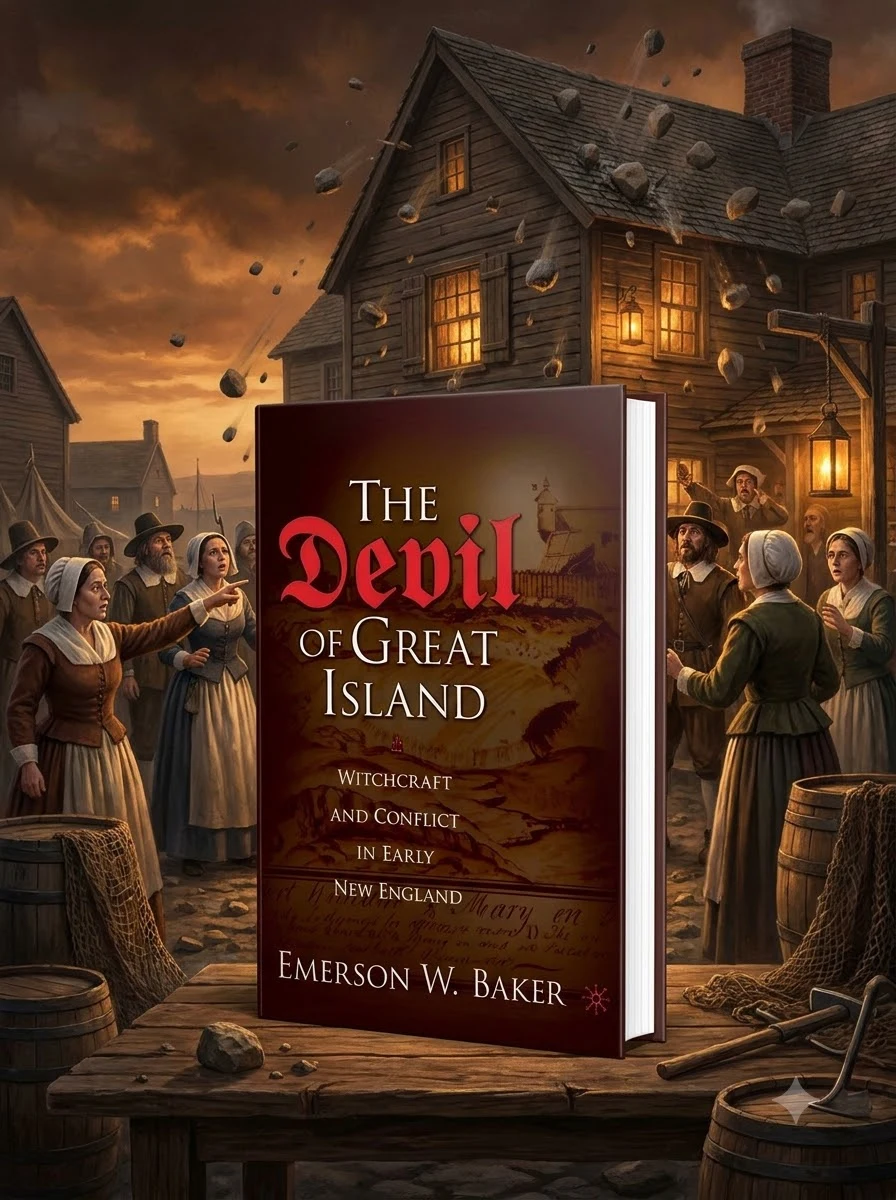
Before Salem, a New Hampshire tavern was besieged by rainstones and demonic whispers.
Emerson Baker transports us to 1682 New Hampshire, where the town of Great Island faced a terrifying phenomenon known as Lithobolia. Stones rained from the sky and materialized within walls, sparking a witchcraft hysteria that prefigured Salem. This narrative dissects how fear spread through colonial communities, revealing the fragile social fabric of the era. Baker challenges long-held myths, offering a nuanced look at how superstition and community conflict intertwined to create a perfect storm of paranoia in early America.
This work sits firmly within the genre of historical non-fiction exploring early American colonial society and the specific phenomenon of pre-Salem witchcraft hysteria. It contributes to the scholarly discourse on how superstition, community conflict, and social fragility intertwined in 17th-century New England.


📝 Description: The Devil of Great Island: Witchcraft and Conflict in Early New England
💎 Expert review
📖 Why choose it
Why this book is worth reading
Readers fascinated by the origins of American folklore and the psychological underpinnings of mass hysteria will find this book deeply rewarding. It offers a nuanced perspective on how fear can dismantle social fabrics, making it essential for those interested in the roots of colonial paranoia. By challenging long-held myths about the Great Island incident, Emerson Baker provides a compelling narrative that connects specific local events to broader themes of superstition and community conflict. It is particularly valuable for history enthusiasts seeking to understand the fragile social dynamics that prefigured later tragedies, offering clarity on how rainstones and demonic whispers fueled a perfect storm of suspicion in early America.
⭐ Reader reviews
Reader rating
Needed this for my research. The text itself is dense but rewarding — you get out what you put in. The material is presented clearly and the structure makes it easy to revisit key passages.
Came across this title in a footnote and had to track it down. I appreciated how the argument builds steadily from first principles. It rewards patience more than any book I've bought this year. Definitely recommend.
Bought this as a gift for my sister and ended up ordering a second copy for myself. The historical context alone makes it worth the price. Challenging in places, but never needlessly obscure.
Exactly what I was looking for. A text you study rather than simply read. Plenty of passages worth underlining; my copy is already full of margin notes. Highly recommend to serious students.
My book club chose this last month. I appreciated how the argument builds steadily from first principles. Delivery took a bit longer than quoted. Good, with the caveats above.
My book club chose this last month. There's real depth here that reveals itself on a second reading. The text itself is dense but rewarding — you get out what you put in. Shipping was quick too.
This book serves as an excellent corrective to simplistic narratives about witchcraft trials, providing a grounded look at the Lithobolia phenomenon in New Hampshire. However, readers seeking sensationalist ghost stories or theological debates may find the focus on social history and myth-busting dry. It is not for those who prefer clear-cut villains over complex community dynamics. The narrative effectively dissects how fear spread, but it requires patience with historical analysis rather than immediate supernatural thrills. Those interested in the sociological aspects of early colonial life will appreciate its rigor, while others might find the detailed examination of social fabric less engaging than the alleged demonic whispers themselves.
❓ Frequently asked questions
📖 Who should read this
Readers fascinated by the prelude to Salem, those interested in the sociology of mass hysteria, and historians seeking to understand the specific regional dynamics of New England's colonial past beyond the famous trials.
🎯 Key themes and symbolism
Lithobolia
Colonial Paranoia
Social Conflict
💬 Quotes from the book
“The town was plagued by mysterious events: strange, demonic noises and unexplainable movement of objects.”
“Overturns many popular assumptions about witchcraft in the seventeenth century.”
📜 Historical context
📚 Glossary
- Lithobolia
- Great Island
- Copycat Incidents
📔 Questions to reflect on
- How did the fear of the unknown shape community bonds in the past?
- What parallels exist between historical witchcraft panics and modern moral panics?
- How might social conflict have been disguised as supernatural accusation?
✍️ More books by this author Baker, Emerson W
All books by this author →
🏛 Books from this publisher St. Martin's Griffin
All books from this publisher →




You might also like
See more →