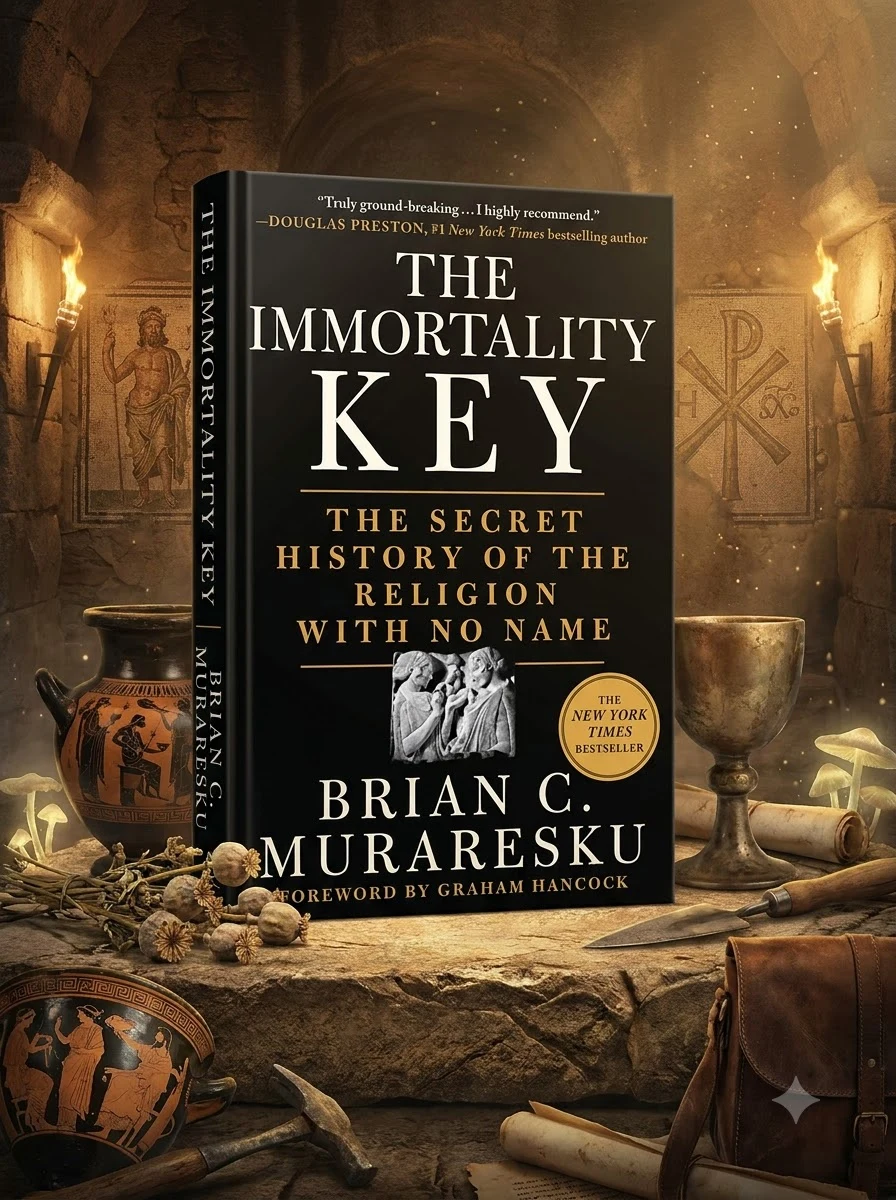
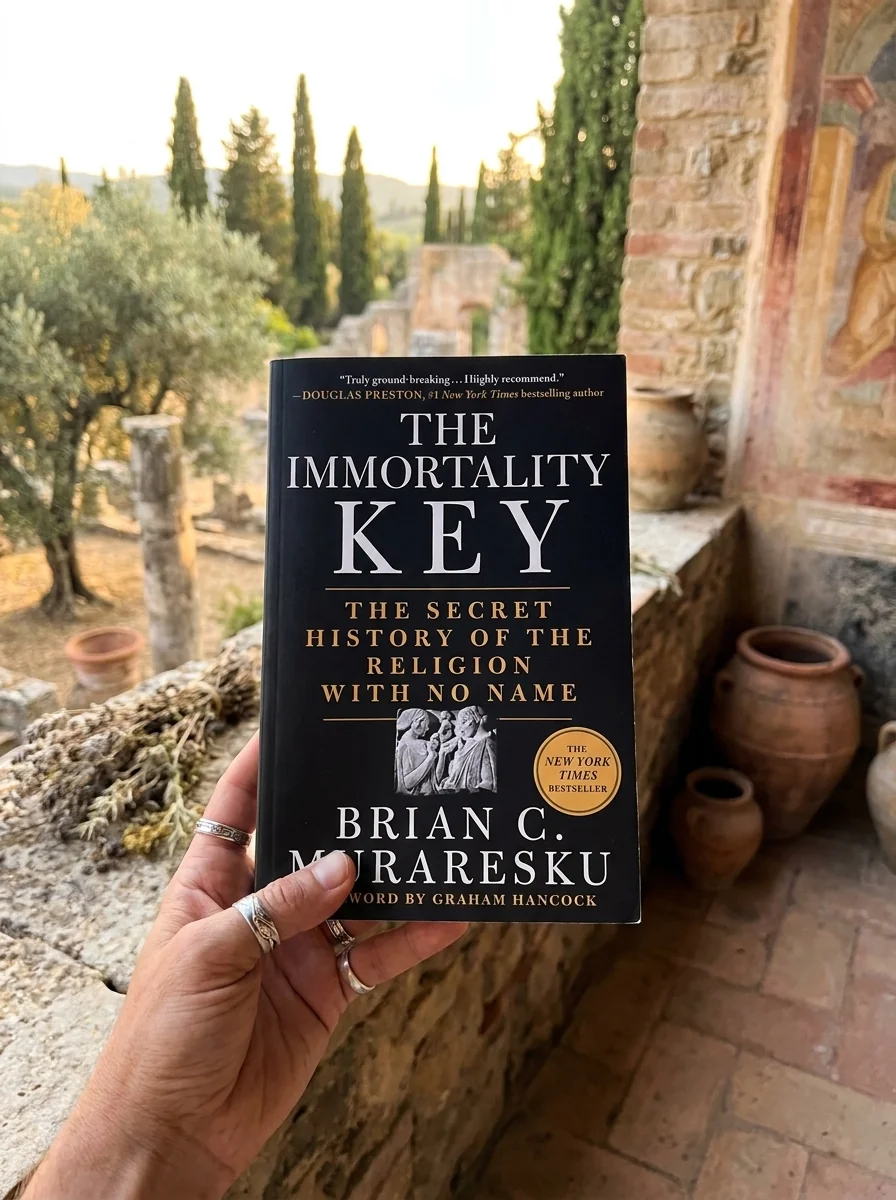
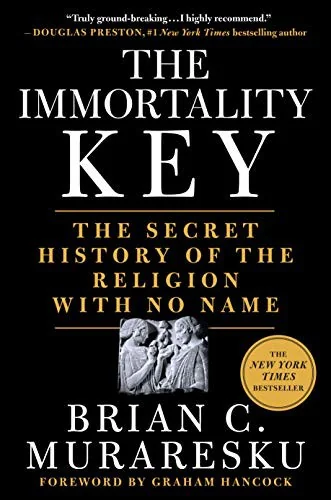
The Immortality Key: The Secret History of the Religion with No Name
A scholar investigates whether mind-altering plants shaped ancient Greek mysteries and early Christian sacraments.
This study examines the hypothesis that secret drug traditions underpinned Western religious origins. Muraresku combines legal investigation with ancient languages, tracing psychedelic beer at Eleusis and spiked wine in Rome to early Christian Eucharist rituals. Using recent archaeochemical data and archival findings, the text re-evaluates early Christian history, the suppression of visionary women, and the shift toward non-psychoactive sacraments.
The work spans human history from Stone Age sites like Göbekli Tepe through ancient Greece and Rome, extending into early Christian communities and the medieval religious war on women.


Praise for this book
“In Brian Muraresku, the psychedelic theory of religion has its newest and most accomplished scholar-historian (who also happens to be very funny). This is no crackpot idea. This is genuine scholarship at its deepest, most comparative, and most conceptually radical.”
“The Immortality Key is an astonishing and remarkable book that explores the mysterious links between psychedelic drugs, human consciousness, and the origins of Christianity. It presents truly ground-breaking research on many levels, tracing the use of psychedelic drugs from Ancient Greece through Rome and into the early days of Christianity, where they played a role--possibly a crucial one--in the new religion of Jesus Christ. This is a fascinating book, which I highly recommend.”
“The book--which is like nothing I had read before, it puts other 'popular scholarship' to shame--is part popularized classical scholarship and part Da Vinci Code-influenced investigative journalism.”
📝 Description: The Immortality Key: The Secret History of the Religion with No Name
💎 Expert review
📖 Why choose it
Why this book is worth reading
Readers fascinated by the secret history of Western civilization and the origins of sacred rituals will find this book profoundly engaging. Brian Muraresku invites you on a quest for the true nature of ancient divine encounters, unearthing forgotten rituals that rewrite our understanding of foundational religious practices. If you are intrigued by the idea that psychedelics were central to traditions like the Eucharist and the Eleusinian Mysteries, this meticulous investigation into archaeological, textual, and botanical evidence offers a provocative new perspective. It is ideal for those seeking to understand the profound impact of visionary plants on spirituality and culture across millennia, revealing a hidden knowledge passed through history.
⭐ Reader reviews
Reader rating
This book presents a bold thesis regarding the entheogenic roots of Western religion, supported by extensive research into ancient texts and botanical evidence. While intellectually stimulating for those open to alternative historical narratives, it may not suit readers who prefer strictly conventional academic histories or those skeptical of psychedelic influences in sacred contexts. The author’s challenge to established religious origins is compelling but requires an accepting mindset toward unconventional interpretations of archaeological data. It is a dense, thought-provoking exploration that demands critical engagement rather than passive consumption, best appreciated by those already familiar with esoteric traditions.
❓ Frequently asked questions
📖 Who should read this
For seekers of hidden truths and those curious about the esoteric underpinnings of Western spirituality. If you question conventional historical narratives and are open to exploring the role of altered states in religious experience, this profound investigation will captivate and challenge your perspectives.
🎯 Key themes and symbolism
Ancient Entheogenic Rituals
Muraresku meticulously explores the documented use of psychoactive substances in ancient Greece, particularly within the Eleusinian Mysteries. He posits that these "sacred medicines" were not fringe practices but foundational to the spiritual experiences sought by initiates, providing direct encounters with the divine. The book reconstructs what these lost rituals might have entailed.
Christian Origins Reexamined
The book boldly questions the traditional understanding of the Christian Eucharist, suggesting that its origins might lie in pre-existing entheogenic traditions rather than purely symbolic communion. It investigates the absence of archaeological proof for the Last Supper's sacramental wine, proposing an alternative interpretation rooted in visionary plant use that could have been inherited by early Christian communities.
Hidden Historical Lineage
This work uncovers a clandestine thread of knowledge concerning visionary plants, arguing it was preserved and transmitted across generations, from the Stone Age through classical antiquity and into early Christian eras. It's a quest to reveal a "religion with no name," a secret tradition maintained through various cultural shifts, offering a new lens on humanity's quest for transcendence.
📜 Historical context
📚 Glossary
- Entheogen
- Eleusinian Mysteries
- Eucharist
📔 Questions to reflect on
- How does the idea of entheogenic roots for ancient religions challenge or deepen your personal understanding of faith and spirituality?
- Consider the implications if core religious rituals were once direct, altered-state experiences. What might humanity have gained or lost by moving away from such practices?
- If a "religion with no name" existed, how might its practices and philosophies differ from organized religions we know today?