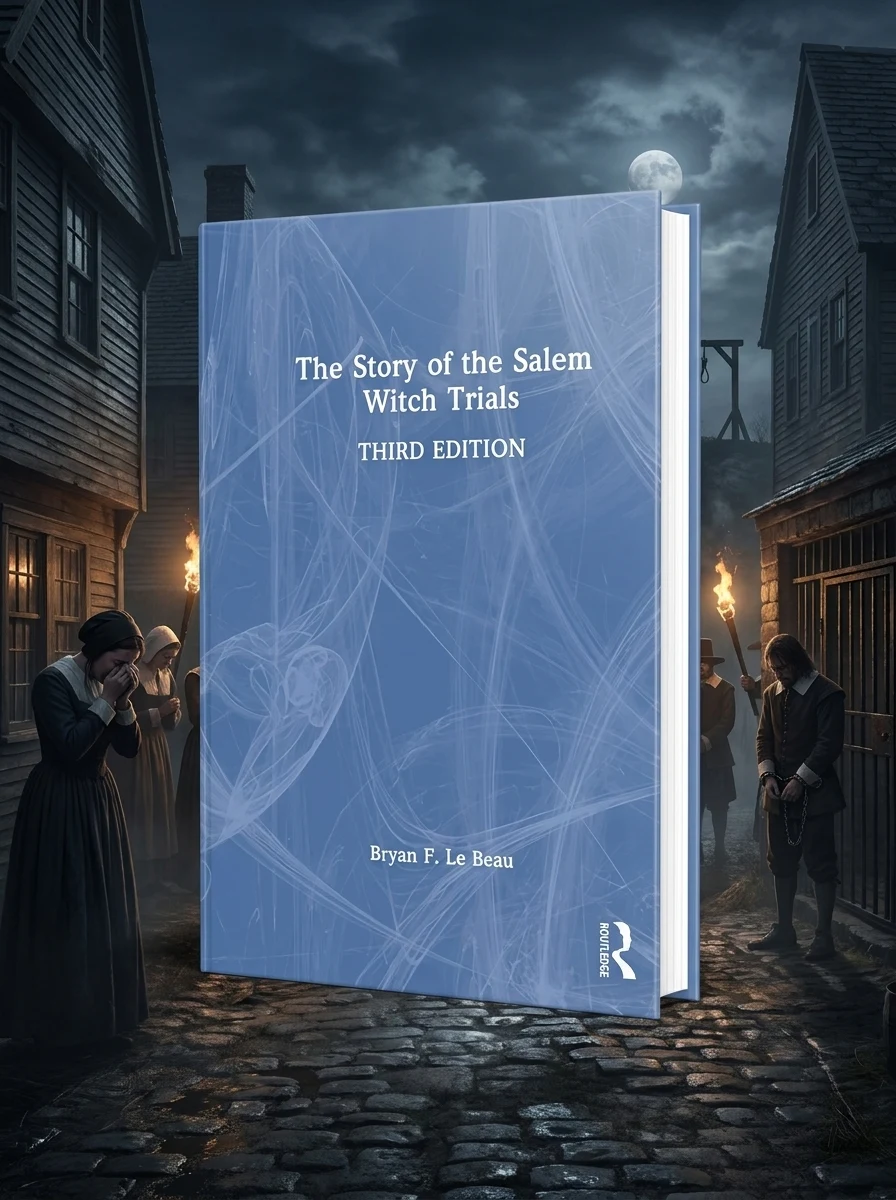


The Story of the Salem Witch Trials
Le Beau, Bryan 85
85
 Editorial score
How we rate
Editorial score
How we rate
Stock reported in the catalog; fulfillment is confirmed with your request.
Uncover the chilling truth behind the Salem Witch Trials, a dark chapter in American history.
Bryan Le Beau's "The Story of the Salem Witch Trials" offers an accessible, thorough examination of the infamous events gripping colonial Massachusetts. It meticulously recounts the period from June to September 1692, when a wave of accusations led to the execution of nineteen individuals by hanging, the agonizing death of another by pressing, and the imprisonment of over 150 others. This volume illuminates the societal fears and judicial failures that allowed such widespread persecution for alleged witchcraft to take root in New England.
This work sits firmly within the historiography of early American colonial studies and the broader cultural narrative of New England Puritanism. It serves as a critical examination of how societal fears and judicial failures in 17th-century Massachusetts facilitated widespread persecution for alleged witchcraft.


📝 Description: The Story of the Salem Witch Trials
💎 Expert review
📖 Why choose it
Why this book is worth reading
Readers seeking a clear, accessible entry point into one of America’s most infamous historical tragedies will find immense value in this volume. Bryan Le Beau provides a thorough yet approachable examination of the events from June to September 1692, making complex judicial failures and societal fears understandable for general audiences. It is ideal for students, history enthusiasts, or those curious about the roots of American legal and social history who want to understand how nineteen executions and over one hundred imprisonments occurred. The book’s strength lies in its ability to illuminate the chilling truth behind these events without overwhelming the reader with dense academic jargon, offering a vital perspective on human nature under pressure.
⭐ Reader reviews
Reader rating
Le Beau delivers a meticulous and engaging recounting of the Salem Witch Trials, effectively highlighting the judicial failures that allowed such persecution to take root. The narrative is thorough, covering the executions by hanging, the death by pressing, and the imprisonment of over 150 individuals with clarity and precision. However, this volume does not suit readers seeking deep theological analysis or those looking for primary source transcripts. It is strictly a historical overview rather than a scholarly deconstruction of Puritan theology. Consequently, academics may find it too accessible, while casual readers will appreciate its directness. It is a solid foundational text for understanding the period's societal fears.
❓ Frequently asked questions
📖 Who should read this
If you seek a clear, compelling account of one of America's most infamous historical tragedies, this book is for you. It's an essential read for anyone interested in early American history, social justice, or the chilling power of collective delusion.
🎯 Key themes and symbolism
Women as Targets
The narrative highlights the disproportionate impact of the witch trials on women, particularly those who were marginalized, outspoken, or defied societal norms. It examines the gendered dynamics of the accusations, exploring how traditional roles and community perceptions contributed to their vulnerability during this period of intense scrutiny and suspicion.
Echoes of Persecution
Beyond the immediate events, the text invites reflection on the broader patterns of mass delusion and persecution throughout history. It positions Salem not just as an isolated incident but as a stark reminder of the dangers inherent in unchecked authority, collective fear, and the suppression of individual rights under the guise of moral panic.
💬 Quotes from the book
“The events of 1692 stand as a stark testament to how easily fear can unravel the fabric of a community, transforming neighbors into accusers and innocent citizens into condemned heretics.”
“More than a century before the American Revolution, Salem offered a chilling preview of the dangers inherent when individual rights are sacrificed at the altar of collective panic and unchecked authority.”
📜 Historical context
📚 Glossary
- Spectral Evidence
- Afflicted Girls
- Peine forte et dure
📔 Questions to reflect on
- Consider how societal anxieties and religious beliefs in 17th-century Puritan New England might have contributed to the rapid escalation of witchcraft accusations.
- Reflect on the role of "spectral evidence" in the trials. What are the modern-day equivalents of such subjective or unprovable accusations in legal or social contexts?
- If you were a resident of Salem in 1692, how do you imagine you would have responded to the accusations, either as an accuser, an accused, or a bystander?
✍️ More books by this author Le Beau, Bryan
All books by this author →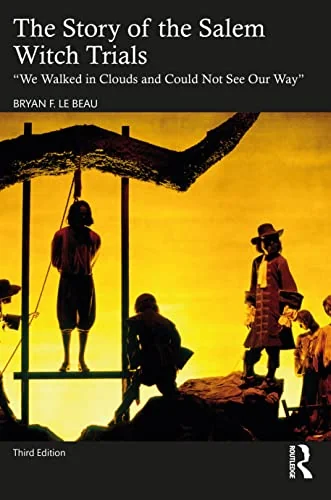
🏛 Books from this publisher Routledge
All books from this publisher →



 89
89


You might also like
See more → 83
83
 91
91


 90
90

 90
90
 90
90