US shipping Secure card payment Occult and esoteric books

The Return of the Dead: Ghosts, Ancestors, and the Transparent Veil of the Pagan Mind

Lecouteux, Claude
Reader rating
4.4
(7 reviews) 119 sold
Availability to be confirmed

This edition can be ordered. No arrival date is confirmed.

📚 ABOUT THE BOOK

Pagan ghosts were flesh and blood revenants, not ethereal phantoms.

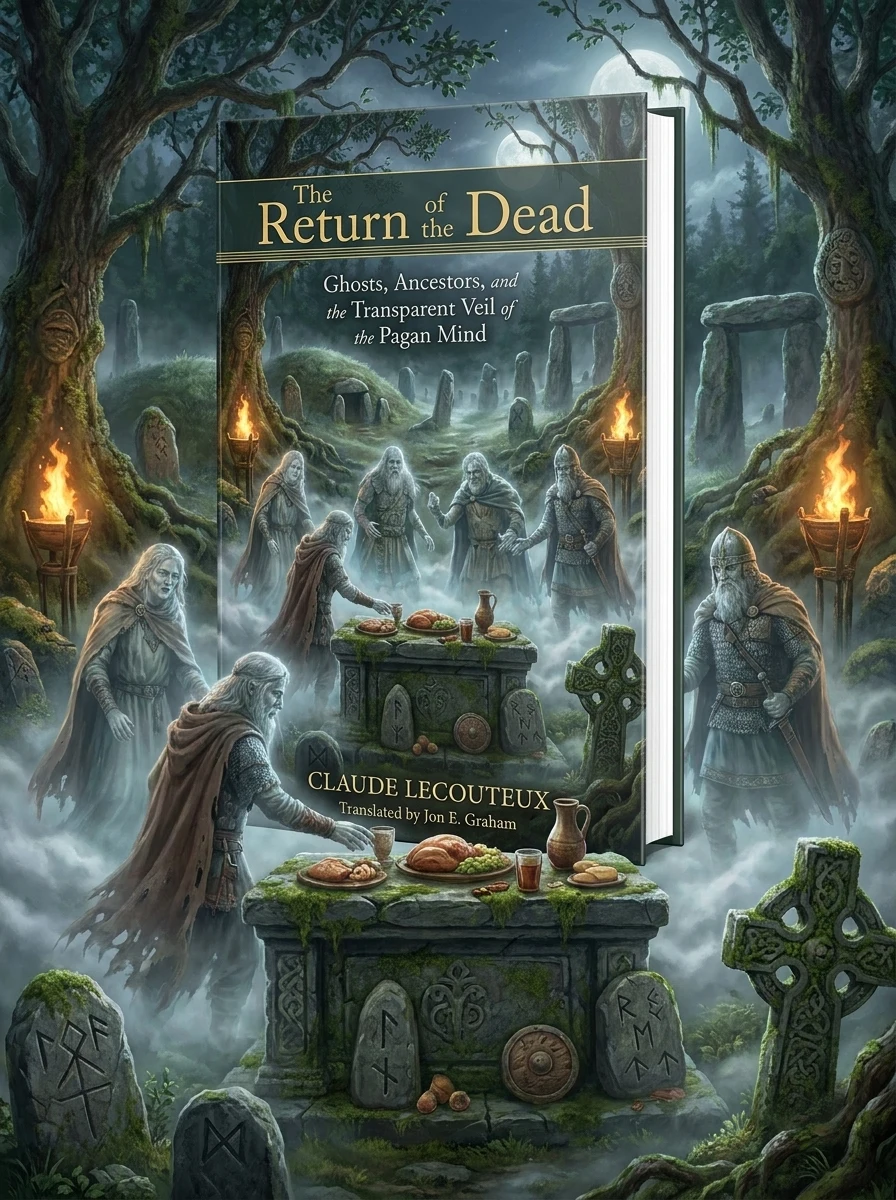
Claude Lecouteux dismantles the modern illusion of a permanent wall between the living and the dead. In the pagan worldview, this boundary was permeable, allowing ancestors to return as tangible beings who ate, slept, and fought. These revenants enforced ancestral laws or sought vengeance for wrongs, existing in a seamless union with the living world. The text traces how medieval Christianity later sanitized these corporeal figures into disembodied spirits, fundamentally altering humanity's perception of death and the afterlife.

Key themes
Corporeal Revenants Ancestral Law Pagan Cosmology
Historical context

This work explores the pre-Christian pagan worldview where the boundary between life and death was permeable, contrasting sharply with later medieval Christian interpretations that sanitized ancestral presence into disembodied spirits.


Difficulty
●● Moderate
Fans will love it
Ronald Hutton · Graham Hancock · Marija Gimbutas · The Celtic World
🌙 Witchcraft & Wicca
🏛 Inner Traditions International 📖 288 pages 📔 Paperback 📐 Paperback ISBN: 9781594773181
Fun fact
Lecouteux excels at demystifying folklore by grounding it in historical reality. The prose is scholarly yet accessible, offering a refreshing alternative to sensationalist ghost stories. However, skeptics seeking empirical proof of the supernatural may find the anthropological approach dry. It sits firmly in the realm of comparative mythology and cultural history, essential for anyone studying the evolution of European spiritual beliefs.
📚 This book appears in Esoterica Books

📝 Description: The Return of the Dead: Ghosts, Ancestors, and the Transparent Veil of the Pagan Mind

How the ghost stories of pagan times reveal the seamless union existing between the world of the living and the afterlife - Demonstrates how Medieval Christianity transformed the more corporeal ghost encountered in pagan cultures with the disembodied form known today - Explains how the returning dead were once viewed as either troublemakers or guarantors of the social order The impermeable border the modern world sees existing between the world of the living and the afterlife was not visible to our ancestors. The dead could--and did--cross back and forth at will. The pagan mind had no fear of death, but some of the dead were definitely to be dreaded: those who failed to go peacefully into the afterlife but remained on this side in order to right a wrong that had befallen them personally or to ensure that the law promoted by the ancestors was being respected. But these dead individuals were a far cry from the amorphous ectoplasm that is featured in modern ghost stories. These earlier visitors from beyond the grave--known as revenants--slept, ate, and fought like men, even when, like Klaufi of the Svarfdaela Saga, they carried their heads in their arms. Revenants were part of the ancestor worship prevalent in the pagan world and still practiced in indigenous cultures such as the Fang and Kota of equatorial Africa, among others. The Church, eager to supplant this familial faith with its own, engineered the transformation of the corporeal revenant into the disembodied ghost of modern times, which could then be easily discounted as a figment of the imagination or the work of the devil. The sanctified grounds of the church cemetery replaced the burial mounds on the family farm, where the ancestors remained as an integral part of the living community. This exile to the formal graveyard, ironically enough, has contributed to the great loss of the sacred that characterizes the modern world.

💎 Expert review

💎
Esoterica Books editorial team
Occult literature desk
Lecouteux provides a compelling dismantling of the modern illusion separating the living from the dead. The text is intellectually rigorous, tracing how corporeal ancestors were reimagined as spiritual phantoms by medieval Christianity. However, readers expecting light paranormal tales or contemporary Wiccan ritual guides will find this dense historical analysis unsuitable. It is not for those who prefer supernatural entertainment over scholarly deconstruction of worldview shifts. The focus remains strictly on the philosophical and cultural transition, making it a serious academic contribution rather than a casual read for entertainment seekers.
✓ EDITOR'S REVIEW

📖 Why choose it

📖

Why this book is worth reading

Readers fascinated by the raw, tangible nature of ancestral spirits will find this book profoundly illuminating. It offers a vital corrective to modern ethereal ghost stories by revealing how pagans viewed the dead as flesh-and-blood revenants who actively participated in daily life. Those interested in the historical evolution of death rituals and the psychological impact of Christian sanitization on our current perception of the afterlife will gain deep insight here. It is essential for anyone seeking to understand the seamless union between the living and the deceased that defined the pagan mind, providing a rich, grounded perspective on ancestral laws and vengeance.

⭐ Reader reviews

The starting rating comes from the team Esoterica Books —
⭐ Esoterica editorial review Editorial rating 4.4/5
★★★★
Readers fascinated by Norse sagas, pre-Christian European history, and the evolution of ghost lore who seek to understand the ancient, tangible connection between the living and their deceased forebears.

Reader rating

4.4
Based on 7 reviews
5
3
4
3
3
1
2
0
1
0
S
Simon W. ✓ Verified purchase
May 19, 2026
My new favorite

Grabbed this during a weekend order. I appreciated how the argument builds steadily from first principles. Well worth it.

J
Josephine F. ✓ Verified purchase
February 3, 2026
Exceeded expectations

Long-time student of the esoteric here. The material is presented clearly and the structure makes it easy to revisit key passages. The symbolism is layered and generous to patient readers. My only regret is not ordering it sooner.

O
Opal N.
December 23, 2025

My book club chose this last month. The material is presented clearly and the structure makes it easy to revisit key passages. There's real depth here that reveals itself on a second reading. My only quibble is the cover feels thinner than expected. Good, with the caveats above.

V
Vera P. ✓ Verified purchase
May 5, 2025
Almost perfect

I've read excerpts online before, but having the full text is different. Challenging in places, but never needlessly obscure. Good, with the caveats above.

O
Oscar D. ✓ Verified purchase
May 15, 2025
Mixed feelings

Arrived faster than expected and well packaged. Some sections stopped me cold in the best way. The font runs small in the appendices. Solid, if not essential.

N
Nathan T. ✓ Verified purchase
September 9, 2024

First purchase from this shop. It connects ideas I'd only seen treated separately elsewhere. Will be gifting a copy to a friend.

E
Esoterica Books editorial team

Lecouteux provides a compelling dismantling of the modern illusion separating the living from the dead. The text is intellectually rigorous, tracing how corporeal ancestors were reimagined as spiritual phantoms by medieval Christianity. However, readers expecting light paranormal tales or contemporary Wiccan ritual guides will find this dense historical analysis unsuitable. It is not for those who prefer supernatural entertainment over scholarly deconstruction of worldview shifts. The focus remains strictly on the philosophical and cultural transition, making it a serious academic contribution rather than a casual read for entertainment seekers.

❓ Frequently asked questions

They were physical revenants who consumed food, slept, and engaged in combat, unlike modern ethereal spirits.
To enforce ancestral laws, settle personal grievances, or maintain social order, not merely to haunt.

📖 Who should read this

Readers fascinated by Norse sagas, pre-Christian European history, and the evolution of ghost lore who seek to understand the ancient, tangible connection between the living and their deceased forebears.

🎯 Key themes and symbolism

Corporeal Revenants

Ancestral Law

Pagan Cosmology

💬 Quotes from the book

“The dead could--and did--cross back and forth at will.”

“These earlier visitors... slept, ate, and fought like men.”

📜 Historical context

This work bridges ancient Norse mythology and medieval theological shifts. It contrasts the pre-Christian belief in physical return with the Christian doctrine of the soul's separation from the body. Lecouteux positions the book as a corrective to Victorian and modern supernatural tropes, grounding ghost stories in the socio-legal frameworks of early European societies.

📚 Glossary

Revenant
Svarfdaela Saga
Transparent Veil

📔 Questions to reflect on

  1. How does your cultural background shape your perception of the boundary between life and death?
  2. What unresolved 'laws' or debts do you feel might bind you to your ancestors?
  3. If ghosts were physical, how would your relationship with the deceased change?

✍️ More books by this author Lecouteux, Claude

All books by this author →
🏛 Books from this publisher Inner Traditions International

All books from this publisher →
You might also like

See more →