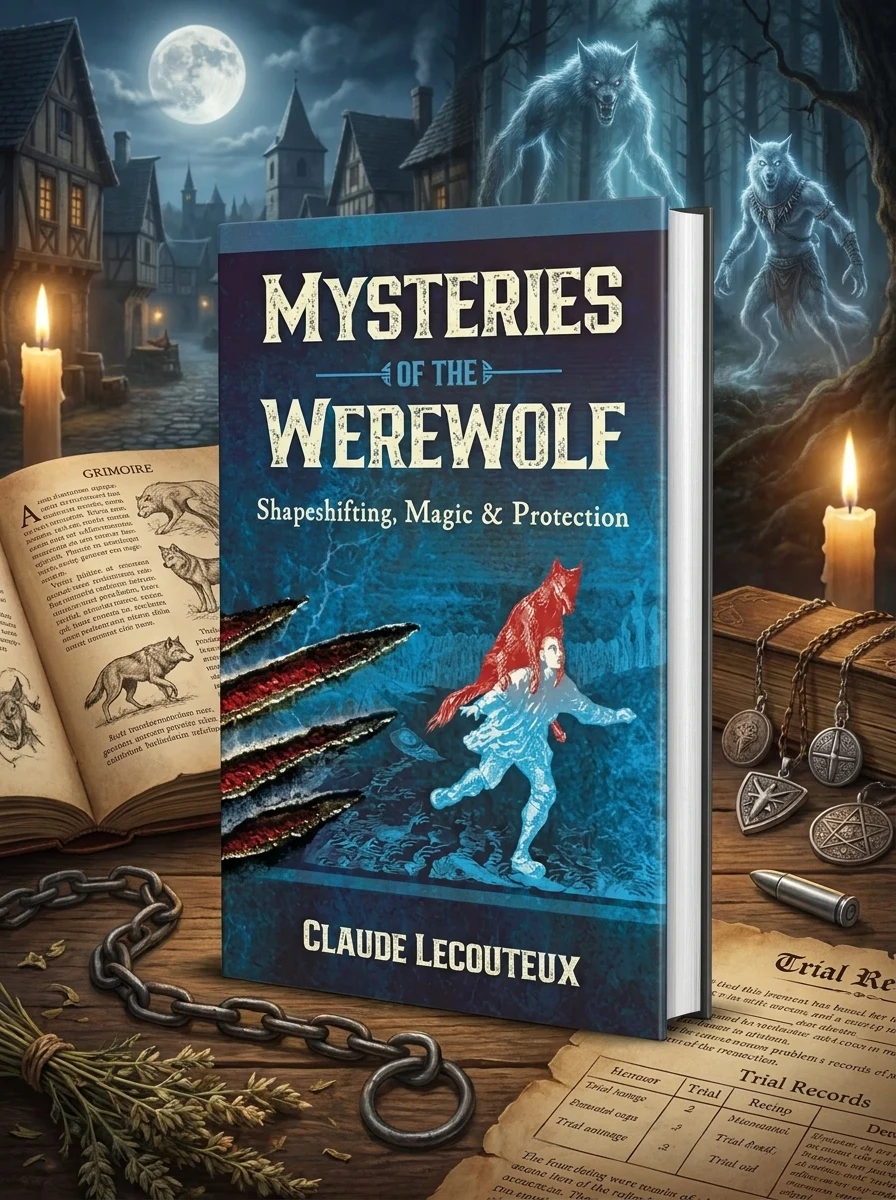


Mysteries of the Werewolf: Shapeshifting, Magic, and Protection
Lecouteux, Claude

This edition can be ordered. No arrival date is confirmed.
Uncover the ancient terror of lycanthropy across global mythologies and medieval trials.
Claude Lecouteux traces the evolution of werewolf lore from ancient Greece to the post-medieval era, revealing how shapeshifting myths transcended cultures. This work investigates the mechanisms of transformation, ranging from demonic pacts to arcane spells, while documenting historical attempts to identify and neutralize these creatures. By analyzing trial records and personal accounts of spouses accused of lycanthropy, the book exposes the deep-seated human fear of the hidden predator. It also expands the scope to include other shapeshifters, such as were-tigers and were-jackals, offering a comprehensive view of how humanity has conceptualized the beast within and the magical protections devised to ward it off.
This work sits firmly within the scholarly study of European folklore and esoteric history, bridging the gap between medieval trial records and broader global mythological traditions regarding lycanthropy.


📝 Description: Mysteries of the Werewolf: Shapeshifting, Magic, and Protection
💎 Expert review
📖 Why choose it
Why this book is worth reading
Readers fascinated by the intersection of historical anthropology and occult lore will find immense value in this comprehensive exploration of lycanthropy. Claude Lecouteux offers a unique lens through which to view the ancient terror of shapeshifting, moving beyond simple horror tropes to examine the cultural mechanisms behind these beliefs. Those interested in how societies conceptualized the 'beast within' and developed magical protections will appreciate the detailed analysis of trials and personal accounts. It is an essential read for anyone seeking to understand the deep-seated human fear of hidden predators across global mythologies, from ancient Greece to the post-medieval era.
⭐ Reader reviews
Reader rating
Ordered this after seeing it referenced in another book I was studying. The text itself is dense but rewarding — you get out what you put in. Some sections stopped me cold in the best way.
Perfect companion for my morning study sessions. Some chapters demand a slow, careful read, and that's exactly the point. Shipping was quick too.
This has been on my wishlist for months. The language takes some getting used to, but it becomes part of the charm. Will be gifting a copy to a friend.
Perfect companion for my morning study sessions. I appreciated how the argument builds steadily from first principles. There's real depth here that reveals itself on a second reading. A few pages arrived with light corner wear, though nothing serious. Still worth having on the shelf.
This edition finally does the material justice. The language takes some getting used to, but it becomes part of the charm. The historical context alone makes it worth the price. Delivery took a bit longer than quoted. Good, with the caveats above.
Lecouteux delivers a rigorous academic examination of werewolf lore that prioritizes historical context over sensationalism. While the breadth of coverage is impressive, tracing transformations from were-tigers to were-jackals, the text demands patience and a tolerance for dense historical analysis. It does not suit readers seeking light entertainment or straightforward horror narratives; those looking for fictional thrills may find the focus on trial records and arcane spells dry. However, for scholars and serious enthusiasts of esoteric history who appreciate a candid look at how humanity has weaponized fear against itself, this volume is an indispensable resource that illuminates the complex relationship between magic, myth, and medieval justice.
❓ Frequently asked questions
📖 Who should read this
Readers fascinated by the intersection of folklore, legal history, and psychological horror will find this essential. It appeals to those interested in how ancient myths shaped medieval societal fears and the specific cultural narratives surrounding lycanthropy across different global traditions.
🎯 Key themes and symbolism
Global Shapeshifter Variants
The author expands beyond European wolves to examine were-tigers in Asia and were-caribou in northern legends. This comparative approach reveals a universal human fascination with losing one's human form to become a predatory animal, suggesting that the fear of the beast is a shared cultural archetype rather than a localized superstition.
Mechanisms of Transformation
Lecouteux details the specific rituals and conditions required for lycanthropy, including devilish pacts and specific incantations. He explores the societal response to these transformations, focusing on the methods used to detect the hidden wolf among neighbors and the desperate measures taken to destroy or escape the influence of these magical curses.
Historical Trial Documentation
The text grounds supernatural theory in legal reality by presenting trial records from medieval Europe. It highlights the tragic intersection of folklore and justice, particularly through personal records of families where spouses were accused of shapeshifting, illustrating how these beliefs impacted daily life and legal outcomes during the early modern period.
💬 Quotes from the book
“The wolf has haunted the human imagination since prehistoric times.”
“Enemies that are all the more dangerous as no one knows who they are.”
📜 Historical context
📚 Glossary
- Lycanthrope
- Shapeshifting
- Trial Records
📔 Questions to reflect on
- How does the fear of losing control manifest in your own cultural stories about transformation?
- What modern figures or entities do you perceive as hiding a 'beastly' nature beneath a human facade?
- How do historical attempts to define and destroy 'monsters' reflect societal fears of the unknown?
✍️ More books by this author Lecouteux, Claude
All books by this author →



🏛 Books from this publisher Inner Traditions International
All books from this publisher →






You might also like
See more →