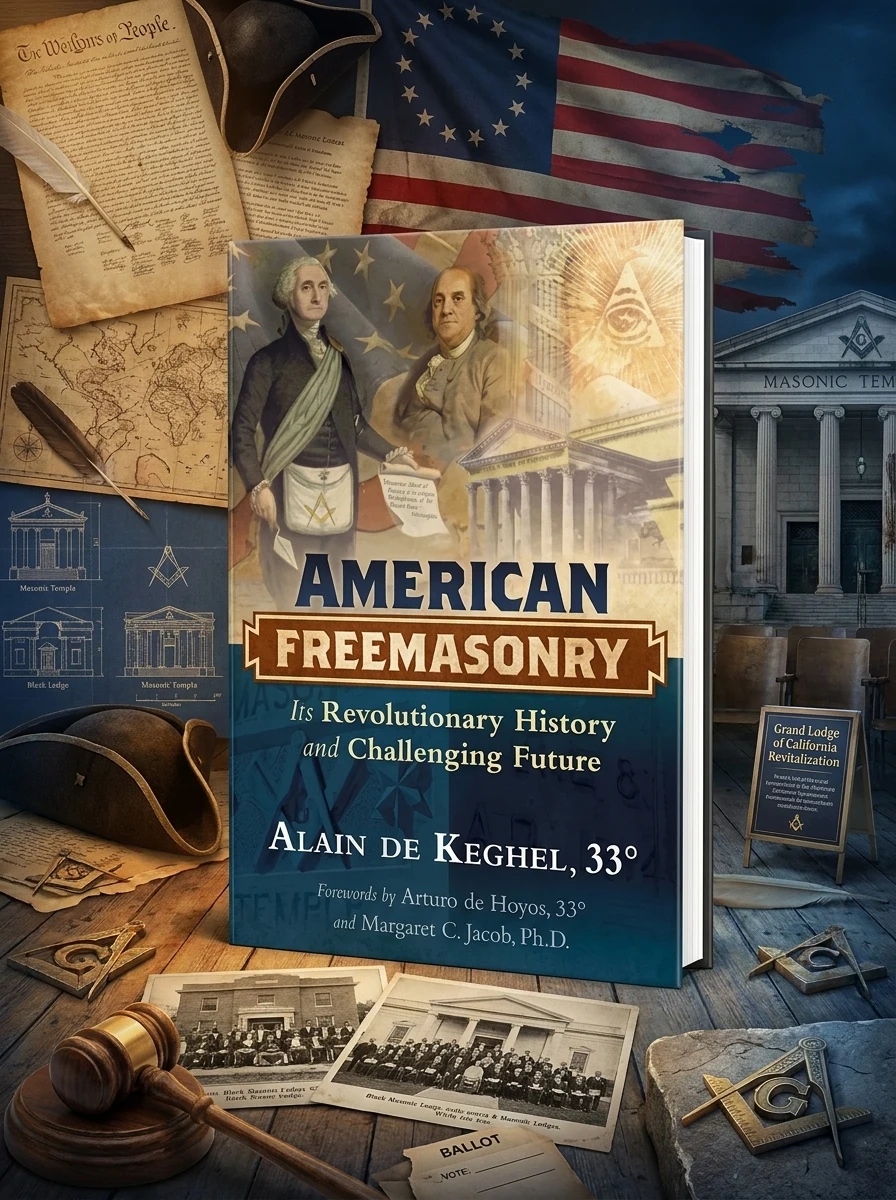
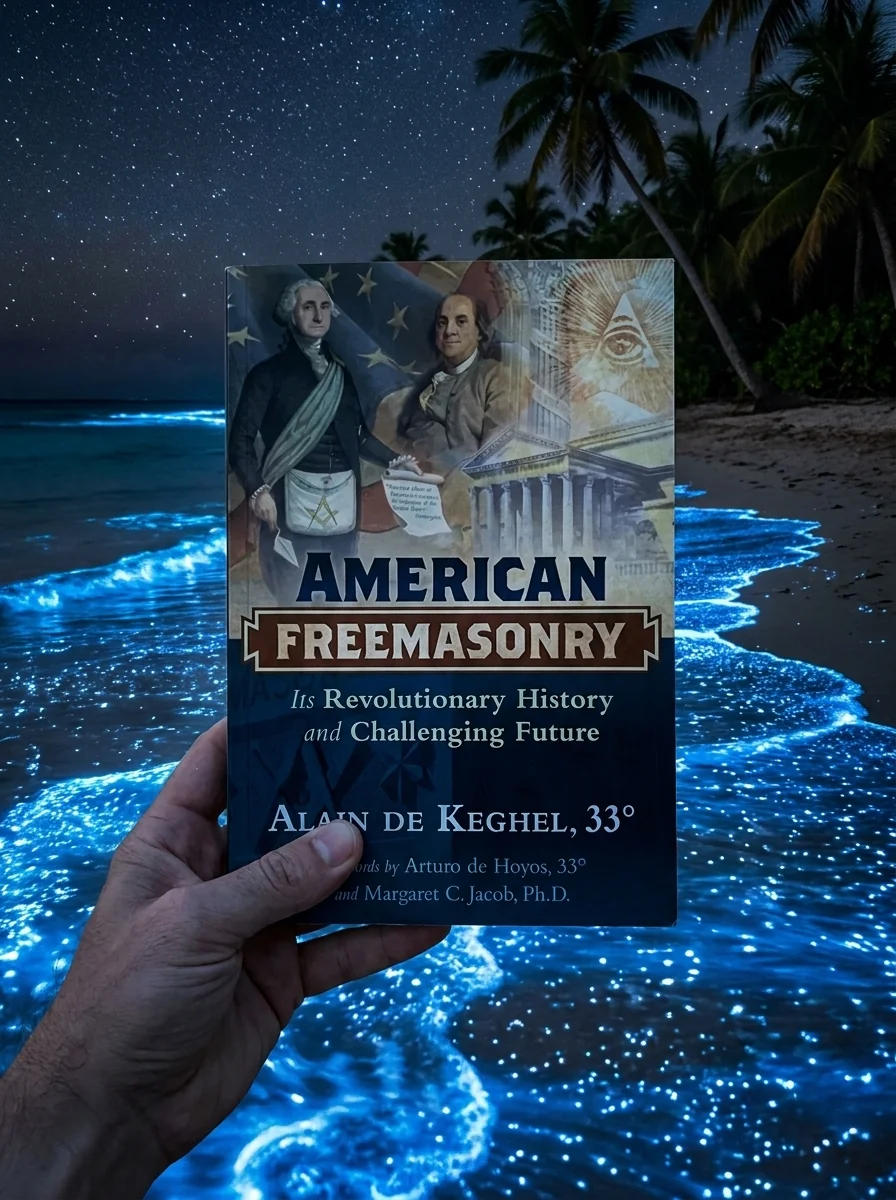
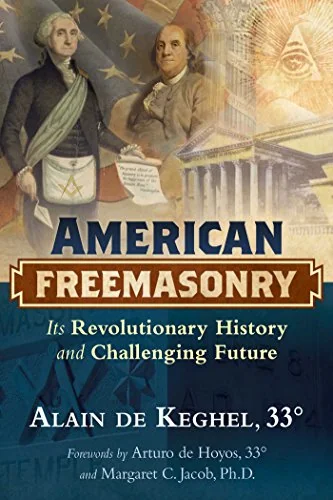
American Freemasonry: Its Revolutionary History and Challenging Future
This compelling volume meticulously traces the evolution of Freemasonry within the United States, from its foundational role in the colonial era and the Revolutionary War to the emergence of the Scottish Rite. It provides an unvarnished look at the distinct American system, dissecting its enduring strengths alongside its significant weaknesses. The book courageously addresses the painful racial divide between Black and white lodges and the persistent exclusion of women, a stark contrast to some European traditions. Furthermore, it explores the forces behind declining membership and highlights contemporary efforts toward revitalization, offering a comprehensive and critical perspective.


Praise for this book
“American Freemasonry is everything one should expect from an author with Alain de Keghel's impressive resume. The author is a committed and accomplished Freemason, scholar, historian, and career diplomat. The book reflects his years of travel, study, and extensive Masonic activity around the world.”
📝 Description: American Freemasonry: Its Revolutionary History and Challenging Future
📑 What's inside
- Foreword by Margaret C. Jacob, Ph.D
- Foreword by Arturo de Hoyos, 33°
- PREFACE Interpreting American Freemasonry throughout Time
- 1 Freemasonry in Pioneer America
- 2 At the Order's Origins The United Lodge of England
- 3 The American Spiritual Infusion and Freemasonry
- 4 The Masonic Tradition The Specifically American Features of Rituals and Institutions
- 5 Black American Freemasonry
- 6 The Charity of an Order Challenged by Change
- 7 American Masonry Confronted by the Initiation of Women
- 8 Relations and Ruptures with French Freemasonry
- 9 French Freemasonry in North America, Yesterday and Today
- 10 A Little American Masonic Perspective in a Changing World
- 11 Is the Overall Decline in Membership the Herald of Profound Changes?
- AFTERWORD
- Freemasonry in North America by John L. Cooper III Appendices
- APPENDIX I Statistical Studies of the Evolution of the Membership of American and Canadian Grand Lodges APPENDIX II American Demographic Studies U.S. Census Bureau and the Washington Post
- APPENDIX III
- APPENDIX IV Sacramento Seminar of 2002, Organized by the Grand Lodge of California
- APPENDIX V
- Geneva Declaration (May 7, 2005)
- APPENDIX VI
- Declaration of Basel (June 10, 2012)
- APPENDIX VII
- Declaration of Vienna (January 29, 2014)
- APPENDIX VIII Extracts from the Report of the Commission on Information for Recognition of the American Grand Lodges at the Conference of Baltimore in 2014
- APPENDIX IX
- Letter of the Sovereign Grand Commander Alain de Keghel to the Northern Jurisdiction
- APPENDIX X
- Thirty-fifth Anniversary of the George Washington Union
- APPENDIX XI George Washington Union A Progressive American Obedience
- Notes Bibliography Index of Names Subject Index
💎 Expert review
📖 Why choose it
Why this book is worth reading
This volume serves as an essential guide for dedicated Masons, historians of the American Revolutionary era, and scholars of esoteric traditions who seek a nuanced understanding of fraternal institutions. It is particularly valuable for readers interested in the sociological impact of secret societies, as it unflinchingly examines the racial divides and gender exclusions that have shaped the American experience. By dissecting both the enduring strengths and significant weaknesses of the distinct American system, the book offers critical insights into contemporary revitalization efforts. Those seeking to understand the complex future of Freemasonry, alongside its foundational role in colonial America, will find this comprehensive perspective indispensable for grasping the current state of the craft.
⭐ Reader reviews
Reader rating
This text provides a rigorous and often unvarnished look at American Freemasonry, moving beyond myth to address painful realities like racial segregation and the exclusion of women. It is highly recommended for serious students of occult history and those analyzing the societal role of fraternal orders. However, it may not suit readers seeking purely ceremonial instruction or uncritical hagiography of Masonic origins. The critical tone regarding membership decline and internal divisions might disappoint those expecting a celebratory tribute to the fraternity's glory days. It is best appreciated by those willing to engage with difficult truths about the organization's past and present challenges in a modern context.
❓ Frequently asked questions
📖 Who should read this
If you're fascinated by American history, the intricate tapestry of secret societies, or the evolution of social institutions, this book is essential. It's for anyone seeking an honest, critical examination of Freemasonry's past and its potential path forward, beyond simplistic narratives.
🎯 Key themes and symbolism
Revolutionary Origins
The book delves into how early American leaders, deeply entwined with Masonic principles, shaped a unique version of the Craft. It explores Freemasonry's crucial role in the nation's formative years, distinguishing its trajectory significantly from European lodges even while maintaining historical ties, particularly with French traditions until the early 20th century.
Social Divides & Exclusions
This work critically examines the profound racial segregation that historically defined American Freemasonry, contrasting the segregated Black and white lodges. It also scrutinizes the enduring policy of excluding women from membership, analyzing how these internal social dynamics reflect and diverge from broader societal norms and the Fraternity's own ideals of universality.
Modern Challenges & Renewal
The authors confront the contemporary struggles facing American Freemasonry, particularly the significant decline in membership. The book investigates the underlying causes of this trend and showcases innovative revitalization initiatives, such as those undertaken by the Grand Lodge of California, offering insights into potential pathways for future relevance and growth.
📜 Historical context
📚 Glossary
- Freemasonry
- Grand Lodge
- Scottish Rite
📔 Questions to reflect on
- How might the historical exclusion of women and people of color from American Freemasonry have impacted its public perception and its internal development over time?
- Considering the parallels between societal changes and Masonic evolution, what lessons can be drawn from Freemasonry's efforts to revitalize itself in the modern era?
- If you were to imagine a 'challenging future' for a similar fraternal organization today, what historical or social factors might predict its decline or resurgence?