US shipping Secure card payment Occult and esoteric books

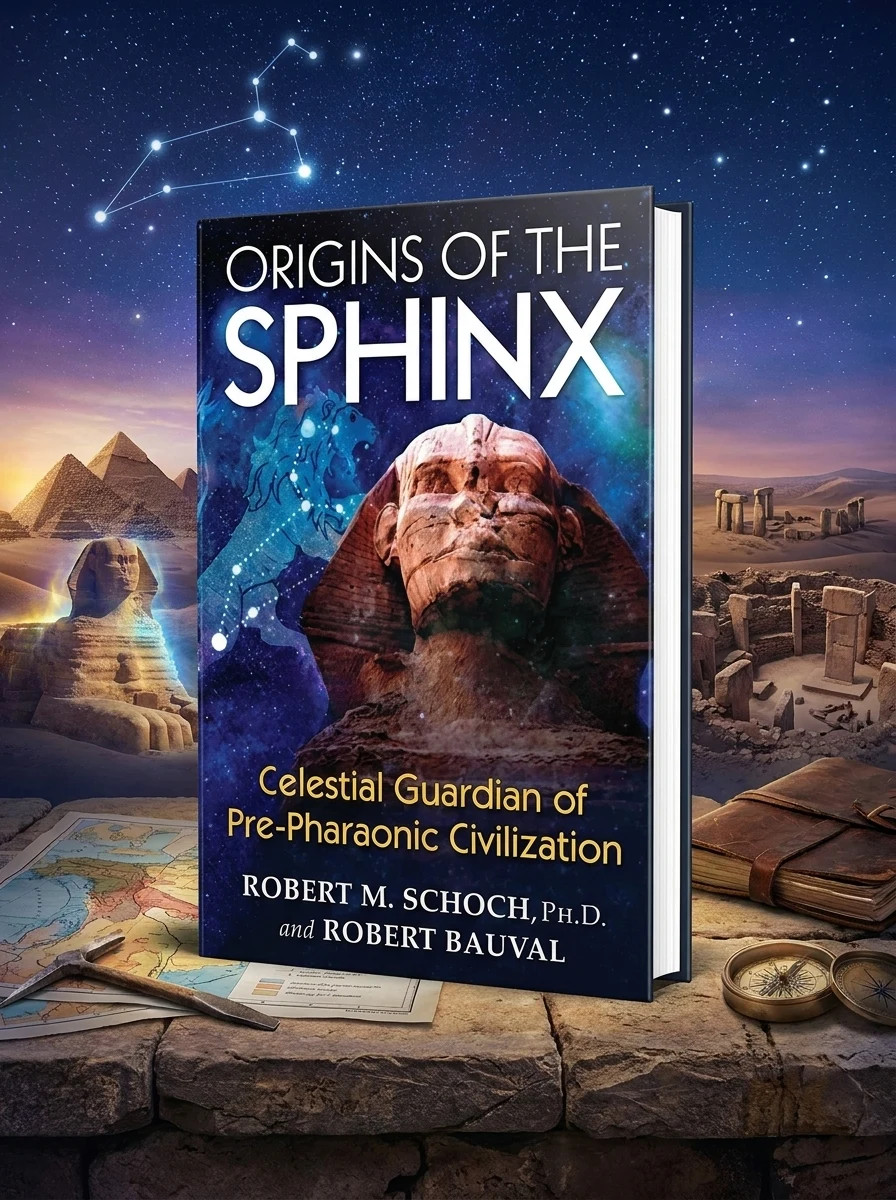
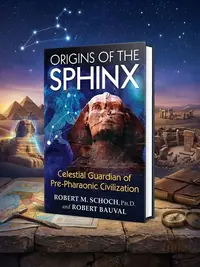
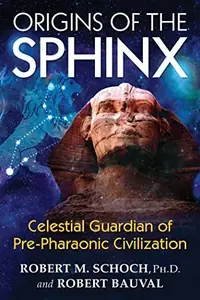
Origins of the Sphinx: Celestial Guardian of Pre-Pharaonic Civilization

Schoch, Robert M; , Bauval, Robert
Reader rating
4.8
(1 reviews) 75 sold
Availability to be confirmed

This edition can be ordered. No arrival date is confirmed.

📚 ABOUT THE BOOK

Unearth the true, ancient origins of the Sphinx, far beyond conventional history.

This groundbreaking collaboration by Robert M. Schoch and Robert Bauval radically re-dates the Great Sphinx of Giza. Challenging orthodox Egyptology, they present compelling multidisciplinary evidence, from geological analyses of water weathering to astronomical alignments, arguing the Sphinx is thousands of years older than currently accepted. The authors connect its construction to a pre-Pharaonic civilization, possibly contemporaneous with Göbekli Tepe, aligning it with the constellation Leo during a period known as Zep Tepi. This book invites readers to reconsider the timeline of ancient Egypt and the sophistication of its earliest builders.

Key themes
Cosmic Alignment Mysteries Geological Age Markers
Historical context

This work sits at the intersection of alternative archaeology and esoteric history, challenging mainstream Egyptological narratives through geological and astronomical analysis. It appeals to readers interested in pre-Pharaonic civilizations and the mythic age known as Zep Tepi.


Difficulty
●● Moderate
Fans will love it
Erich von Däniken · John Anthony West · Graham Hancock
🕯️ Occult Philosophy
🏛 Inner Traditions International 📅 2017 📖 528 pages 📔 Paperback 📐 Paperback ISBN: 9781620555255
Fun fact
Schoch and Bauval's collaboration offers a meticulously argued, albeit controversial, re-evaluation of the Sphinx's origins. It excels in presenting compelling, multi-disciplinary evidence challenging mainstream Egyptology. Readers seeking confirmation of orthodox views will be disappointed, but those open to radical re-timings of history will find it immensely stimulating. It stands as a seminal work in alternative ancient history, forcing a re-examination of our collective past.

📝 Description: Origins of the Sphinx: Celestial Guardian of Pre-Pharaonic Civilization

New research and evidence that the Sphinx is thousands of years older than previously thought - Contrasts what Egyptologists claim about the Sphinx with historical accounts and new research including reanalysis of seismic studies and updates to Schoch's water weathering research and Bauval's Orion Correlation Theory - Examines how the Sphinx is contemporaneous with Göbekli Tepe, aligned with the constellation Leo, and was recarved during the Old Kingdom era of Egypt - Reveals that the Sphinx was built during the actual historical Golden Age of ancient Egypt, the period known in legend as Zep Tepi No other monument in the world evokes mystery like the Great Sphinx of Giza. It has survived the harsh climate of Egypt for thousands of years and will remain long after our own civilization is gone. According to orthodox Egyptology, the Sphinx was built around 2500 BCE as a memorial to the pharaoh Khafre. Yet this "fact" has scant to no supportive evidence. When was the Sphinx really built and, most importantly, why? In this provocative collaboration from two Egyptology outsiders, Robert M. Schoch, Ph. D., and Robert Bauval combine their decades of research to show how the Sphinx is thousands of years older than the conventional Egyptological timeline and was built by a long forgotten pre-Pharaonic civilization. They examine the known history of the Sphinx, contrasting what Egyptologists claim with prominent historical accounts and new research, including updates to Schoch's geological water weathering research and reanalysis of seismic studies. Building on Bauval's Orion Correlation Theory, they investigate the archaeoastronomical alignments of the monuments of the Giza Plateau and reveal how the pyramids and Sphinx were built to align with the constellations of Orion and Leo. Analyzing the evidence for a significantly older construction phase at Giza and the restoration and recarving of the Sphinx during the Old Kingdom era, they assert that the Sphinx was first built by an advanced pre-Pharaonic civilization that existed circa 12,000 years ago on the Giza Plateau, contemporaneous with the sophisticated Göbekli Tepe complex. The authors examine how the monuments at Giza memorialize Zep Tepi, the Golden Age of legend shown here to be an actual historical time period from roughly 10,500 BCE through 9700 BCE. Moving us closer to an understanding of the true age and purpose of the Great Sphinx, Schoch and Bauval provide evidence of an early high civilization witnessed by the Great Sphinx before the end of the last ice age.

💎 Expert review

💎
Esoterica Books editorial team
Occult literature desk
Schoch and Bauval present a bold challenge to orthodox Egyptology, using geological and astronomical data to argue for a pre-Pharaonic origin of the Sphinx. While the evidence is presented with conviction, readers expecting traditional academic consensus will likely find this work frustratingly revisionist. It does not suit those who prefer established historical narratives or are skeptical of interdisciplinary hypotheses. However, for enthusiasts of alternative archaeology and esoteric history, it offers a provocative re-examination of ancient timelines and celestial alignments. The book is best appreciated as a thought-provoking exploration rather than definitive proof, appealing to those willing to question the accepted chronology of one of the world's most iconic monuments.
✓ EDITOR'S REVIEW

📖 Why choose it

📖

Why this book is worth reading

You should read this if you are fascinated by the mysteries of ancient Egypt and suspect that conventional history may have overlooked significant details. This book offers a compelling, multidisciplinary argument for a much older Sphinx, supported by geological evidence of water weathering and astronomical alignments with the constellation Leo. It is ideal for those who enjoy deep dives into alternative theories about pre-Pharaonic civilizations and their potential sophistication. If you are open to rethinking the timeline of human development and exploring connections to sites like Göbekli Tepe, this collaboration provides a rigorous, albeit controversial, perspective that will expand your understanding of ancient guardianship and celestial significance.

⭐ Reader reviews

The starting rating comes from the team Esoterica Books —
⭐ Esoterica editorial review Editorial rating 4.8/5
★★★★
If you question established historical narratives and seek deeper truths about humanity's past, or if the Sphinx's enigmatic gaze has always captivated you, this book offers a compelling alternative perspective that challenges conventional Egyptology.

Reader rating

4.8
Based on 1 reviews
5
0
4
1
3
0
2
0
1
0
E
Esoterica Books editorial team

Schoch and Bauval present a bold challenge to orthodox Egyptology, using geological and astronomical data to argue for a pre-Pharaonic origin of the Sphinx. While the evidence is presented with conviction, readers expecting traditional academic consensus will likely find this work frustratingly revisionist. It does not suit those who prefer established historical narratives or are skeptical of interdisciplinary hypotheses. However, for enthusiasts of alternative archaeology and esoteric history, it offers a provocative re-examination of ancient timelines and celestial alignments. The book is best appreciated as a thought-provoking exploration rather than definitive proof, appealing to those willing to question the accepted chronology of one of the world's most iconic monuments.

❓ Frequently asked questions

Schoch and Bauval assert the Sphinx is thousands of years older than orthodox Egyptology claims, dating back to a pre-Pharaonic era, possibly around 10,000 BCE, based on geological and astronomical evidence.
They combine geological studies, particularly water erosion patterns on the Sphinx enclosure, with astronomical alignments, including the Orion Correlation and the Sphinx's alignment with Leo in the distant past.

📖 Who should read this

If you question established historical narratives and seek deeper truths about humanity's past, or if the Sphinx's enigmatic gaze has always captivated you, this book offers a compelling alternative perspective that challenges conventional Egyptology.

🎯 Key themes and symbolism

Cosmic Alignment Mysteries

Building on the Orion Correlation Theory, the authors explore how the Sphinx and the Giza plateau's monuments were designed with profound astronomical significance. They reveal the Sphinx's alignment with the constellation Leo during a specific ancient epoch, suggesting an advanced understanding of celestial mechanics and its integration into monumental architecture.

Geological Age Markers

Central to the argument is the extensive water erosion evident on the Sphinx and its enclosure walls, a phenomenon inconsistent with the arid climate of 2500 BCE. Schoch's reanalysis of seismic data and geological surveys provides compelling evidence for a much earlier construction date, when heavy rainfall would have caused such weathering.

💬 Quotes from the book

“The undeniable water erosion patterns visible on the Sphinx and its enclosure walls speak of millennia of rainfall, a climate vastly different from the arid desert we know today, pointing to an age far beyond dynastic Egypt.”

“When the sky was mapped to the earth, the Sphinx stood sentinel to a celestial epoch, aligning with Leo as Orion's belt mirrored the pyramids – a cosmic clock marking a forgotten civilization's Golden Age.”

📜 Historical context

This work stands firmly within a tradition of scholarship that challenges mainstream archaeological timelines, often associated with concepts of 'lost civilizations' and 'out-of-place artifacts.' It directly confronts established Egyptology, reigniting debates around legendary periods like Zep Tepi, the 'First Time,' and suggesting a far more complex and ancient origin for humanity's monumental achievements.

📚 Glossary

Zep Tepi
Orion Correlation Theory
Pre-Pharaonic

📔 Questions to reflect on

  1. How does challenging the accepted timeline of ancient Egypt impact your understanding of human history and technological development?
  2. If the Sphinx truly predates dynastic Egypt, what implications does this have for our perception of 'lost civilizations'?
  3. Consider the role of 'outsider' theories in academic fields. When is it valuable to question established paradigms, and what are the challenges?

🏛 Books from this publisher Inner Traditions International

All books from this publisher →

You might also like

See more →