US shipping Secure card payment Occult and esoteric books

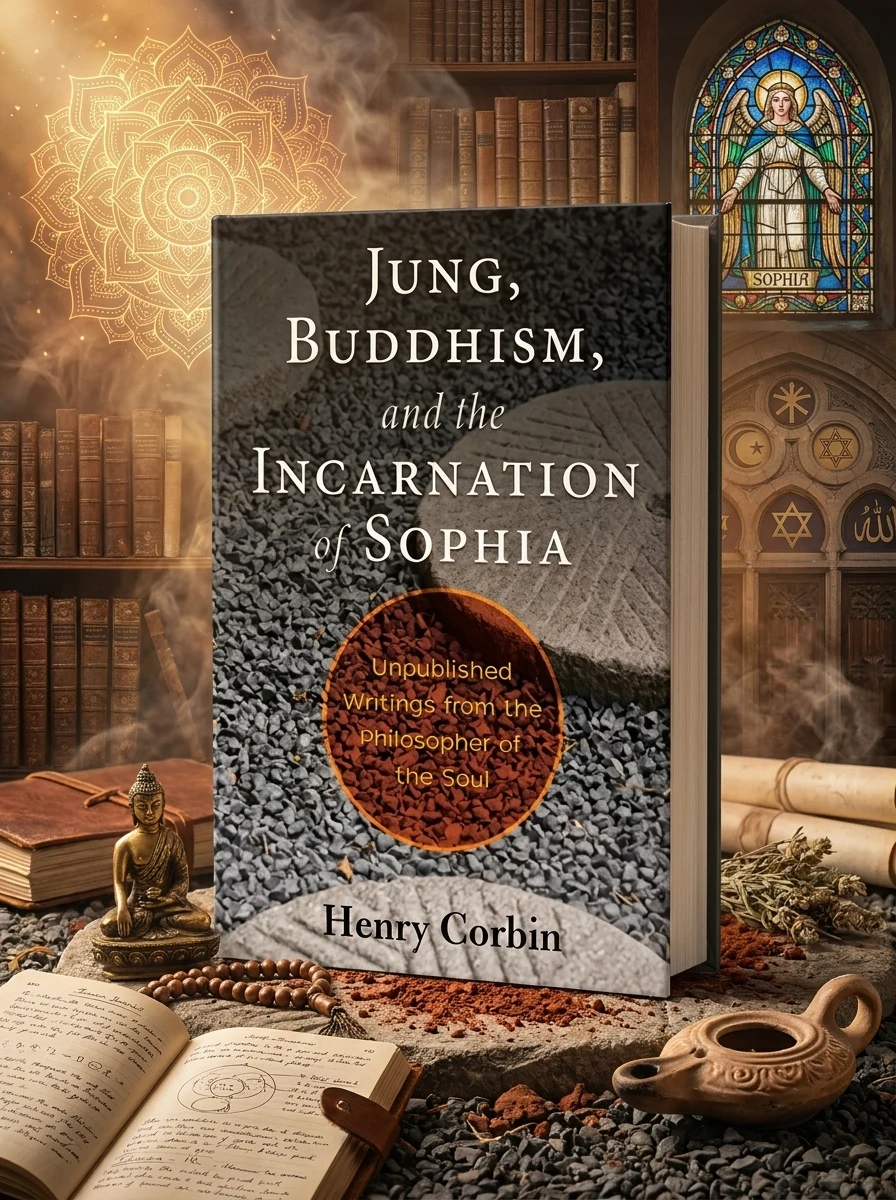
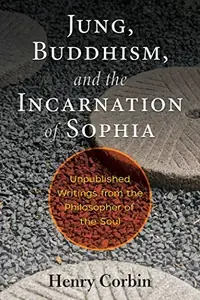
Jung, Buddhism, and the Incarnation of Sophia: Unpublished Writings from the Philosopher of the Soul

Corbin, Henry
Reader rating
4.7
(1 reviews) 87 sold
Availability to be confirmed

This edition can be ordered. No arrival date is confirmed.

📚 ABOUT THE BOOK

Unearth the hidden spiritual currents linking Jung, ancient Sophia, and profound Eastern wisdom.

This compelling collection unveils previously unreleased insights from Henry Corbin, a seminal 20th-century philosopher. It meticulously explores the profound spiritual underpinnings of Carl Jung's psychoanalytic theories, drawing illuminating parallels with Eastern religious traditions, particularly esoteric Buddhist practices, and the transformative path of Sufi mysticism. Corbin delves into the pivotal role of the Gnostic Sophia, especially in the context of Jung's challenging essay "Answer to Job." By bridging these diverse spiritual landscapes, the work reveals a shared esoteric heritage connecting Islam, Judaism, Christianity, and Buddhism, offering a unique perspective on inner exploration.

Key themes
Sophia and Jungian Thought Eastern Mysticism & Jung
Historical context

This volume sits at the intersection of 20th-century phenomenological philosophy and comparative esoteric studies, bridging Western psychoanalysis with Eastern mysticism and Gnostic theology. It represents a critical moment in the dialogue between Jungian psychology and perennialist thought.


Difficulty
●●● Demanding
Fans will love it
Carl Jung's 'Answer to Job' · Henry Corbin's other works on Islamic mysticism · Gnostic texts featuring Sophia · Comparative religion studies
🕯️ Occult Philosophy
🏛 Inner Traditions International 📅 2019 📖 208 pages 📔 Paperback 📐 Paperback ISBN: 9781620557396
Fun fact
This is an indispensable addition for serious scholars of Jung, comparative religion, and mystical philosophy. Corbin masterfully illuminates the hidden spiritual currents underlying Jung's work, offering unparalleled depth in his synthesis of Eastern mysticism and Gnostic wisdom. While its dense, scholarly nature may deter casual readers, those seeking a profound intellectual and spiritual journey will find it immensely rewarding. It firmly establishes itself as a cornerstone text in esoteric studies.

📝 Description: Jung, Buddhism, and the Incarnation of Sophia: Unpublished Writings from the Philosopher of the Soul

Examines the work of Carl Jung in relation to Eastern religion, the wisdom teachings of the Sophia, Sufi mysticism, and visionary spirituality - Reveals the spiritual values underlying the psychoanalytic theories of Carl Jung - Explores the role of the Gnostic Sophia with respect to Jung's most controversial essay, "Answer to Job" - Presents new revelations about Sufi mysticism and its relationship to esoteric Buddhist practices - Shows how the underlying spiritual traditions of Islam, Judaism, and Christianity mesh with the spiritual teachings of Buddhism Henry Corbin (1903-1978) was one of the most important French philosophers and orientalists of the 20th century. In this collection of previously unpublished writings, Corbin examines the work of Carl Jung in relationship to the deep spiritual traditions of Eastern religion, the esoteric wisdom teachings of Sophia, the transformational symbolism of alchemy, and Sufi mysticism. Looking at the many methods of inner exploration in the East, including the path of the Sufi and Taoist alchemy, Corbin reveals how the modern Western world does not have its own equivalent except in psychotherapy. Expanding Jung's findings in light of his own studies of Gnostic and esoteric Islamic traditions, he offers a unique insight into the spiritual values underlying Jung's psychoanalytic theories. Corbin analyzes Jung's works on Buddhism, providing his own understanding of the tradition and its relationship to Sufi mysticism, and explores the role of the Gnostic Sophia with respect to Jung's most controversial essay, "Answer to Job." He also studies the rapport between the Gnostic wisdom of Sophia and Buddhist teachings as well as examining Sophia through the lens of Jewish mysticism. Explaining how Islamic fundamentalists have turned their back on the mystic traditions of Sufism, Corbin reveals how totalitarianism of all kinds threatens the transformative power of the imagination and the transcendent reality of the individual soul. He shows how the underlying spiritual traditions of Islam, Judaism, and Christianity mesh with the spiritual teachings of Buddhism and reinforce the unity of the esoteric teachings of the world's great religions. Comparing the imaginal realm with Jung's archetypal field, he shows how we could transform the world by spiritualizing Jung's methods, enabling us to transcend duality and make the created world divine.

💎 Expert review

💎
Esoterica Books editorial team
Occult literature desk
Corbin’s compilation is a dense, scholarly treasure for those willing to navigate complex philosophical terrain. It successfully illuminates the Gnostic Sophia’s role in Jung’s 'Answer to Job' while weaving together Sufi and Buddhist threads into a cohesive esoteric narrative. However, readers seeking accessible self-help advice or straightforward psychoanalytic summaries will likely find this text overly abstract and academically rigorous. It demands patience and a prior familiarity with comparative religion. Those looking for light reading or practical spiritual exercises should look elsewhere; this is strictly for the serious student of occult philosophy.
✓ EDITOR'S REVIEW

📖 Why choose it

📖

Why this book is worth reading

Readers deeply invested in the synthesis of psychology and spirituality will find this collection indispensable. It offers a rare, previously unseen glimpse into Henry Corbin’s intellectual landscape, specifically his nuanced interpretation of Carl Jung’s work through the lens of Sophia and esoteric Buddhism. Those seeking to understand the hidden spiritual currents connecting Islam, Judaism, Christianity, and Buddhism will appreciate the meticulous exploration of these shared esoteric heritages. It is ideal for scholars and seekers who wish to transcend conventional boundaries between psychoanalysis and mysticism, providing a transformative perspective on inner exploration that honors the profound depths of the human soul.

⭐ Reader reviews

The starting rating comes from the team Esoterica Books —
⭐ Esoterica editorial review Editorial rating 4.7/5
★★★★
If you're a student of Jungian psychology, a seeker of mystical traditions, or someone fascinated by the esoteric connections between world religions, this book will deeply enrich your understanding. Prepare to journey into the shared spiritual heart of East and West.

Reader rating

4.7
Based on 1 reviews
5
0
4
1
3
0
2
0
1
0
E
Esoterica Books editorial team

Corbin’s compilation is a dense, scholarly treasure for those willing to navigate complex philosophical terrain. It successfully illuminates the Gnostic Sophia’s role in Jung’s 'Answer to Job' while weaving together Sufi and Buddhist threads into a cohesive esoteric narrative. However, readers seeking accessible self-help advice or straightforward psychoanalytic summaries will likely find this text overly abstract and academically rigorous. It demands patience and a prior familiarity with comparative religion. Those looking for light reading or practical spiritual exercises should look elsewhere; this is strictly for the serious student of occult philosophy.

❓ Frequently asked questions

While insightful, the depth of its philosophical and mystical concepts might be challenging for those entirely new to Jung or comparative religion. A basic familiarity with these subjects would enhance your experience.
This collection compiles essays, lectures, and notes from Henry Corbin that have not previously appeared in print. They offer fresh perspectives and expand upon his known body of work, providing new insights into his ongoing research.

📖 Who should read this

If you're a student of Jungian psychology, a seeker of mystical traditions, or someone fascinated by the esoteric connections between world religions, this book will deeply enrich your understanding. Prepare to journey into the shared spiritual heart of East and West.

🎯 Key themes and symbolism

Sophia and Jungian Thought

Corbin illuminates the critical significance of the Gnostic wisdom figure, Sophia, within Jung's philosophical landscape. He particularly examines her connection to "Answer to Job," offering a fresh interpretation of Jung's engagement with the problem of evil and divine wisdom, and how this ancient feminine principle resonates with modern depth psychology.

Eastern Mysticism & Jung

The book draws intricate connections between diverse Eastern spiritual paths, including Sufism and esoteric Buddhist practices, and Jungian psychology. It highlights how these traditions offer potent methods of inner exploration, suggesting that Western psychotherapy, as pioneered by Jung, serves as a contemporary equivalent to these ancient spiritual disciplines.

💬 Quotes from the book

“The Western psyche, starved of its own profound spiritual disciplines, often finds its only echo of true inner exploration within the therapeutic dialogue, a phenomenon the East has long understood through its mystical paths.”

“To grasp the full revolutionary impact of Jung's 'Answer to Job,' one must journey beyond the theological and into the luminous, yet often shadowed, wisdom of Sophia, whose presence reshapes the very nature of divine justice.”

📜 Historical context

Henry Corbin, a pivotal 20th-century French philosopher and orientalist, was uniquely positioned to bridge Western and Eastern thought. His work builds upon a lineage of scholars who sought universal spiritual truths, deepening the cross-cultural dialogue initiated by figures like Jung himself. This collection exemplifies his lifelong dedication to unveiling the profound esoteric connections spanning millennia and continents.

📚 Glossary

Sophia
Sufism
Jungian Psychology

📔 Questions to reflect on

  1. How does understanding the spiritual roots of Jung's work change your perception of psychotherapy?
  2. In what ways do you see ancient spiritual traditions, like Gnosticism or Sufism, offering insights relevant to contemporary psychological well-being?
  3. Reflect on the concept of Sophia. How might integrating such a feminine principle of wisdom affect your worldview or spiritual practice?

🏛 Books from this publisher Inner Traditions International

All books from this publisher →
You might also like

See more →