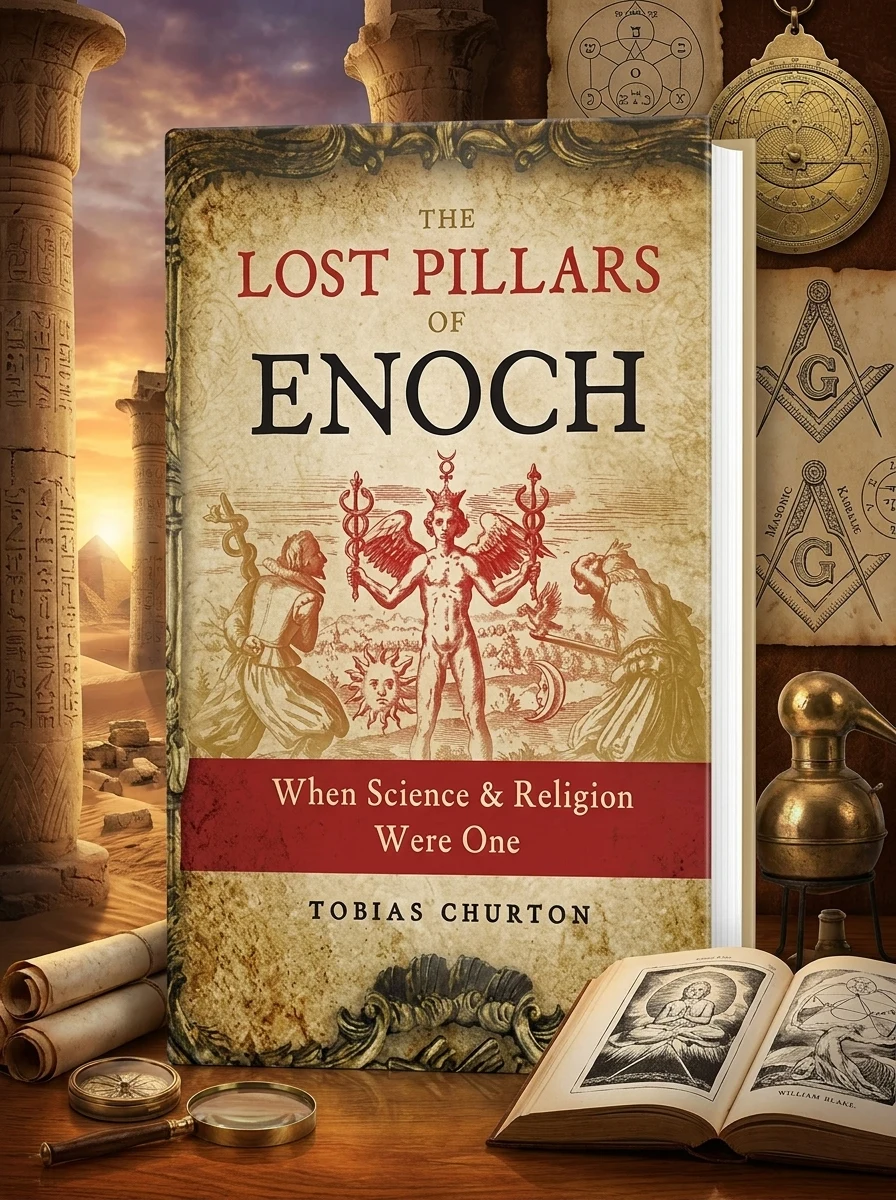
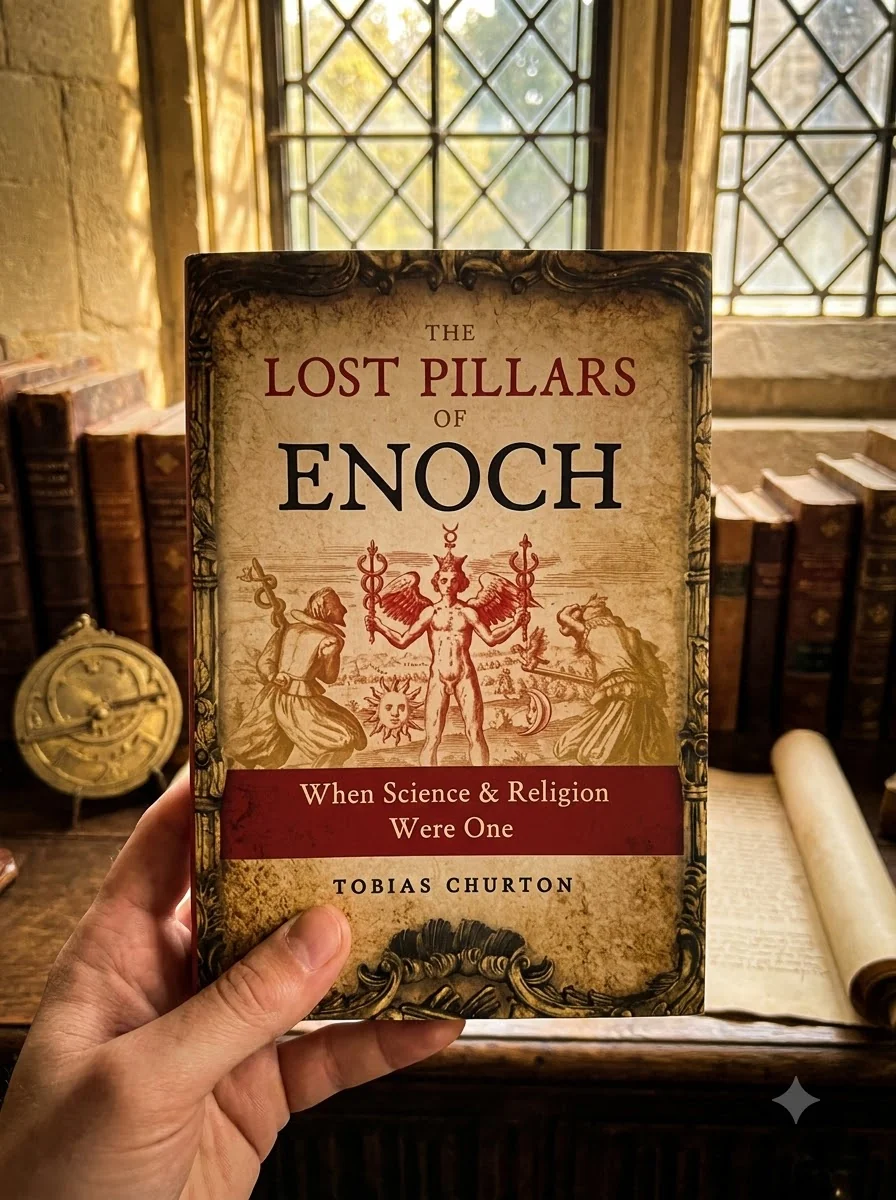
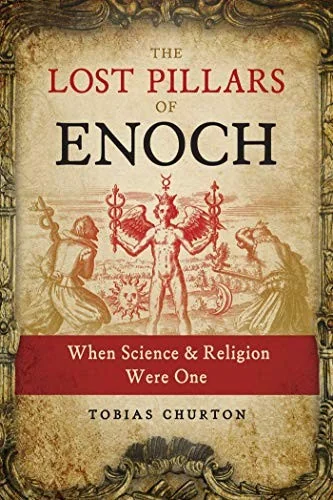
The Lost Pillars of Enoch: When Science and Religion Were One
✍️ Churton, TobiasTobias Churton masterfully explores the ancient concept of a unified science-religion, a profound spiritual grasp of the cosmos held by early civilizations. He delves into the enduring legend of Enoch's or Seth's Pillars, said to preserve this primordial knowledge from global catastrophe. Journey through the controversial origins of this tale, examining its deep Jewish and Egyptian roots, and witness its powerful resonance through the ages. This work unearths how these foundational ideas continued to shape diverse mystical traditions and philosophical thought across millennia, revealing a hidden intellectual lineage.


Praise for this book
“Highly informative, eye-opening, and uplifting, this book takes you on a provocative journey to discover the roots of human knowledge and fills you with hope that we may one day reattain our lost ancient heritage. Since my first encounter with Tobias Churton's work twenty years ago, I am still amazed by his ability to expertly untangle the complex threads of history.”
📝 Description: The Lost Pillars of Enoch: When Science and Religion Were One
📑 What's inside
- Provenance
- A Note about the Timing of This Book
- PART ONE The Lost Pillars in Antiquity
- ONE
- Saving Knowledge from Catastrophe: The World's First Archaeological Story
- The NephilimWhere Could Josephus's Surviving Pillar Be Found?
- TWO
- "Sethites" in Egypt?
- THREEEnoch and Hermes: Guardians of Truth
- Tracing the Myth The Emerald Tablet
- FOURA Sense of Loss Pervades The Fallen Gnostics: Return of the Sethites
- FIVE
- How Ancient Is the Ancient Theology?
- SIX
- A Concise History of Religion
- SEVEN
- From Apocalyptic to Gnosis--and Back to Religion
- PART TWO
- Hermetic Philosophy
- Seeking Concordance, or Reuniting the Fragments
- EIGHT
- The Unitive Vision
- Kabbalah Ramon Llull (1232-ca. 1316) 100The Alembic of Florence: Hermetic Philosophy Reborn
- NINE
- Restoring Harmony: From the Sun to Infinity
- Francesco Giorgi: Cosmic HarmonyCopernicusGiordano Bruno (1548-1600)
- TEN
- The Lost Pillars of Freemasonry
- Late Medieval Evidence for Antediluvian Pillars Antediluvian Masonry
- ELEVEN
- Esoteric Masonry and the Mystery of the "Acception"
- John Dee and Primal Mathematics
- TWELVE
- The Return of Enoch
- "Out of Egypt I Have Called My Son"
- THIRTEENEnter Isaac Newton
- FOURTEEN
- "A History of the Corruption of the Soul of Man"
- The Temple of Wisdom The Ancients Knew Already Newton and the "Daimon"
- FIFTEEN
- Antiquarianism: Stukeley and Blake
- Stukeley, Freemasonry, and the Prisca Sapientia
- SIXTEEN
- Blake and the Original Religion
- All Religions Are One
- SEVENTEENFrom the Enlightenment to Theosophy: Persistence of Antediluvian Unity of Science and Religion
- The Tradition Saint-Yves d'Alveydre The Secret Doctrine Problems with Theosophical Influence
- EIGHTEEN
- The Aim of Religion, the Method of Science: Aleister Crowley and Thelema
- Science and Antediluvian Mythology
- PART THREE Paradise Regained?
- NINETEEN
- Back to the One
- Essential Communion in Esoteric Systems Religion for the Future
- TWENTY
- Return of the Lost Pillar
- NOTES BIBLIOGRAPHY INDEX
💎 Expert review
📖 Why choose it
Why this book is worth reading
Readers fascinated by the intersection of science and spirituality will find this book a compelling exploration of humanity's forgotten wisdom. Churton invites you to uncover a time when these domains were perfectly entwined, offering a profound spiritual grasp of the cosmos held by early civilizations. If you are drawn to the enduring legend of Enoch's or Seth's Pillars and wish to understand how they preserved knowledge from catastrophe, this text is essential. It unearths a hidden intellectual lineage that shaped diverse mystical traditions across millennia, providing valuable context for those seeking to connect ancient roots with modern philosophical thought.
⭐ Reader reviews
Reader rating
Churton delivers a masterful account of the unified science-religion concept, tracing its Jewish and Egyptian origins through the ages. The narrative effectively reveals how foundational ideas continued to shape philosophical thought, making it a valuable resource for historians of esotericism. However, readers seeking empirical scientific data or strict theological dogma will find little here. This is not a guide for those who demand concrete historical proof over symbolic interpretation. It suits those open to mystical perspectives and the study of lost intellectual lineages rather than skeptics looking for definitive factual resolution in a traditional academic sense.
❓ Frequently asked questions
📖 Who should read this
If you're drawn to the interconnectedness of ancient mysteries, philosophy, and the hidden currents of human thought, this book is for you. It's a deep dive for seekers fascinated by the origins of esoteric traditions and the perennial quest for lost knowledge.
🎯 Key themes and symbolism
Ancient Unified Knowledge
This book posits a foundational era when humanity perceived the universe through a lens where scientific inquiry and spiritual understanding were not separate but intrinsically linked. It explores the notion that our earliest ancestors possessed a holistic worldview, seeing divine order within natural law and spiritual truth within empirical observation, a stark contrast to modern dichotomies.
The Pillars of Primordial Wisdom
Central to the narrative is the legendary account of Seth's descendants inscribing sacred knowledge onto two pillars to safeguard it from impending cataclysm. Churton meticulously investigates the historical and mythological foundations of this story, examining how these 'Lost Pillars of Enoch' became potent symbols for the preservation and transmission of profound, universal truths across generations.
Hermeticism's Enduring Legacy
The text traces the pervasive influence of this ancient, unified wisdom, particularly through the stream of Hermetic philosophy. It reveals how Hermetic principles, often associated with figures like Enoch and Thoth, became foundational to a vast array of esoteric currents including Gnosticism, Kabbalah, Rosicrucianism, Freemasonry, and even influenced seminal figures like Isaac Newton and the Theosophists.
📜 Historical context
📚 Glossary
- Hermetism
- Gnosticism
- Enoch/Hermes Trismegistus
📔 Questions to reflect on
- How might our understanding of the universe change if science and spirituality were still considered two facets of the same truth?
- Reflect on a piece of ancient wisdom or mythology. What 'lost knowledge' might it be trying to convey to us today?
- Consider the various traditions mentioned (Hermetism, Gnosticism, Masonry). What common threads do you perceive in their pursuit of ultimate knowledge?