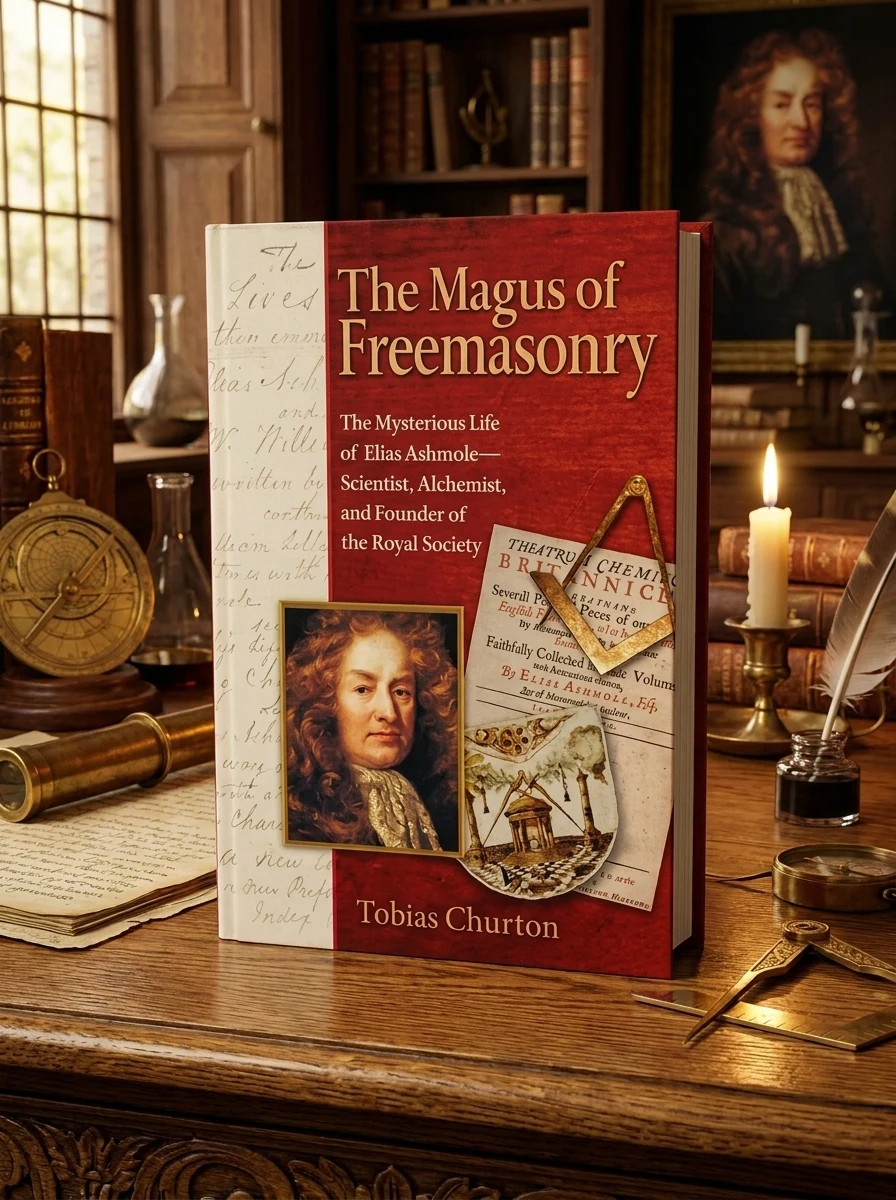
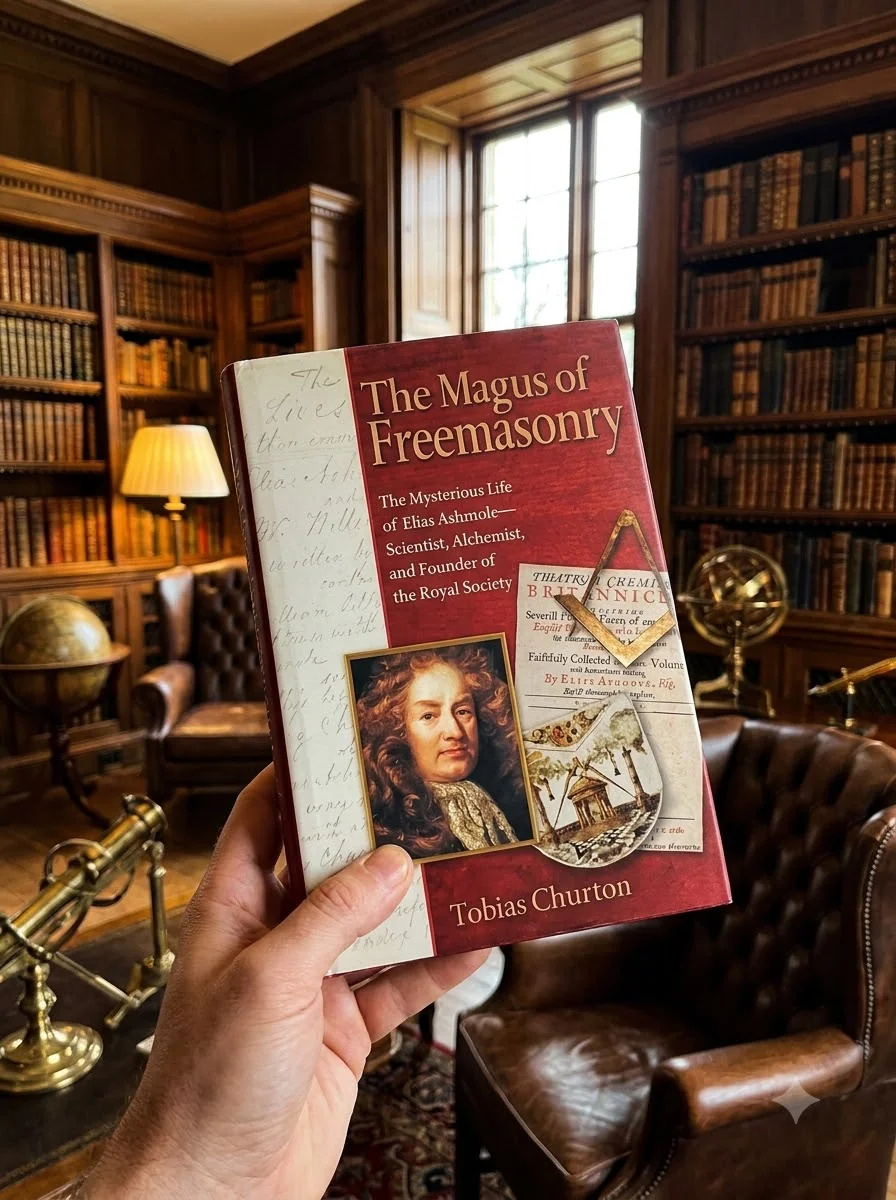
The Magus of Freemasonry: The Mysterious Life of Elias Ashmole--Scientist, Alchemist, and Founder of the Royal Society
✍️ Churton, TobiasElias Ashmole, a pivotal 17th-century polymath, emerges as the definitive link between traditional craft guilds and the symbolic Freemasonry we know today. This biography unveils his life as an alchemist, astrologer, Royal Society founder, and museum creator, revealing how occult studies profoundly influenced early modern science. Churton reclaims Ashmole's rightful place, ignored by conventional history, as a true Renaissance magus whose intellectual curiosity knew no bounds, offering a fresh perspective on the origins of scientific inquiry and esoteric traditions.


Praise for this book
“Reads like an adventure novel. Ashmole was one of the leading intellectual and spiritual lights of the time, an accomplished alchemist, and close friend to some of the most brilliant men in England. Churton has given us a compelling picture of Ashmole's life, the city in which he lived, and the guild structure of the time.”
📝 Description: The Magus of Freemasonry: The Mysterious Life of Elias Ashmole--Scientist, Alchemist, and Founder of the Royal Society
📑 What's inside
- Acknowledgements
- Introduction: Ex Uno Omnia The Great Man
- The Magus
- The Hermetic Magus
- Alchemy
- Lichfield
- C.H. Josten
- One: The Coming One The Ashmoles
- Formative Influences
- Mother
- Two: Lichfield--the Hidden Light of England St. Chad and the Origins of Lichfield
- Gaia
- Childhood
- Three: London Calling
- Four: War Astrology
- The Intelligencer
- Ashmole's Persona
- Defending Oxford
- Dreams and Spires
- Women
- Worcester
- Five: Defeat and Rebirth: Freemasonry
- Free Masonry
- Secret Signs
- Six: Return to London
- Women Again
- Lady Mainwaring
- Seven: The 1650s (I): The Philosopher's Stone
- Ex Uno Omnia Fasciculus Chemicus
- One Hieroglyph--New Being
- The Theatre of British Chemistry
- Ashmole and the Rosicrucians
- The Rose Cross Fraternity
- A Gathering Reputation
- The Way to Bliss
- Eight: The 1650s (ii): Study to Be Quiet Secret Work
- A Journey to Staffordshire
- Contemplative Men and Antiquarian Recreation
- The Tradescant Deed of Gift
- Nine: The Windsor Herald The Royal Society
- The Antiquarian
- The Masterpiece
- Astro-Politics
- Ten: Lichfield--the Reconstruction
- Restaurator
- The Loving Cup
- Our Magus
- Ashmole's Politics
- Bills, Bills, and More Bills
- Ashmole and the Mason's Company
- The Origins of Freemasonry
- Eleven: The Museum The Tradescant Rarities
- The Ashmolean
- "Those Fatall Flames"
- Twelve: Coming Home
- Saving Dee
- Sendivogius, Kelley, and Dee
- Toward Home
- Postscript
- Notes Bibliography Index
Showing the first 60 entries.
💎 Expert review
📖 Why choose it
Why this book is worth reading
Readers fascinated by the hidden currents of history will find this biography illuminating and deeply rewarding. It is perfect for those who suspect that the origins of modern science are inextricably linked to alchemy, astrology, and secret societies rather than purely rationalist frameworks. By reclaiming Elias Ashmole’s place as a true Renaissance magus, the book offers a fresh perspective on how intellectual curiosity knew no bounds in the 17th century. If you enjoy uncovering forgotten architects of knowledge who bridged ancient mysticism with emerging empirical methods, this text provides a necessary correction to conventional historical narratives. It is an essential read for understanding the symbolic Freemasonry we know today and its roots in traditional craft guilds.
⭐ Reader reviews
Reader rating
Churton delivers a compelling reclamation of Elias Ashmole’s legacy, effectively dismantling the notion that occultism and science were mutually exclusive during the Enlightenment. The narrative successfully bridges the gap between ancient mysticism and modern scientific inquiry, offering a vivid portrait of a polymath whose interests were truly boundless. However, readers seeking a dry, strictly academic historiography devoid of esoteric interpretation may find the focus on Ashmole’s alchemical and astrological pursuits distracting or overly sympathetic to hermetic traditions. This book is best suited for those open to interdisciplinary approaches that honor the spiritual dimensions of early modern intellectual life.
❓ Frequently asked questions
📖 Who should read this
If you're fascinated by the hidden currents of history, the esoteric roots of science, or the true origins of Freemasonry, this book is essential. It offers a nuanced portrait of a figure whose legacy profoundly shaped both the Royal Society and secret societies.
🎯 Key themes and symbolism
Freemasonry's Hidden Origins
This work meticulously traces how Elias Ashmole's initiation into Accepted Freemasonry illuminates the transition from practical, "operative" stonemason guilds to the philosophical, "speculative" brotherhood. It highlights his unique perspective, showing how symbolic elements were already embedded within the trade bodies, rather than being a later addition.
Occultism & Early Science
Explore how figures like Ashmole embodied the "magus" ideal, integrating alchemical, astrological, and magical studies directly into the nascent scientific method. The book reveals the profound, often overlooked, influence of esoteric thought on the foundational members of the Royal Society, challenging modern divisions between science and spirituality.
The Renaissance Magus
Churton vividly portrays Ashmole as the quintessential Renaissance intellectual—a polymath who effortlessly blended diverse fields. This concept of the "magus" represents an integrated worldview, contrasting sharply with later Cartesian philosophy, where the pursuit of knowledge encompassed both empirical observation and profound spiritual inquiry into the cosmos.
📜 Historical context
📚 Glossary
- Operative Freemasonry
- Speculative Freemasonry
- Magus
📔 Questions to reflect on
- Consider how the historical integration of occult studies and science in figures like Ashmole challenges contemporary divisions between these fields.
- Reflect on the significance of secret societies like early Freemasonry in preserving or transmitting knowledge during periods of intellectual transition.
- How might our understanding of "progress" and "enlightenment" change if we fully acknowledge the influence of esoteric thought on foundational scientific minds?