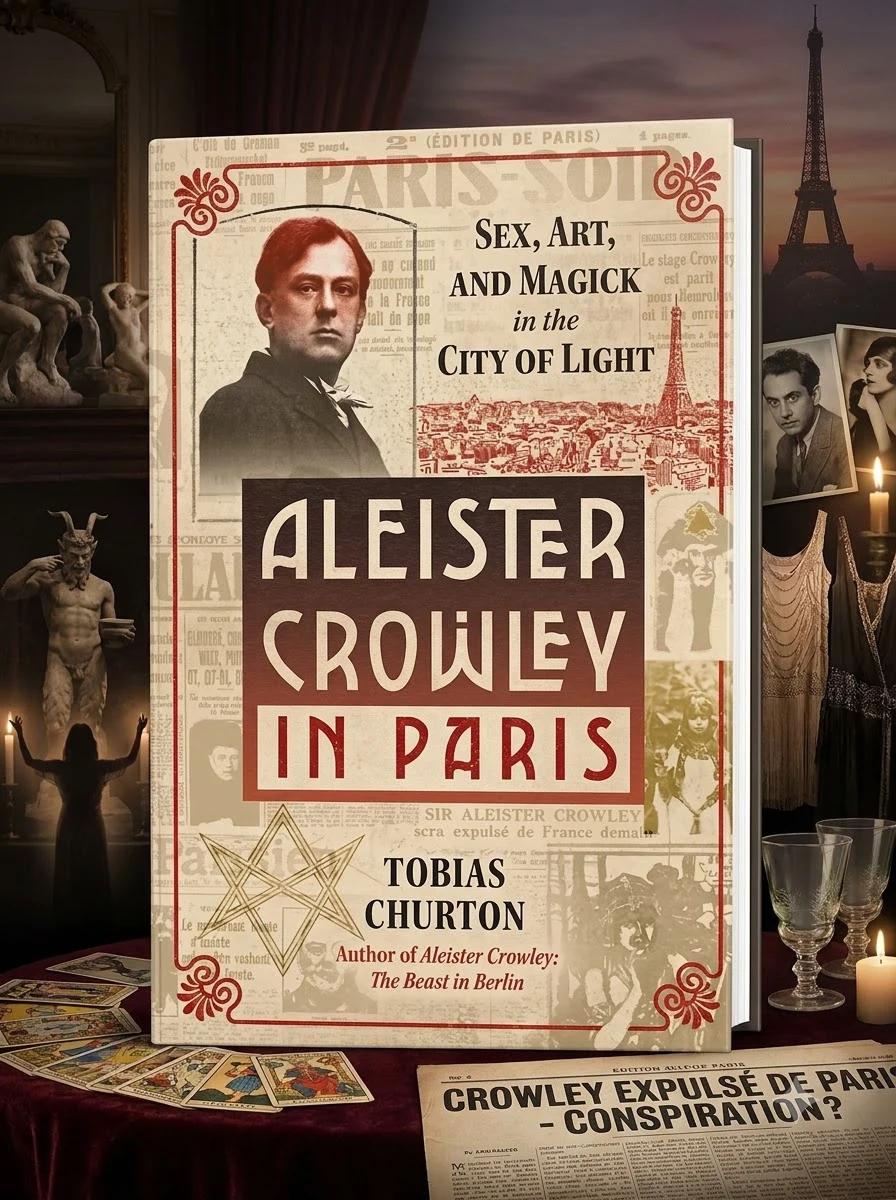
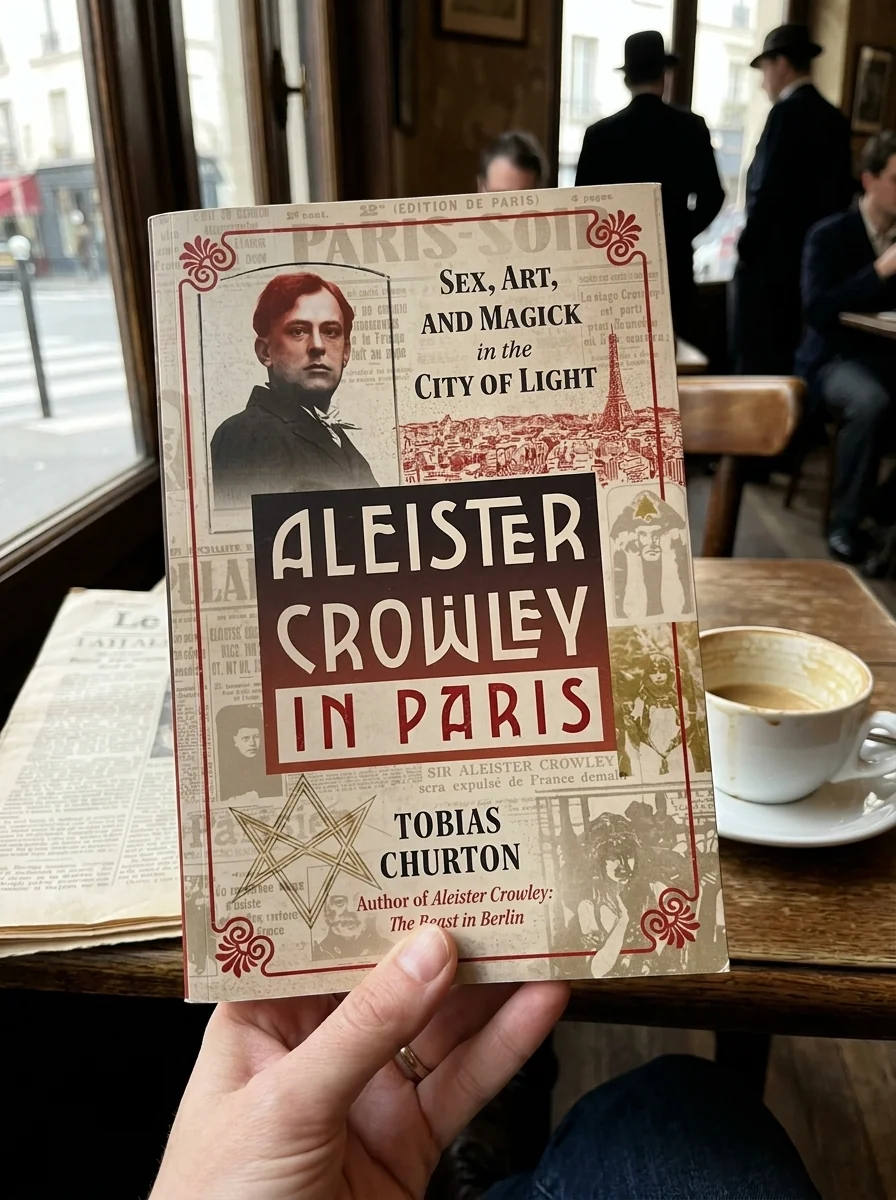
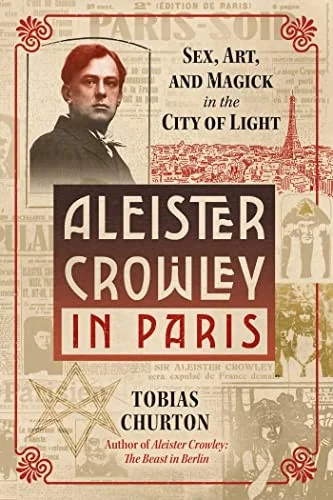
Aleister Crowley in Paris: Sex, Art, and Magick in the City of Light
✍️ Churton, TobiasTobias Churton meticulously chronicles Aleister Crowley's intricate three-decade connection with Paris, a city that profoundly shaped his magickal and artistic evolution. Drawing on previously unexamined personal archives, this biography illuminates Crowley's immersion in Belle Époque artistic circles, his later interactions with avant-garde figures of the 1920s, and the controversies surrounding his occult practices. Churton also critically investigates the sensational claims of "raising Pan" and "gay sex magick," offering a fresh perspective on Crowley’s dramatic expulsion from the city in 1929, suggesting a deeper, conspiratorial undercurrent.


Praise for this book
“This final installment of Churton's expansive and detailed exposition on Aleister Crowley's life, work, and milieu is a treasure trove of new information and startling revelations. Scrupulously researched and exquisitely written, Churton's complete six-volume biography of Crowley confirms his position as one of the most insightful, respected, and eloquent scholars on Frater Perdurabo to ever put pen to paper . Aleister Crowley in Paris is a delight.”
📝 Description: Aleister Crowley in Paris: Sex, Art, and Magick in the City of Light
📑 What's inside
- FOREWORD by Frank van Lamoen
- ACKNOWLEDGMENTS
- ONE
- Sir Aleister Crowley Will Be Expelled from France Tomorrow
- TWO
- One Flame 1883-1898
- Mathers in Paris Mina Mathers and Annie Horniman
- THREE
- The Road to Auteuil 1898-1900
- FOUR
- Toward the City of Light
- Gerald Kelly
- FIVE
- Paris, November 1902
- SIX
- Old Threads and New 1902-1903
- Eileen Gray and Friends The Star and the Garter Nina Olivier
- SEVEN
- Where Soul and Spirit Slip 1903
- To Nice
- EIGHTRodin
- NINE
- Le Chat Blanc
- The Upper Room Maugham on Crowley
- TEN
- I Piped When You Danced
- A Khan in the City of Light Return to Paris-Alone
- ELEVEN
- Adonai 1907-1908
- Paris, 1908
- TWELVE
- John St. John, or Aleister Crowley's Great Magical Retirement, 1908
- The Thirteen Days
- THIRTEENRagged and Wilde 1909-1913
- Covering Embarrassment
- FOURTEEN
- Fiery Arrows 1914
- Dennis Wheatley and the Legend of Raising Pan in Paris
- FIFTEEN
- The Fool Is a Card 1920
- SIXTEENSpiritual Poison 1921-1923
- SEVENTEEN
- I Died 1924
- EIGHTEENMan Is a Gambler 1925-1927 284
- NINETEEN
- The Mortal Kiss 1928
- Retirement--May 24-August 29, 1928
- TWENTYRefus de séjour 1929
- TWENTY-ONE
- The Last Time He Saw Paris 1929-1930
- The Last Dash
- NOTES BIBLIOGRAPHY INDEX
💎 Expert review
📖 Why choose it
Why this book is worth reading
Readers deeply fascinated by the hidden layers of Parisian history and the complex persona of Aleister Crowley will find this book indispensable. Churton’s meticulous research offers a fresh, grounded perspective on Crowley’s artistic and magickal evolution during his time in France. This biography is particularly rewarding for those tired of sensationalist myths, as it critically investigates controversial claims with scholarly rigor. It appeals to scholars of the Belle Époque and avant-garde movements who wish to understand the conspiratorial undercurrents that led to Crowley’s expulsion. By illuminating his immersion in artistic circles, this text provides a nuanced portrait of a controversial figure, making it essential for anyone seeking to separate historical fact from legend in the realm of Western esotericism.
⭐ Reader reviews
Reader rating
Tobias Churton delivers a comprehensive and well-researched account that effectively disentangles Crowley’s life from the surrounding sensationalism. The use of previously unexamined archives adds significant value for serious students of Thelema and French cultural history. However, this book is not suitable for casual readers seeking light entertainment or those who prefer purely mythological treatments of occult figures. It may also disappoint individuals looking for a straightforward hagiography, as the author critically examines controversial aspects rather than glorifying them. Those uninterested in the intersection of art, scandal, and magickal theory might find the detailed analysis dense. Ultimately, it is a vital resource for dedicated enthusiasts but lacks the accessibility required for a broader general audience unfamiliar with esoteric contexts.
❓ Frequently asked questions
📖 Who should read this
If you're fascinated by the enigmatic life of Aleister Crowley, particularly his lesser-known European escapades, or if you're drawn to the intersection of occultism, art, and bohemian culture in early 20th-century Paris, this book offers an essential, meticulously researched account.
🎯 Key themes and symbolism
Parisian Bohemian Encounters
Explore Crowley's deep entanglement with the vibrant artistic and intellectual currents of Paris, from his early association with Auguste Rodin and the Salon d'Automne to his later engagement with luminaries like Man Ray and André Gide during the roaring twenties. The book details his social life and creative collaborations.
Magick and Scandal in Montparnasse
Delve into the notorious tales surrounding Crowley's occult workings in the City of Light, including the infamous "raising Pan" incident and the exploration of "gay sex magick." Churton critically examines these sensational narratives, providing context and re-evaluating their historical accuracy and significance within Crowley's broader magical system.
Political Intrigue and Expulsion
Uncover the political machinations and alleged conspiracies that led to Crowley's dramatic departure from Paris in 1929. This work posits that his "expulsion" was not merely a personal failing but rather the result of a concerted, high-level effort to remove the controversial figure from the French capital, hinting at broader geopolitical tensions.
📜 Historical context
📚 Glossary
- Belle Époque
- Golden Dawn
- Thelema
📔 Questions to reflect on
- How might the vibrant, permissive atmosphere of early 20th-century Paris have influenced Aleister Crowley's development of Thelema and his approach to magick?
- Consider the interplay between artistic movements (like those around Rodin or the 1920s avant-garde) and esoteric practices. How do they mutually inform or challenge each other, as seen in Crowley's life?
- If Crowley's 1929 expulsion from Paris was indeed a "high-level conspiracy," what does this suggest about the perceived threat of occult figures to established power structures at the time?