
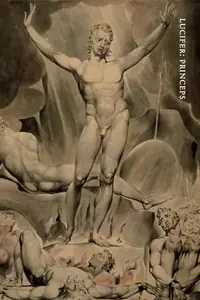
Lucifer: Princeps


Stock reported in the catalog; fulfillment is confirmed with your request.
Unearth the primal genesis of Lucifer, architect of Western esotericism.
Peter Grey's "Lucifer: Princeps" embarks on a profound journey into the foundational myths surrounding the enigmatic figure of Lucifer. This initial volume meticulously traces his historical and theological evolution, positioning him not merely as a symbol of defiance but as a pivotal archetype within Western occult traditions. Drawing extensively from ancient texts, archaeological findings, and contemporary scholarship, Grey illuminates the underlying principles that shaped countless magical practices. It offers an essential exploration for anyone seeking to understand the deep, often hidden, roots of forbidden knowledge and spiritual rebellion.
Peter Grey's work serves as a foundational text within Western esotericism and the Thelemic tradition, recontextualizing Lucifer not merely as a theological antagonist but as a pivotal archetype in magical history.


📝 Description: Lucifer: Princeps
💎 Expert review
📖 Why choose it
Why this book is worth reading
This volume is an essential exploration for those seeking to understand the deep, often hidden roots of forbidden knowledge and spiritual rebellion. It is designed for serious students of occultism who wish to unearth the primal genesis of Lucifer as the architect of Western esoteric practices. By tracing his historical and theological evolution through ancient texts and contemporary scholarship, Grey illuminates the underlying principles that shaped countless magical rituals. Readers will gain a profound appreciation for Lucifer’s role not just as a symbol of defiance, but as a central figure in the archetypal landscape of spiritual history. It is particularly valuable for those engaged in Thelemic studies or comparative mythology who desire a rigorous, scholarly approach to understanding the enigmatic foundations of their craft.
⭐ Reader reviews
Reader rating
Grey’s meticulous tracing of Lucifer’s evolution offers a compelling, albeit dense, academic inquiry into Western occult traditions. While it provides invaluable insights for dedicated practitioners and scholars of esoteric history, it may not suit casual readers seeking accessible mythology or those uninterested in heavy theological analysis. The text demands patience and prior familiarity with complex historical sources, making it less approachable for beginners. However, for those committed to understanding the structural underpinnings of magical rebellion, this work is an indispensable resource. It successfully bridges archaeological findings with contemporary scholarship to redefine a misunderstood archetype.
❓ Frequently asked questions
📖 Who should read this
If you are drawn to the historical and mythological underpinnings of Western esotericism, seeking an academic yet deeply insightful exploration of Lucifer's origins, this book is for you. It's perfect for scholars and practitioners alike who value rigorous research over practical instruction.
🎯 Key themes and symbolism
Origins of Lucifer
This book delves into the earliest conceptualizations of Lucifer, moving beyond conventional religious narratives. It meticulously reconstructs his lineage, examining how his figure emerged from diverse ancient Near Eastern cultures, including Sumeria, Egypt, and Ugarit, to become the foundational archetype of rebellion and enlightenment within esoteric thought. Grey provides a comprehensive genealogical study of this seminal figure.
Occult Foundation Myth
Grey posits that the narrative of Lucifer and the fallen angels constitutes the very bedrock of Western occultism. He explores how this myth underpins various magical traditions, from grimoires to folk practices. The book unravels the core ideas embedded in this foundational story, revealing its profound influence on the development of esoteric philosophy and ritual practice throughout history.
Ancient Cultural Context
The author meticulously contextualizes Lucifer's emergence within the rich tapestry of ancient Near Eastern civilizations. By analyzing effaced cultures and cults that predate or run parallel to Old Testament narratives, Grey unveils the linguistic and cultural "koiné" from which the Lucifer mythos sprung. This interdisciplinary approach provides crucial insights into the historical and cultural forces that shaped this complex figure.
💬 Quotes from the book
“To truly comprehend the adversarial current, one must first trace its serpentine path through the forgotten pantheons and the whispered narratives of the pre-monotheistic world.”
“The rebellion of the 'sons of God' is not merely a biblical allegory, but a profound cosmic event echoing through the grimoires, revealing the inherent principles of magical transformation.”
📜 Historical context
📚 Glossary
- Princeps
- Koiné
- Effaced cultures
📔 Questions to reflect on
- How does understanding the ancient Near Eastern context of Lucifer's origins challenge or reinforce your current perceptions of this figure?
- Consider the idea of Lucifer as a 'foundation myth' for Western occultism. What implications does this have for contemporary magical practice?
- Reflect on how 'effaced cultures' might still influence modern spiritual or esoteric thought, even if their direct history is obscured.
🏛 Books from this publisher Scarlet Imprint
All books from this publisher →
You might also like
See more →