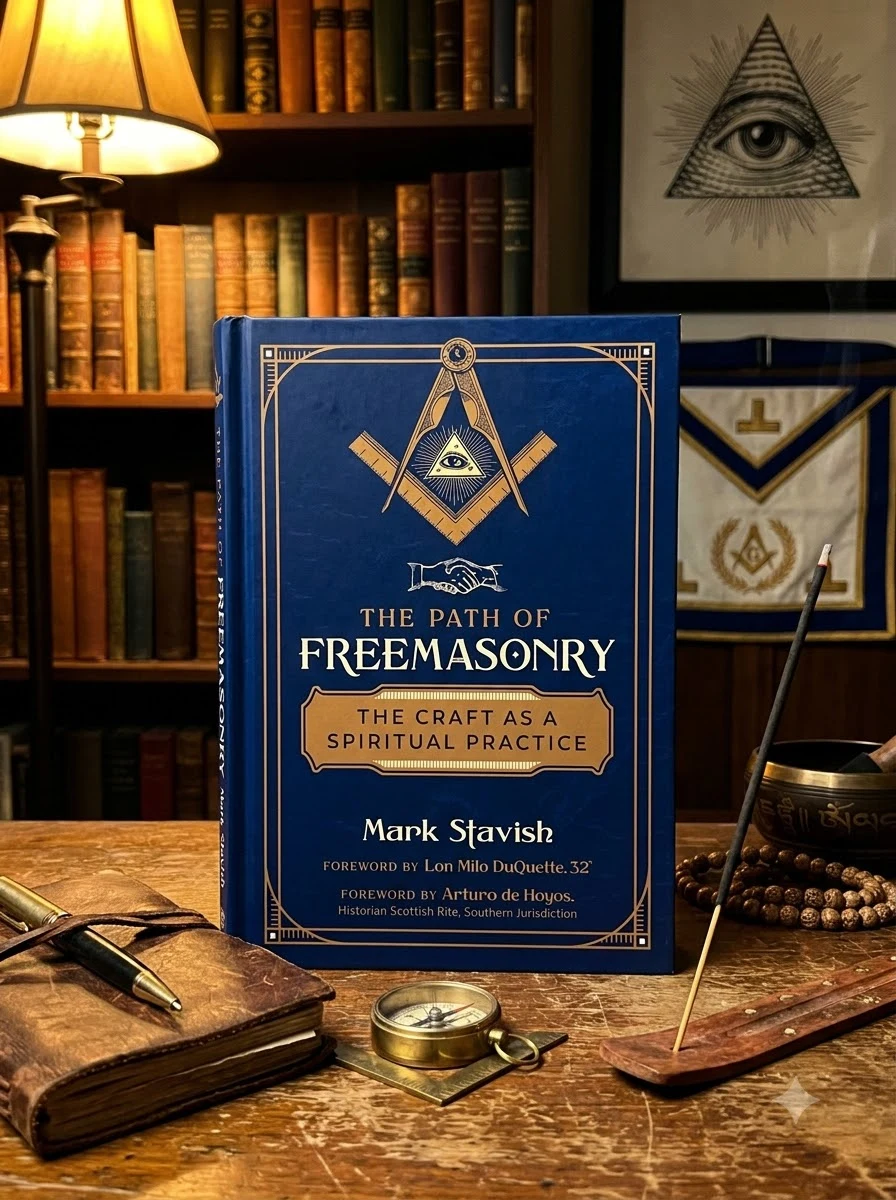
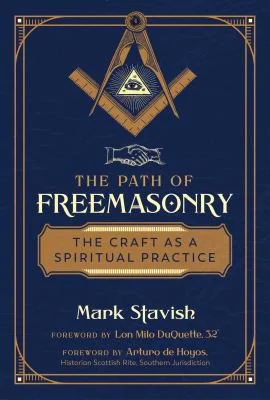
The Path of Freemasonry: The Craft as a Spiritual Practice (Edition, Revised of Freemasonry: Rituals, Symbols & History of the Secret Society)
✍️ Stavish, Mark;, De Hoyos and 3 moreA practical guide examining Masonic rituals, symbols, and history as a path of spiritual growth.
This volume reinterprets Masonic tradition as an active system of inner development. Grounded in Western esoteric traditions, Mark Stavish examines how ancient legends, architectural symbolism, and ritual degrees map directly onto personal self-improvement. By combining historical context with daily exercises like journaling and meditation, the text provides structured tools for both Masons and non-Masons to work with the Craft's spiritual foundation.
Originating from Solomon's Temple, Medieval craft guilds, and Renaissance worldviews, Masonic symbolism expanded through eighteenth-century esoteric rites, the York and Scottish Rites, and the European occult revival.


Praise for this book
“Like a drowsy lion, Freemasonry arouses in the outsider both curiosity and mistrust. This landmark book anatomizes the creature without apology or mystification. At the same time, it summons insiders to revive their moribund craft in all the grandeur of its original mission to humanity. Mark Stavish, whose work is informed by a profound knowledge of esoteric traditions, has earned gratitude from both sides.”
📝 Description: The Path of Freemasonry: The Craft as a Spiritual Practice (Edition, Revised of Freemasonry: Rituals, Symbols & History of the Secret Society)
📑 What's inside
- Deeper into the Wonderful Mystery
- Foreword to the 2021 Edition by Arturo de Hoyos, 33°
- Foreword to the First Edition by Lon Milo DuQuette, 32° How to Use This Book
- INTRODUCTION
- What Is the Secret of Freemasonry?
- CHAPTER 1
- What Is Freemasonry?
- CHAPTER 2
- The Temple of Solomon and the Legend of Hiram Abiff
- CHAPTER 3
- Masonic Initiation and the Blue Lodge
- CHAPTER 4
- The Worldview of the Renaissance The World Is Alive, and Magic Is Afoot
- CHAPTER 5
- Sacred Geometry, Gothic Cathedrals, and the Hermetic Arts in Stone
- CHAPTER 6
- The Lost Word and the Masonic Quest
- CHAPTER 7
- Scottish Rite and the Rise of Esoteric Masonry
- CHAPTER 8
- Occult Masonry in the Eighteenth Century
- CHAPTER 9
- York Rite and the Survival of the Knights Templar
- CHAPTER 10
- Freemasonry and the European Occult Revival
- CONCLUSION
- Modern Masonry Much Ado about Nothing, or the Revival of the Lost Word?
- Afterword by Charles S. Canning, 33°
- APPENDIX A
- Sacred Geometry and the Masonic Tradition
- by John Michael Greer
- APPENDIX B
- Symbols of the Tracing Boards and the Degrees
- APPENDIX C
- Excerpts from Morals and Dogma on the Three Degrees of Masonry
- Notes Bibliography Index
💎 Expert review
📖 Why choose it
Why this book is worth reading
Readers seeking to transform curiosity about Freemasonry into a tangible spiritual practice will find immense value in this guide. It is ideal for both initiated Masons wishing to deepen their understanding of the Craft’s symbolic depth and secular seekers looking for a structured path to self-discovery. By presenting rituals as a roadmap for personal enlightenment rather than obscure history, it empowers individuals to construct their own 'Inner Temple.' You will gain accessible exercises that bridge historical context with modern self-improvement, making the ancient secrets of the Craft practical tools for realizing your highest potential and achieving profound personal growth.
⭐ Reader reviews
Reader rating
Stavish successfully demystifies Freemasonry, offering a compelling argument for its relevance as a psychological and spiritual tool. The text is accessible, inviting readers to engage with symbolism actively rather than passively studying it. However, those seeking purely academic, dry historical analysis or rigid doctrinal orthodoxy may find the practical, self-help orientation too informal or speculative. It is less suited for those who view Freemasonry strictly as a social club devoid of metaphysical significance. The strength lies in its invitation to internalize lessons, making it a vibrant resource for personal transformation rather than a scholarly reference text for historians.
❓ Frequently asked questions
📖 Who should read this
This essential guide is for Masons seeking deeper spiritual insight, curious non-Masons exploring esoteric traditions, and anyone committed to personal development. If you are drawn to symbolic wisdom and practical spiritual tools, this book offers a clear path to self-transformation.
🎯 Key themes and symbolism
Spiritual Progression
The book meticulously details how Freemasonry serves as a structured system for individual spiritual advancement. It frames the Craft's teachings as a step-by-step methodology for self-mastery, guiding readers to cultivate inner wisdom and achieve a deeper understanding of their own being through its symbolic framework.
Esoteric Symbolism Decoded
Stavish delves into the profound meanings embedded within Masonic symbols and rituals, tracing their origins from ancient lore to modern practice. He illuminates how these emblematic representations are not arbitrary but are carefully designed to convey hidden truths and facilitate a transformative experience for the practitioner, drawing parallels to broader esoteric traditions.
Practical Inner Work
Beyond theory, this guide provides concrete methods for integrating Masonic principles into daily life. It offers practical exercises, including dream analysis, reflective journaling, meditation techniques, and focused prayer, enabling readers to personalize and internalize the lessons, fostering genuine self-realization and personal growth.
📜 Historical context
📚 Glossary
- The Craft
- Inner Temple
- Esoteric Doctrines
📔 Questions to reflect on
- Reflect on a personal symbol or ritual in your own life. How does it guide you, and what 'hidden' meanings might it hold for your personal growth?
- Consider the concept of 'building an inner temple.' What qualities or virtues would you incorporate into its foundation, walls, and roof to make it a sanctuary of wisdom?
- How can you apply the principle of 'perfection through measurement and design' (as in architecture) to a specific goal or challenge in your personal or spiritual life?