US shipping Secure card payment Occult and esoteric books

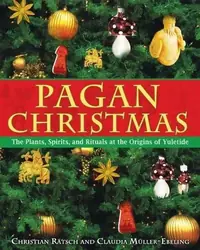
Pagan Christmas: The Plants, Spirits, and Rituals at the Origins of Yuletide

Rätsch, Christian
Reader rating
4.6
(2 reviews) 46 sold
Availability to be confirmed

This edition can be ordered. No arrival date is confirmed.

📚 ABOUT THE BOOK

Unearth the botanical sorcery and shamanic roots hidden within your holiday decorations.

This volume strips away the sanitized veneer of modern Yuletide to reveal its deep pagan foundations. It meticulously maps the sacred botany that once dominated northern European spirituality, showing how the fir tree evolved from a revered World Tree into a Christian symbol. The authors trace how ancient agricultural rites, tree worship, and plant spirits were absorbed by the church, effectively turning contemporary living rooms into sites of shamanic ritual. By analyzing these botanical symbols, the text offers a rare glimpse into the pre-Christian religious landscape that still pulses beneath the surface of our festive traditions.

Key themes
Sacred Botany Shamanic Origins Syncretic Rituals
Historical context

This work situates itself within the rich tapestry of European pagan spirituality and botanical occultism, exploring the indigenous roots that predate modern Christian Yuletide traditions.

Difficulty
●● Moderate
Fans will love it
Starhawk · Ronald Hutton · Sabina Magliocco
🌙 Witchcraft & Wicca
🏛 Inner Traditions International 📖 224 pages 📔 Paperback 📐 Paperback ISBN: 9781594770920
Fun fact
Rätsch succeeds brilliantly in decoupling the botanical from the botanical, revealing the eerie vitality beneath our festive cheer. It is essential for historians of religion and nature mystics, but may disappoint those seeking practical spellwork or strict Christian theology. In the field of comparative religion, it stands as a vital corrective to sanitized holiday narratives, proving that the old gods never truly left, they merely changed their address.

📝 Description: Pagan Christmas: The Plants, Spirits, and Rituals at the Origins of Yuletide

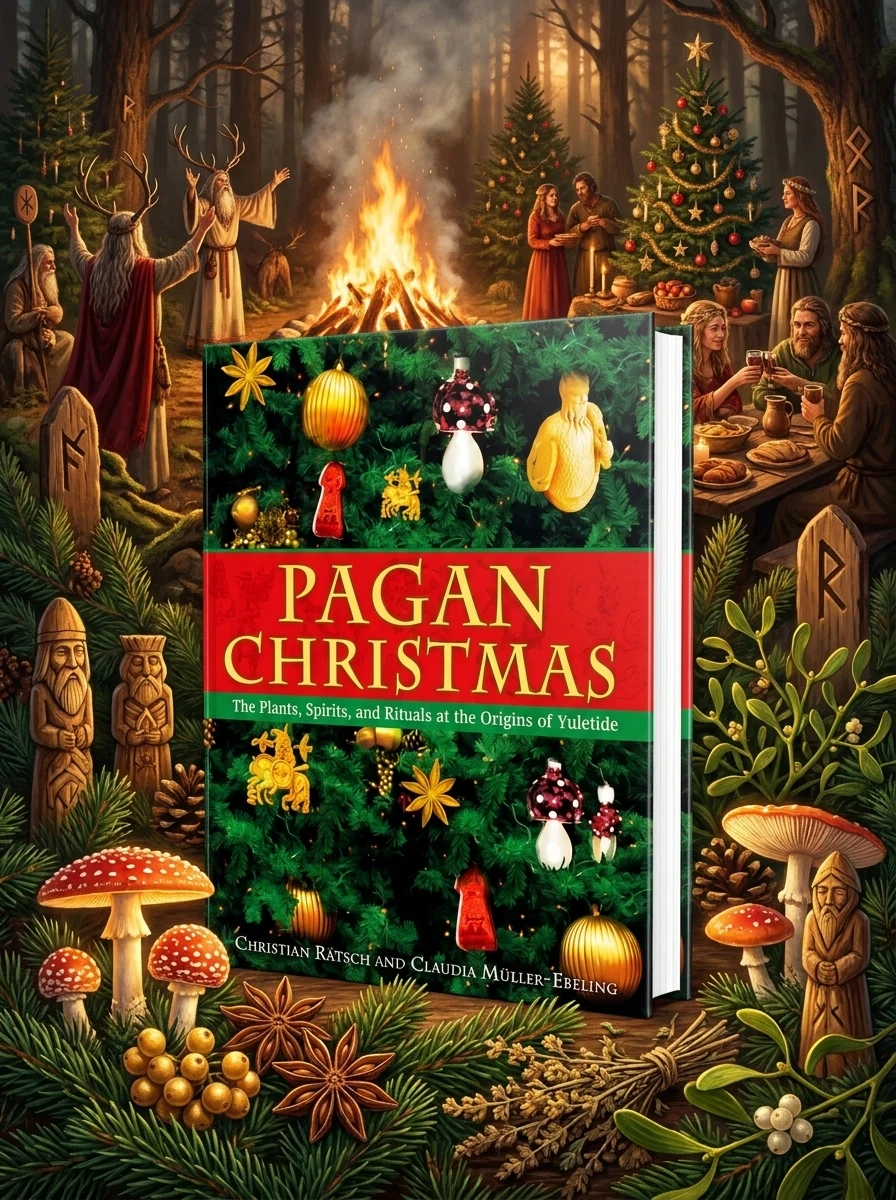
An examination of the sacred botany and the pagan origins and rituals of Christmas - Analyzes the symbolism of the many plants associated with Christmas - Reveals the shamanic rituals that are at the heart of the Christmas celebration The day on which many commemorate the birth of Christ has its origins in pagan rituals that center on tree worship, agriculture, magic, and social exchange. But Christmas is no ordinary folk observance. It is an evolving feast that over the centuries has absorbed elements from cultures all over the world--practices that give plants and plant spirits pride of place. In fact, the symbolic use of plants at Christmas effectively transforms the modern-day living room into a place of shamanic ritual. Christian Rätsch and Claudia Müller-Ebeling show how the ancient meaning of the botanical elements of Christmas provides a unique view of the religion that existed in Europe before the introduction of Christianity. The fir tree was originally revered as the sacred World Tree in northern Europe. When the church was unable to drive the tree cult out of people's consciousness, it incorporated the fir tree by dedicating it to the Christ child. Father Christmas in his red-and-white suit, who flies through the sky in a sleigh drawn by reindeer, has his mythological roots in the shamanic reindeer-herding tribes of arctic Europe and Siberia. These northern shamans used the hallucinogenic fly agaric mushroom, which is red and white, to make their soul flights to the other world. Apples, which figure heavily in Christmas baking, are symbols of the sun god Apollo, so they find a natural place at winter solstice celebrations of the return of the sun. In fact, the authors contend that the emphasis of Christmas on green plants and the promise of the return of life in the dead of winter is just an adaptation of the pagan winter solstice celebration.

💎 Expert review

💎
Esoterica Books editorial team
Occult literature desk
Rätsch provides a compelling botanical map of Yuletide’s pagan foundations, effectively linking sacred botany to shamanic ritual. While it offers valuable insights for those interested in the evolution of tree worship and plant spirits, it may not suit readers seeking strictly Christian theological interpretations or those uninterested in esoteric history. The text is dense with historical analysis rather than practical spellcraft, which might disappoint casual holiday enthusiasts. However, for scholars and practitioners of witchcraft and wicca, it serves as an essential guide to the spiritual mechanics behind familiar festive icons.
✓ EDITOR'S REVIEW

📖 Why choose it

📖

Why this book is worth reading

Readers fascinated by the hidden histories of holiday symbols will find this volume deeply rewarding. It appeals to those who wish to look beyond the commercialized veneer of Christmas to discover the ancient agricultural rites and shamanic practices that once defined winter celebrations. By understanding how plant spirits and tree worship were absorbed into later traditions, enthusiasts gain a profound appreciation for the enduring power of nature-based spirituality. This book is ideal for anyone seeking to reconnect with the earthy, mystical origins of their festive decor, offering a sense of continuity with the pre-Christian landscapes that still pulse beneath our modern rituals.

⭐ Reader reviews

The starting rating comes from the team Esoterica Books —
⭐ Esoterica editorial review Editorial rating 4.6/5
★★★★
Readers fascinated by the intersection of folklore, botany, and religious history who wish to understand the deeper, often occult, meanings behind seasonal decorations and Yuletide customs.

Reader rating

4.6
Based on 2 reviews
5
1
4
1
3
0
2
0
1
0
S
Silas H. ✓ Verified purchase
October 21, 2025
Essential reading

This has been on my wishlist for months. The text itself is dense but rewarding — you get out what you put in. It pairs well with more modern commentaries on the same tradition.

E
Esoterica Books editorial team

Rätsch provides a compelling botanical map of Yuletide’s pagan foundations, effectively linking sacred botany to shamanic ritual. While it offers valuable insights for those interested in the evolution of tree worship and plant spirits, it may not suit readers seeking strictly Christian theological interpretations or those uninterested in esoteric history. The text is dense with historical analysis rather than practical spellcraft, which might disappoint casual holiday enthusiasts. However, for scholars and practitioners of witchcraft and wicca, it serves as an essential guide to the spiritual mechanics behind familiar festive icons.

❓ Frequently asked questions

No, it is a scholarly historical analysis of how pagan rituals influenced Christmas, rather than a manual for modern practitioners.
Primarily, it centers on Northern European traditions where the fir tree and specific plant spirits are central, though it notes global cultural absorptions.

📖 Who should read this

Readers fascinated by the intersection of folklore, botany, and religious history who wish to understand the deeper, often occult, meanings behind seasonal decorations and Yuletide customs.

🎯 Key themes and symbolism

Sacred Botany

Shamanic Origins

Syncretic Rituals

💬 Quotes from the book

“The symbolic use of plants at Christmas effectively transforms the modern-day living room into a place of shamanic ritual.”

“The fir tree was originally revered as the sacred World Tree in northern Europe.”

📜 Historical context

Emerging from the 19th-century rise of folkloristics and 20th-century ethnobotany, this work challenges the narrative of Christian dominance by highlighting the resilience of indigenous European nature worship. It situates Christmas not as a sudden theological event, but as a continuous evolution of ancient agrarian festivals, reflecting the enduring human need to vitalize the winter solstice through plant-based magic and communal exchange.

📚 Glossary

Syncretism
World Tree
Ethnobotany

📔 Questions to reflect on

  1. Which plant in your holiday decor holds the most personal or ancestral significance to you?
  2. How does the concept of 'sacred space' in your home shift when viewed through the lens of ancient botany?
  3. What modern traditions do you perform that feel disconnected from their original spiritual or natural purpose?

🏛 Books from this publisher Inner Traditions International

All books from this publisher →

You might also like

See more →