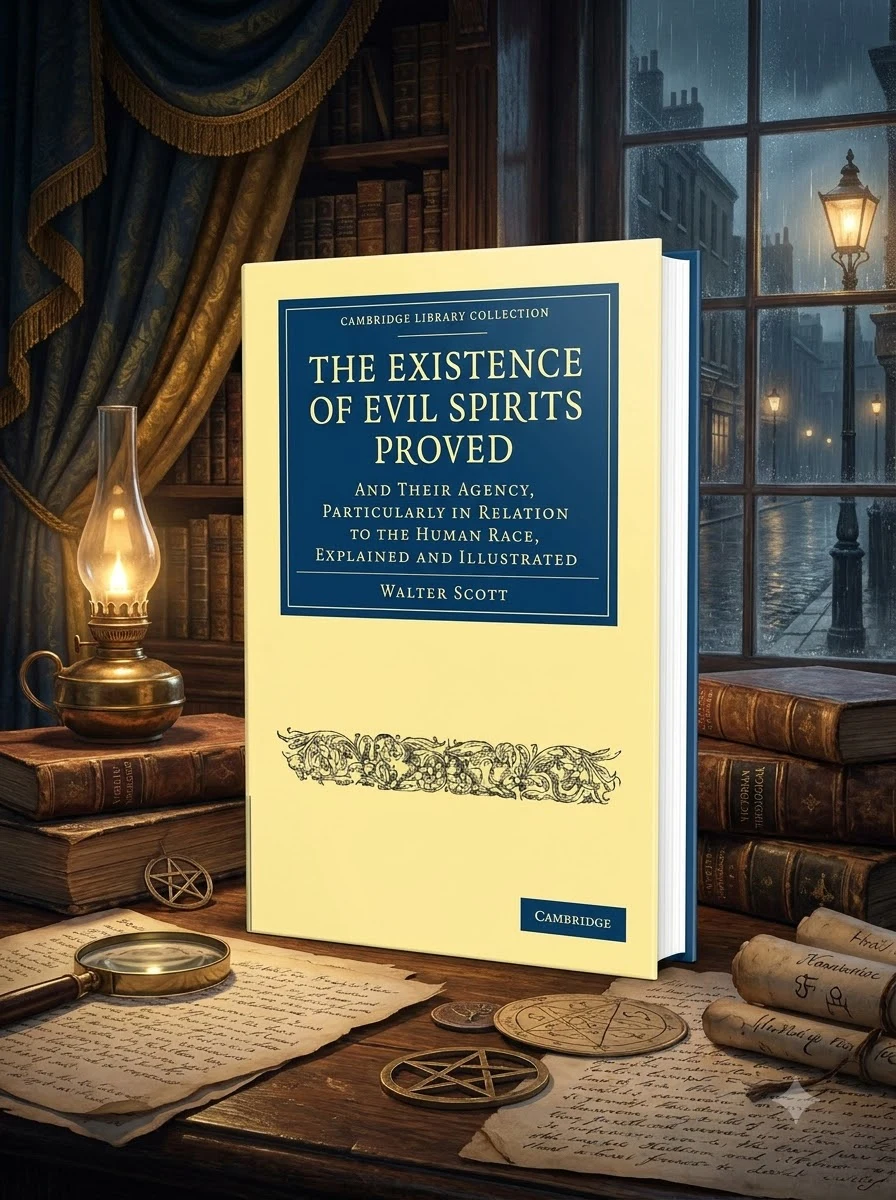
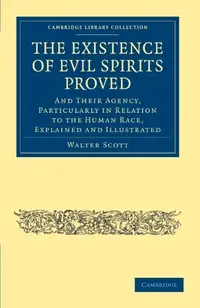
The Existence of Evil Spirits Proved Scott, Walter
Scott, WalterStock reported in the catalog; fulfillment is confirmed with your request.
Unravel the compelling 19th-century arguments for the tangible reality of malevolent spiritual forces.
Step into the intellectual landscape of 1841 London as Walter Scott, a distinguished theological tutor, meticulously dissects the concept of evil spirits. Originally presented as a series of influential lectures at the Congregational Library, this 1843 compilation offers a profound theological and historical exploration. Scott, then President of Airedale College, systematically builds his case for the undeniable existence of these entities, drawing upon scriptural interpretation, philosophical reasoning, and historical accounts. This volume stands as a crucial artifact for understanding 19th-century Christian thought on the supernatural and its enduring implications.
This work emerges from the mid-nineteenth century intellectual landscape, reflecting a period where theological tutors and college presidents actively engaged with supernatural phenomena through rigorous academic discourse rather than mere folklore. It stands as a significant artifact of 19th-century Christian thought, bridging scriptural interpretation with philosophical reasoning regarding malevolent spiritual forces.


📝 Description: The Existence of Evil Spirits Proved Scott, Walter
💎 Expert review
📖 Why choose it
Why this book is worth reading
This volume is essential for historians, theologians, and serious students of the occult who wish to understand how intelligent minds in the 1840s approached the tangible reality of evil spirits. Walter Scott’s meticulous dissection offers a rare glimpse into the intellectual rigor applied to supernatural beliefs during this era. Readers seeking a substantive, non-sensationalized analysis of malevolent spiritual forces will find value in Scott’s systematic construction of his case. It serves as a crucial bridge between raw scriptural interpretation and philosophical reasoning, providing context for modern discussions on the supernatural. If you appreciate deep dives into historical religious thought and want to see how theological tutors argued these points with academic precision, this compilation is an indispensable resource for your collection.
⭐ Reader reviews
Reader rating
Scott’s 1843 compilation offers a dense, scholarly examination of evil spirits that demands patience and intellectual stamina. While it provides valuable insight into 19th-century Christian thought on the supernatural, it is strictly an academic artifact rather than an entertaining narrative. Readers seeking quick answers, sensational ghost stories, or modern psychological interpretations will find this text dry and inaccessible. It does not suit casual readers of occult fiction or those looking for practical spiritual guidance. However, for those analyzing the historical intersection of theology and philosophy, Scott’s work remains a compelling, albeit demanding, primary source that accurately reflects the serious tone of his time.
❓ Frequently asked questions
📖 Who should read this
If you are fascinated by the intersection of theology, history, and the supernatural, or seek to understand 19th-century religious thought on spiritual warfare, this book is for you. It offers a unique window into the intellectual battles of the past regarding unseen forces.
🎯 Key themes and symbolism
Demonology's Theological Foundation
This work delves deeply into the scriptural and theological underpinnings supporting the belief in evil spirits. Scott examines biblical narratives, Christian doctrine, and the writings of early church fathers to construct a robust framework for understanding the nature, activities, and spiritual significance of these malevolent entities within the Christian worldview.
Historical Belief in the Occult
Beyond theology, the book explores the historical prevalence and evolution of human belief in the occult and supernatural forces. It traces how societies across different eras have grappled with and interpreted phenomena attributed to evil spirits, providing a fascinating glimpse into the cultural and intellectual history surrounding spiritual warfare and unseen influences.
Rational Proof of Spiritual Evil
Scott endeavors to present a logical and compelling argument for the existence of evil spirits, moving beyond mere faith. He employs reasoned discourse and careful analysis to 'prove' their reality, engaging with contemporary skepticism and offering a structured defense of traditional Christian views against emerging rationalist perspectives of his era.
💬 Quotes from the book
“For to deny the existence of these malignant intelligences is not merely to contradict the plainest statements of Scripture, but to fly in the face of human experience across all ages.”
“The Christian, armed with divine truth, must not shrink from acknowledging the adversary, for in understanding his wiles, we are better prepared to resist his dominion.”
📜 Historical context
📚 Glossary
- Demonology
- Occult
- Theological Tutor
📔 Questions to reflect on
- How does Scott's 19th-century 'proof' of evil spirits resonate or conflict with your own contemporary understanding of evil and malevolent forces, both spiritual and secular?
- Consider the historical context: what societal anxieties or intellectual shifts of the 1840s might have made Scott's lectures particularly timely or controversial?
- If you were to construct a modern argument for or against the existence of evil spirits, what sources of evidence or reasoning would you prioritize, and how would they differ from Scott's approach?
📖 From the series “Cambridge Library Collection - Spiritualism and Esoteric Kno”
All books in the series →
✍️ More books by this author Scott, Walter
All books by this author →
🏛 Books from this publisher Cambridge University Press
All books from this publisher →

 75
75

You might also like
See more →