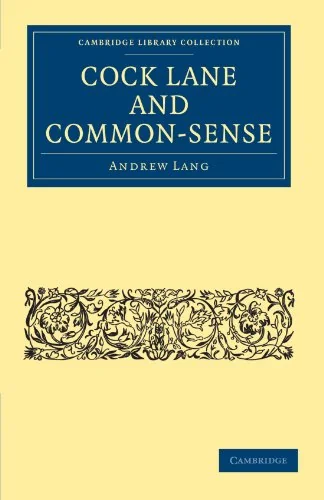
Cock Lane and Common-Sense Lang, Andrew
✍️ Lang, AndrewAndrew Lang, the esteemed folklorist and "Wizard of St Andrews," meticulously delves into the historical and cultural efforts of humankind to interact with the deceased. Published in 1894, this polymathic work critically explores the complex and often contradictory ways societies have perceived and attempted to bridge the chasm between life and death. Lang scrutinizes various spiritualist phenomena and historical accounts, offering a multifaceted perspective on the intersection of belief, skepticism, and the unknown. He invites readers to ponder the psychological and societal implications of our fascination with the afterlife and spectral encounters, blending scholarly rigor with an accessible narrative.


📝 Description: Cock Lane and Common-Sense Lang, Andrew
💎 Expert review
📖 Why choose it
Why this book is worth reading
This book is an essential read for those fascinated by the historical roots of spiritualism and the psychological underpinnings of our desire to commune with the departed. Andrew Lang offers a unique polymathic perspective that blends scholarly rigor with accessible narrative, making complex cultural phenomena understandable. Readers who appreciate the intersection of folklore, history, and psychology will find value in his multifaceted exploration of belief versus skepticism. It serves as a thoughtful guide for anyone pondering the societal implications of spectral encounters, providing context to our enduring quest to understand life beyond death without resorting to uncritical acceptance or dismissive scorn.
⭐ Reader reviews
Reader rating
Lang’s 1894 text provides a critical yet accessible survey of humanity's efforts to interact with the deceased. While his scholarly rigor offers a refreshing counterpoint to sensationalist spiritualist literature, this work may not suit readers seeking definitive proof of the afterlife or those who prefer purely fictional ghost stories. It is best appreciated by those interested in the cultural history of belief systems and the psychological dimensions of grief. Skeptics and believers alike will find value in his balanced scrutiny, though it demands patience for its academic tone and historical context rather than offering immediate thrills.
❓ Frequently asked questions
📖 Who should read this
If you're drawn to the historical intersections of folklore, psychology, and the supernatural, or if you seek a scholarly yet engaging exploration of humanity's age-old fascination with the afterlife, this book offers a discerning and thought-provoking perspective.
🎯 Key themes and symbolism
Human-Spirit Interaction
Lang focuses on how diverse cultures and eras have attempted to establish contact with the dead, examining the methods and motivations behind these endeavors. He critically analyzes the validity and societal impact of such efforts, providing a broad historical overview of humanity's quest to pierce the veil between worlds.
Skepticism and Belief
This book explores the inherent tension between rational inquiry and fervent belief concerning spiritual phenomena. Lang, a scholar of folklore, navigates the fine line separating genuine mystery from human credulity, encouraging a balanced, critical perspective that respects both the power of conviction and the necessity of scrutiny.
Historical Spiritualism Context
Lang chronicles the evolution of spiritualist practices and beliefs across various historical periods. The book contextualizes the late 19th-century spiritualist movement within a broader tradition of human engagement with the unseen, drawing on rich historical accounts and folklore to illuminate its antecedents and societal role.
📜 Historical context
📚 Glossary
- Folklorist
- Polymath
- Spiritualism
📔 Questions to reflect on
- How do contemporary views on death and the afterlife compare with the historical perspectives Lang explores in 'Cock Lane and Common-Sense'?
- Reflect on a personal experience or cultural anecdote involving the 'supernatural.' How might Andrew Lang, with his folklorist's lens, analyze such an event?
- In what ways does a 'polymathic' approach, like Lang's, enrich the study of subjects often relegated to fringe belief systems or purely scientific inquiry?