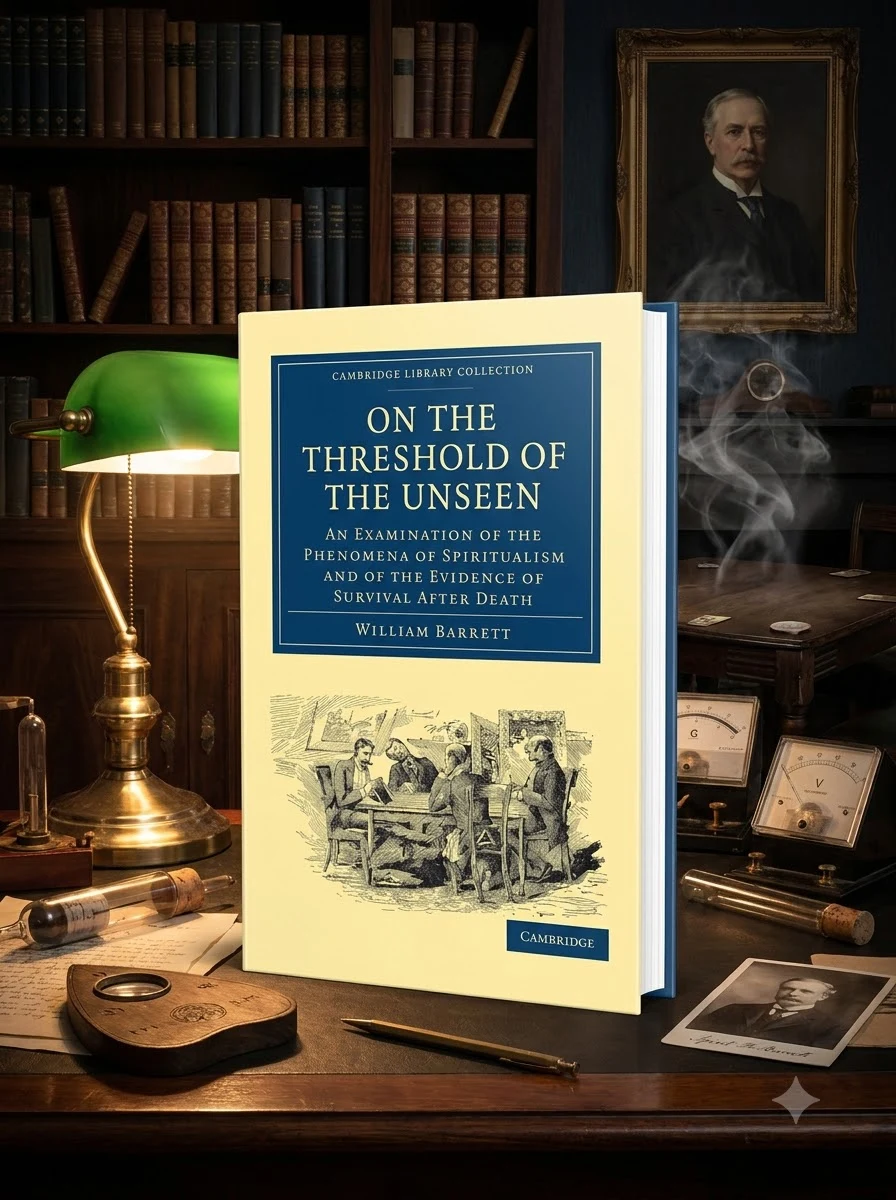
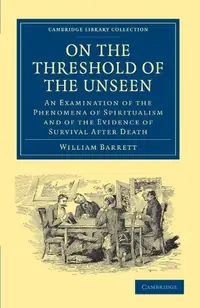
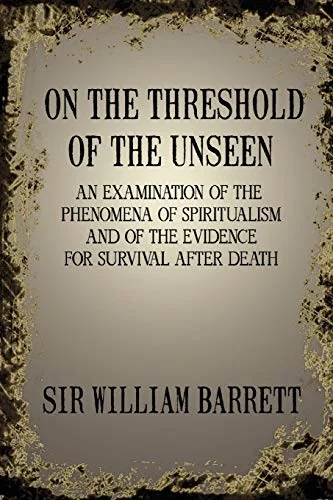
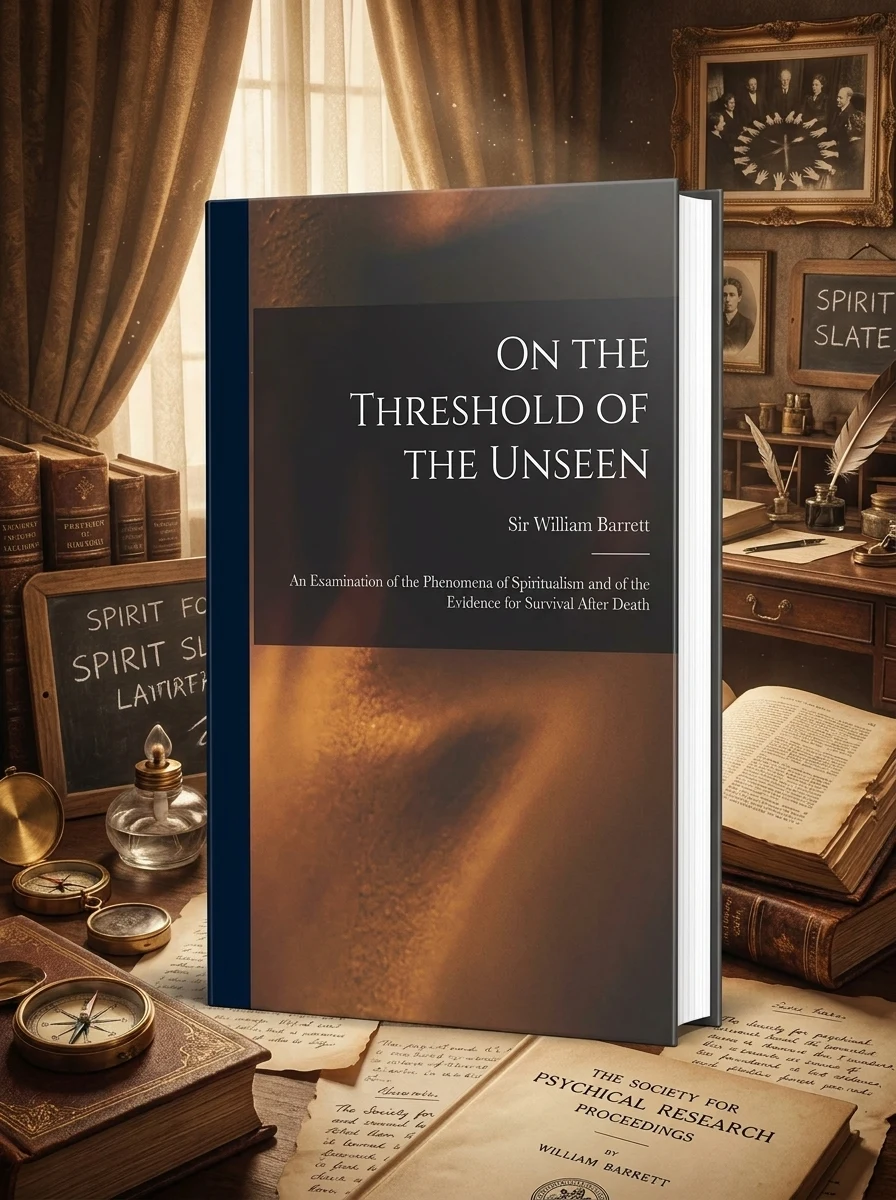
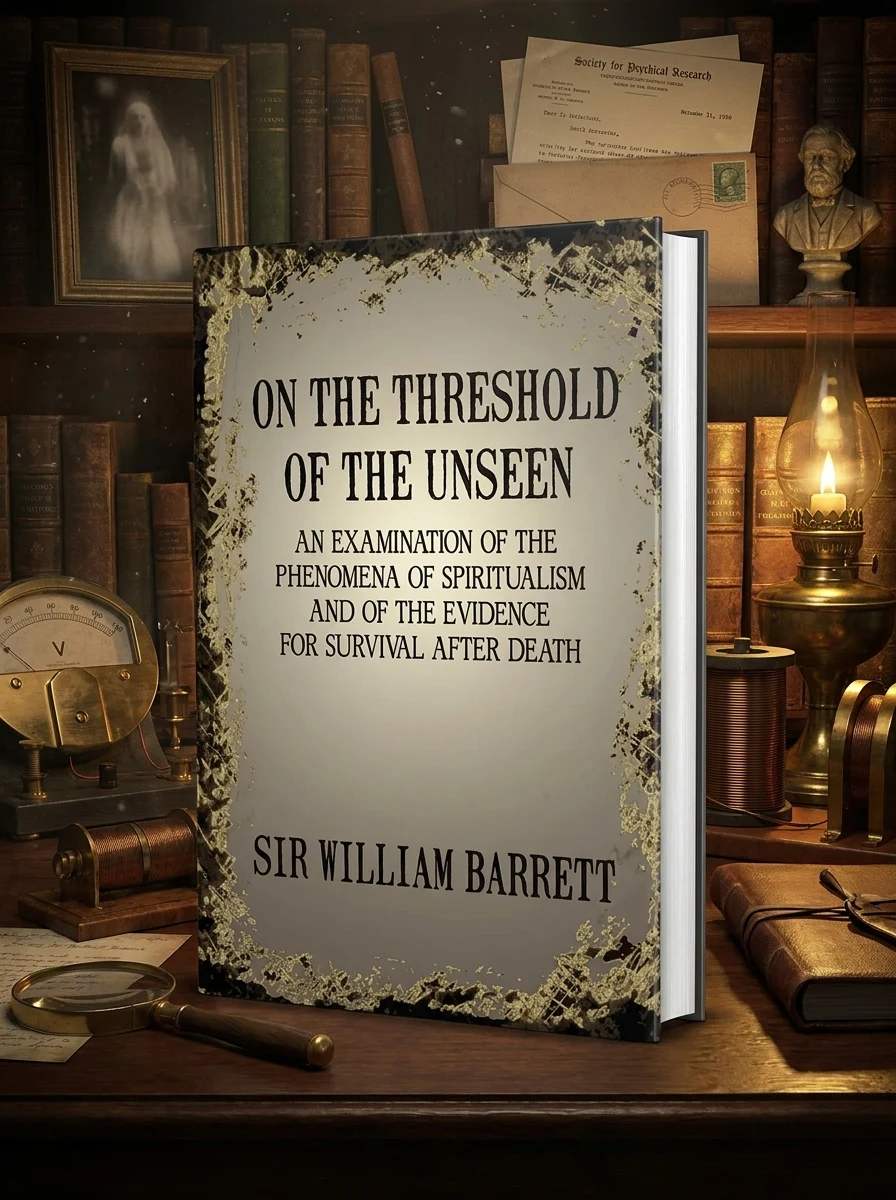
On the Threshold of the Unseen Barrett, William
Barrett, WilliamStock reported in the catalog; fulfillment is confirmed with your request.
Bridge science and spirit: a physicist's daring defense of the unseen.
Sir William Barrett, a distinguished physicist, champions psychical research against the prevailing academic skepticism of his era. Published in 1917, this foundational work meticulously presents evidence and arguments for the existence of phenomena like ESP and spiritual communication. He endeavors to legitimize the study of the unseen within scientific discourse, applying a rigorous, empirical lens to experiences often dismissed as mere superstition, thereby seeking to establish a rational basis for their investigation and acceptance.
This work emerges from the early twentieth century's pivotal moment when scientific inquiry began to seriously engage with psychical phenomena, challenging the rigid boundaries of materialist academia. It stands as a testament to the era's intellectual tension between empirical physics and the burgeoning interest in spiritualism.


📝 Description: On the Threshold of the Unseen Barrett, William
💎 Expert review
📖 Why choose it
Why this book is worth reading
Readers fascinated by the historical intersection of physics and metaphysics will find immense value here. Barrett offers a rare perspective from a distinguished scientist who dared to validate the unseen through empirical rigor rather than blind faith. Those interested in the history of science, particularly how skeptics were challenged by evidence, will appreciate his meticulous approach. It is essential for anyone exploring the roots of modern parapsychology or seeking a rational framework for spiritual experiences. The book provides a unique lens on how respected academics navigated the controversial waters of spiritual communication during a time of intense academic skepticism.
⭐ Reader reviews
Reader rating
While Barrett’s credentials lend weight to his arguments, this text is not for casual readers seeking quick paranormal thrills or those firmly entrenched in strict materialist dogma. It demands patience with early twentieth-century scientific prose and a willingness to engage with dense empirical evidence rather than sensationalism. Readers expecting definitive proof of the afterlife may find the academic caution frustrating. However, for those interested in the sociological history of science and the specific arguments used to legitimize psychical research, it remains an indispensable, albeit dry, primary source that captures a critical moment in intellectual history.
❓ Frequently asked questions
📖 Who should read this
For those who seek a rational, scientific defense of the unseen, or wish to explore the historical roots of psychical research. If you appreciate a rigorous, evidence-based approach to phenomena often dismissed, this foundational text offers a compelling perspective on the early days of parapsychology.
🎯 Key themes and symbolism
Scientific Validation of the Unseen
Barrett, a respected physicist, meticulously applies scientific methodology to phenomena traditionally relegated to superstition. He argues for empirical investigation into telepathy, clairvoyance, and spiritual manifestations, seeking to establish psychical research as a legitimate field of study worthy of academic rigor and serious consideration in his time.
Challenging Skepticism
The book directly confronts the prevailing skepticism within the scientific community of its era. Barrett systematically addresses common objections and criticisms, presenting counter-evidence and logical arguments to dismantle doubts and pave the way for a more open-minded approach to extraordinary human experiences and their potential reality.
Evidence for Psychic Phenomena
Barrett compiles and analyzes various accounts and experiments related to ESP, clairvoyance, and spiritualist manifestations. He sifts through observations and testimonies, attempting to build a robust evidentiary foundation that supports the existence of these phenomena, emphasizing their potential as a frontier for scientific exploration rather than mere folklore.
💬 Quotes from the book
“To dismiss these phenomena without rigorous examination is to betray the very spirit of scientific inquiry we claim to uphold.”
“The evidence, though often anecdotal, when accumulated and critically assessed, points towards forces beyond our current understanding.”
📜 Historical context
📚 Glossary
- Psychical Research
- Spiritualism
- Extra-Sensory Perception (ESP)
📔 Questions to reflect on
- How might modern scientific methods approach the phenomena Barrett discusses, and what specific challenges would they face today?
- Reflect on a time you encountered something seemingly unexplainable. How did you rationalize or interpret it, and how does Barrett's approach resonate with your experience?
- In what ways do societal biases and the prevailing scientific paradigms of any given era influence the acceptance or rejection of unconventional claims?
📖 From the series “Cambridge Library Collection - Spiritualism and Esoteric Kno”
All books in the series →



✍️ More books by this author Barrett, William
All books by this author →
🏛 Books from this publisher Cambridge University Press
All books from this publisher →


 75
75

You might also like
See more →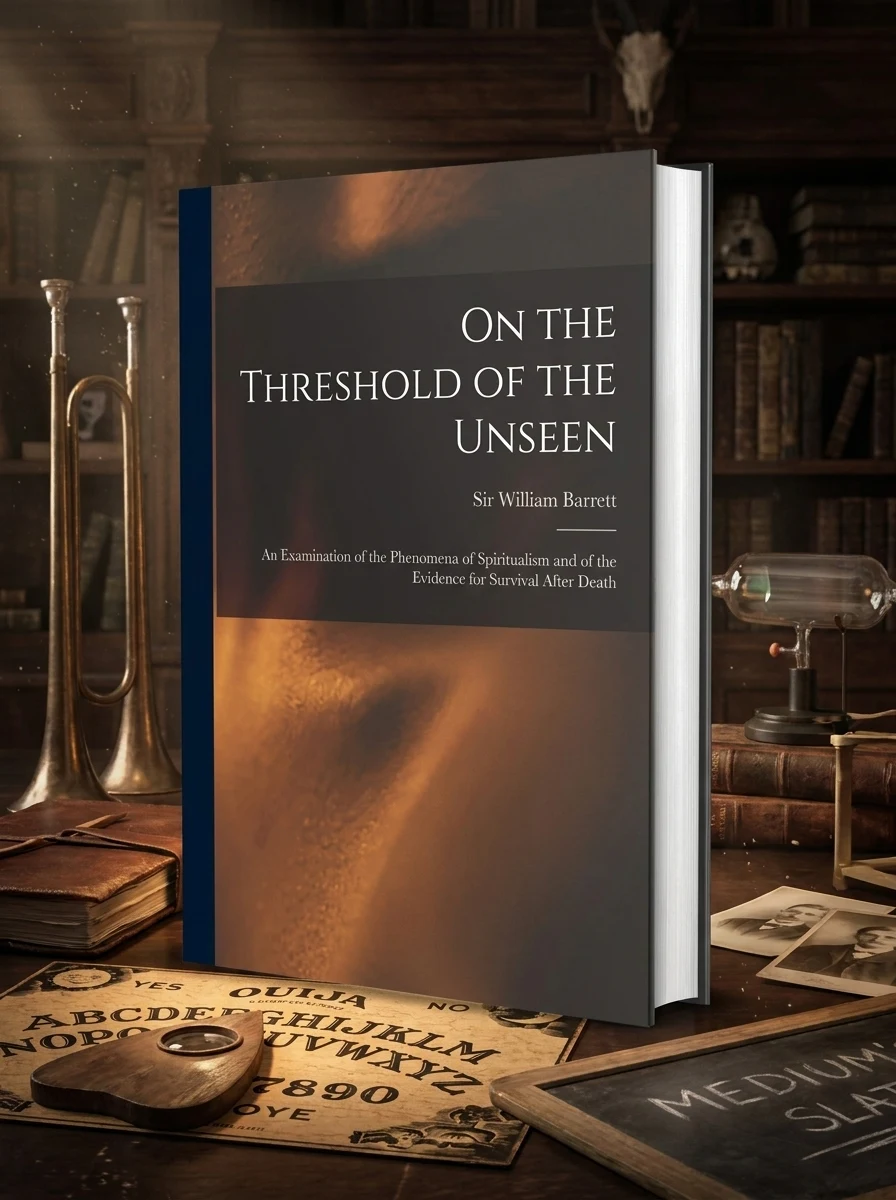
 85
85