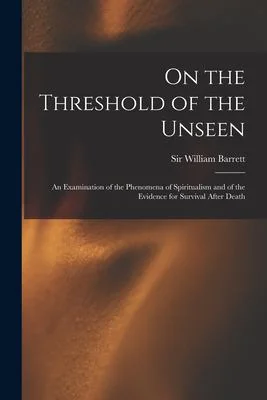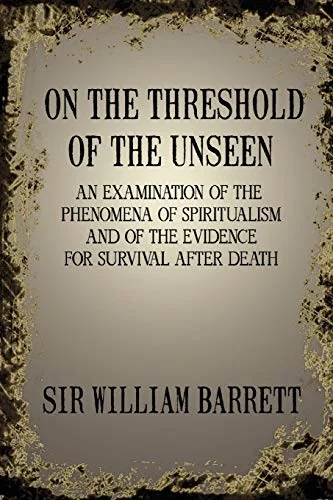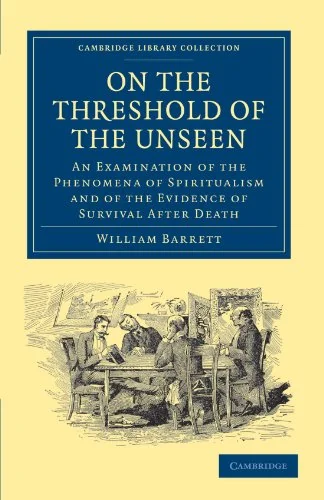
US shipping Secure card payment Occult and esoteric books

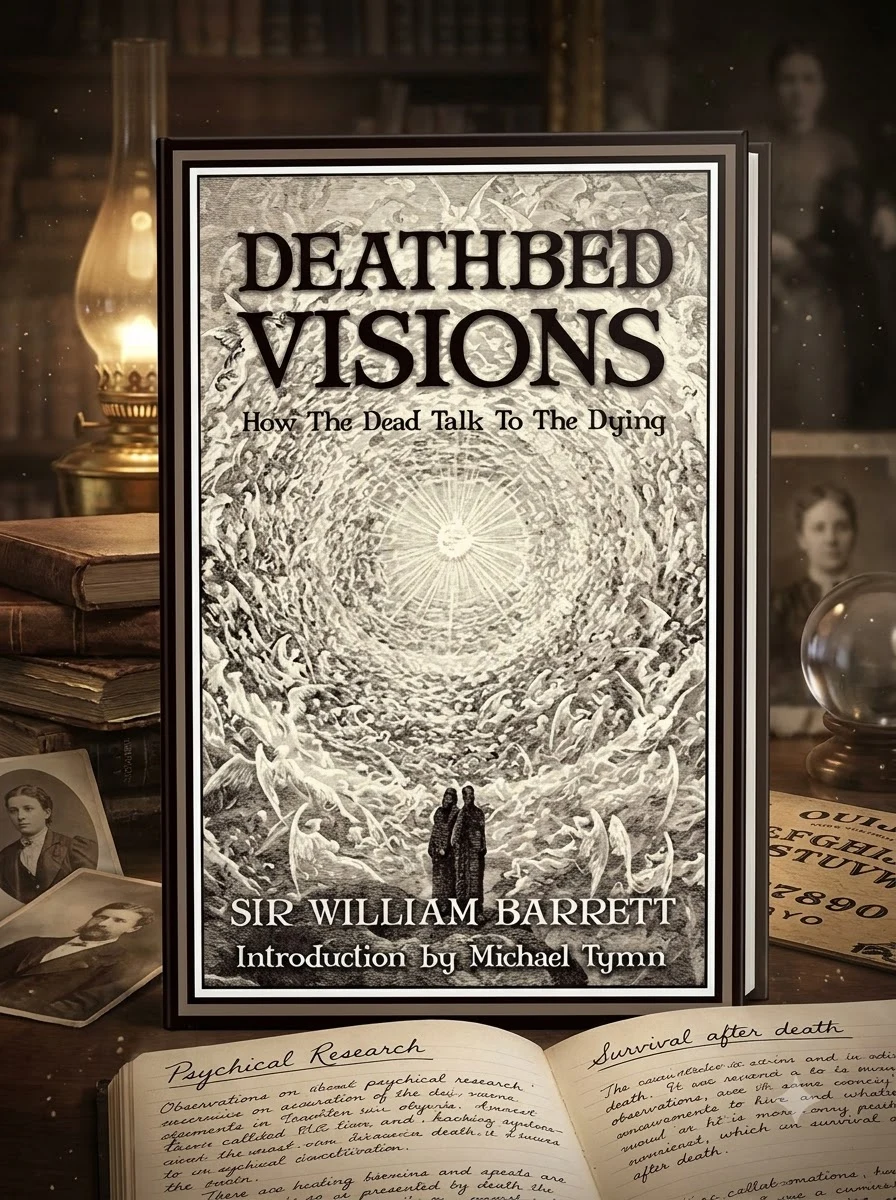
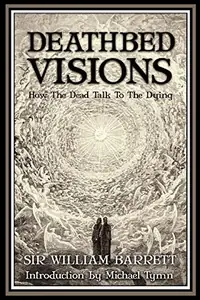
Deathbed Visions

Barrett, William
Reader rating
4.6
(1 reviews) 146 sold
In stock

Stock reported in the catalog; fulfillment is confirmed with your request.

📚 ABOUT THE BOOK

Witness the veil thin as the dying glimpse departed loved ones.

Sir William Barrett, a pivotal figure in early psychical research, delves into the profound phenomenon of deathbed visions. This compelling work, compiled posthumously, presents a series of fascinating accounts where individuals on the brink of passing reportedly perceive deceased relatives or other entities. Barrett meticulously examines these often-uncanny experiences, considering them as potent evidence for consciousness beyond the physical body and the potential for communication across the threshold of death. It's a foundational text for understanding psychic phenomena and the mysteries surrounding our final moments.

Key themes
Consciousness Beyond Life Inter-dimensional Encounters Psychic Manifestations
Historical context

This text emerges from the early psychical research movement, reflecting a period where scientific inquiry began to seriously engage with phenomena traditionally dismissed as mere superstition. It sits at the intersection of Victorian spiritualism and emerging parapsychology, attempting to validate mystical experiences through empirical observation.


Difficulty
●● Moderate
Fans will love it
Arthur Conan Doyle's spiritualist works · Sir Oliver Lodge's investigations into survival · The Society for Psychical Research archives · Modern accounts of near-death experiences
🌠 Dreams & Astral
🏛 White Crow Books 📅 2011 📖 140 pages 📔 Paperback 📐 Paperback ISBN: 9781907661020
Fun fact
Barrett's work is a fascinating look into early psychical research, offering a collection of compelling, meticulously documented cases of deathbed visions. It excels in its earnest, empirical approach to phenomena often relegated to folklore. While it may not satisfy readers seeking contemporary neurological explanations, it’s a foundational text for understanding the historical investigation into survival after death and the origins of parapsychology. Essential for scholars and curious minds alike.

📝 Description: Deathbed Visions

During his 50 years of psychical research, Sir William Fletcher Barrett (February 10, 1884 - May 26, 1925) observed many types of phenomena. In his reminiscences, read at a private meeting of the Society for Psychical Research (SPR) on June 17, 1924, less than a year before his death, Barrett said: "I am personally convinced that the evidence we have published decidedly demonstrates (1) the existence of a spiritual world, (2) survival after death, and (3) of occasional communication from those who have passed over... It is however hardly possible to convey to others who have not had a similar experience an adequate idea of the strength and cumulative force of the evidence that has compelled [my] belief." Barrett was the prime-mover in the founding of the SPR in 1882, serving as vice-president and editor of the Society's Journal during its first year and president in 1904. He also encouraged Professor William James of Harvard to organize the American branch of the SPR in 1884. In this book, Deathbed Visions, first published in 1926, the year after his death, Barrett reported on a number of intriguing cases in which a dying person appears to see and recognize some deceased relative or friend, some of them involving instances where the dying person was unaware of the previous death of the spirit form he saw. "These cases form, perhaps, one of the most cogent arguments for survival after death, as the evidential value and veridical (truth telling) character of these visions of the dying is greatly enhanced when the fact is undeniably established that the dying person was wholly ignorant of the decease of the person he or she so vividly sees," Barrett stated in the book, now something of a classic in the field.

💎 Expert review

💎
Esoterica Books editorial team
Occult literature desk
While historically significant, this work may frustrate readers seeking rigorous scientific methodology or modern psychological interpretations of terminal lucidity. It relies heavily on anecdotal accounts rather than statistical analysis, which might feel dated to contemporary academics. Furthermore, those expecting a clinical detachment may find the tone too sympathetic or speculative. However, for enthusiasts of early 20th-century esotericism and psychical research, it remains an essential primary source that captures the era's genuine curiosity about the afterlife.
✓ EDITOR'S REVIEW

📖 Why choose it

📖

Why this book is worth reading

Readers fascinated by the boundary between life and death will find profound comfort in this collection. It offers a gentle, observational look at the final moments of consciousness without resorting to dogma. Those seeking evidence for the continuity of the soul or those mourning loved ones may discover solace in these documented encounters. The book serves as a bridge for skeptics and believers alike, inviting them to consider the possibility that death is not an end but a transition witnessed by clear-eyed observers.

⭐ Reader reviews

The starting rating comes from the team Esoterica Books —
⭐ Esoterica editorial review Editorial rating 4.7/5
★★★★
If you're drawn to the enigmatic frontier of consciousness, the mysteries of dying, or the historical roots of psychical research, this book offers invaluable insights. It's essential reading for anyone seeking a deeper understanding of the soul's journey and the potential for life beyond physical…

Reader rating

4.6
Based on 1 reviews
5
0
4
1
3
0
2
0
1
0
E
Esoterica Books editorial team

While historically significant, this work may frustrate readers seeking rigorous scientific methodology or modern psychological interpretations of terminal lucidity. It relies heavily on anecdotal accounts rather than statistical analysis, which might feel dated to contemporary academics. Furthermore, those expecting a clinical detachment may find the tone too sympathetic or speculative. However, for enthusiasts of early 20th-century esotericism and psychical research, it remains an essential primary source that captures the era's genuine curiosity about the afterlife.

❓ Frequently asked questions

While the subject matter often touches upon spiritual concepts, Barrett approaches these phenomena from a scientific and empirical perspective, seeking evidence rather than relying solely on religious doctrine. It's an investigation into experience, not dogma.
The book primarily details accounts of dying individuals who report seeing or interacting with deceased loved ones, often with startling clarity and recognition, sometimes even of those whose deaths were unknown to the patient.

📖 Who should read this

If you're drawn to the enigmatic frontier of consciousness, the mysteries of dying, or the historical roots of psychical research, this book offers invaluable insights. It's essential reading for anyone seeking a deeper understanding of the soul's journey and the potential for life beyond physical existence.

🎯 Key themes and symbolism

Consciousness Beyond Life

Barrett profoundly explores the concept of enduring consciousness, presenting deathbed visions as compelling testimony. He argues that these experiences strongly suggest that personal awareness persists beyond the body's demise, offering a glimpse into a continued existence rather than absolute cessation.

Inter-dimensional Encounters

The book investigates instances where dying individuals seem to interact with those who have already passed on. Barrett posits these visions as potential evidence of communication between realms, bridging the divide between the living and the deceased in their final moments.

Psychic Manifestations

This work serves as an early examination of psychic occurrences, specifically focusing on the heightened sensitivities around death. It contributes to the broader study of ESP, clairvoyance, and precognition by documenting profound, unexplained perceptual experiences at life's end.

💬 Quotes from the book

“The dying often perceive a reality beyond our common sight, a phenomenon too consistent to be dismissed as mere hallucination.”

“It is in these final moments that the veil between worlds seems thinnest, allowing for startling recognition of those who have 'passed over'.”

📜 Historical context

Published posthumously in 1926, this work emerges from the golden age of psychical research, a period marked by earnest scientific inquiry into spiritualist claims. Sir William Barrett, a co-founder of the Society for Psychical Research, was at the forefront of this movement, lending academic rigor to phenomena often dismissed as superstition. It represents a foundational text in the study of death and consciousness.

📚 Glossary

Psychical Research
Society for Psychical Research (SPR)
Deathbed Vision

📔 Questions to reflect on

  1. How might the widespread acceptance of deathbed visions alter our cultural perceptions of death and grief?
  2. If consciousness can indeed persist beyond the body, what implications does this have for our understanding of identity and existence?
  3. Consider a personal experience or anecdote related to a loved one's passing. Does it resonate with the phenomena described by Barrett?

🏛 Books from this publisher White Crow Books

All books from this publisher →
You might also like

See more →