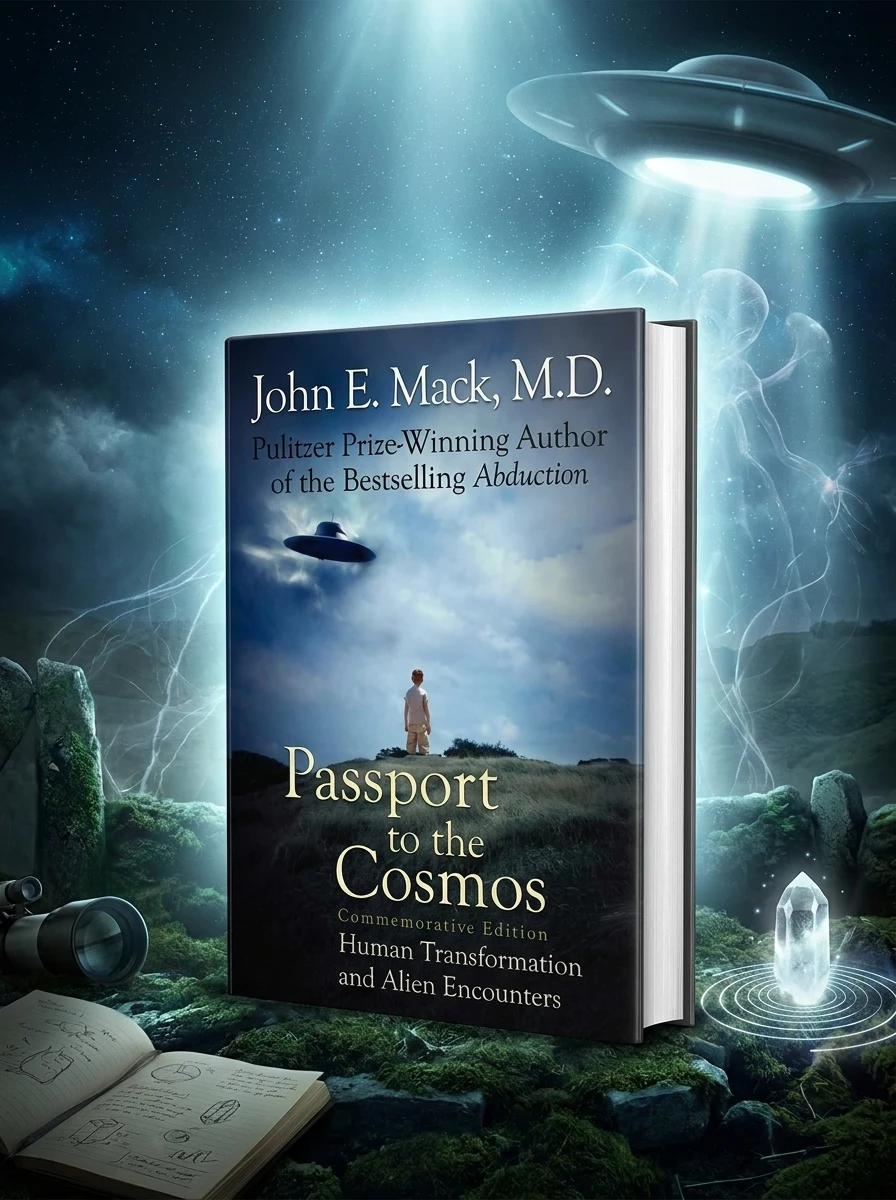
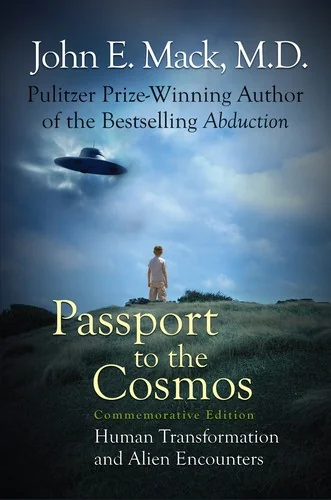
Passport to the Cosmos
✍️ Mack, John EJohn Mack's "Passport to the Cosmos" delves into the profound implications of alien encounter experiences, suggesting they offer a revolutionary lens through which to view our existence. He posits that these encounters unveil a cosmos vibrant with diverse forms of intelligence, moving beyond the purely physical. Rather than debating the material 'truth' of UFOs, Mack invites us to consider how these experiences challenge the very boundaries between the spiritual and the scientific, urging us to expand our understanding of reality and our own potential within it.


📝 Description: Passport to the Cosmos
💎 Expert review
📖 Why choose it
Why this book is worth reading
Readers seeking to transcend the rigid boundaries of conventional materialism will find profound value in this exploration. It is ideal for those who feel that standard scientific paradigms fail to capture the fullness of human experience, particularly regarding consciousness and reality. By engaging with Mack’s perspective on alien encounters, you gain access to a framework where the spiritual and scientific coexist harmoniously. This book empowers individuals to expand their understanding of their own potential within a universe teeming with diverse intelligence. It offers a revolutionary lens for viewing existence, inviting you to move beyond debates about physical truth toward a deeper appreciation of how these experiences challenge our perceptions. If you are ready to question the limits of your reality and embrace a more vibrant, intelligent cosmos, this text provides the essential passport for that journey.
⭐ Reader reviews
Reader rating
Mack’s approach is intellectually stimulating but may alienate strict skeptics who demand empirical proof over phenomenological interpretation. This work does not suit readers looking for hard scientific data or those who prefer to keep the domains of UFOlogy and spirituality strictly separate. It challenges the boundary between spiritual and scientific, which can be unsettling for materialists. However, for open-minded seekers willing to explore the implications of these encounters on our understanding of reality, it is a compelling read. The book succeeds in urging an expansion of consciousness rather than providing definitive answers about physical origins.
❓ Frequently asked questions
📖 Who should read this
If you're ready to question conventional notions of reality, consciousness, and the cosmos, and are open to exploring unexplained phenomena not just as curiosities but as profound avenues for self-discovery, this book will profoundly resonate with you.
🎯 Key themes and symbolism
Beyond Material Reality
Mack rigorously explores the idea that our conventional understanding of reality is far too limited. He argues that experiences often labeled 'alien encounters' push us past the edge of what we consider physical, revealing a multi-dimensional universe where spirit and matter are not separate but interwoven, challenging scientific reductionism.
Cosmic Intelligence & Life
This work suggests that the universe is not a sterile, empty void but is abundantly alive with various forms of intelligence. These intelligent entities may not always manifest in familiar, densely embodied forms, prompting us to reconsider what 'life' and 'consciousness' truly mean within a vast, interconnected cosmic framework.
Transformation Through Encounter
The book examines the profound transformative impact of these experiences on individuals. Mack links them to personal and collective awakening, touching upon themes of trauma, healing, and a renewed sense of urgency regarding our planet's ecological crisis, implying a deep connection between personal revelation and global stewardship.
📜 Historical context
📚 Glossary
- Interdimensional
- UAPs
- Ontological Shock
📔 Questions to reflect on
- How might a multi-dimensional understanding of reality change your personal perception of daily life and your place in the universe?
- Consider an experience in your life that challenged your established worldview. How did you integrate it, or how might Mack's perspective help you process it now?
- If the cosmos is indeed teeming with diverse intelligence, what ethical responsibilities might we have, both to our planet and to potential non-human entities?