US shipping Secure card payment Occult and esoteric books

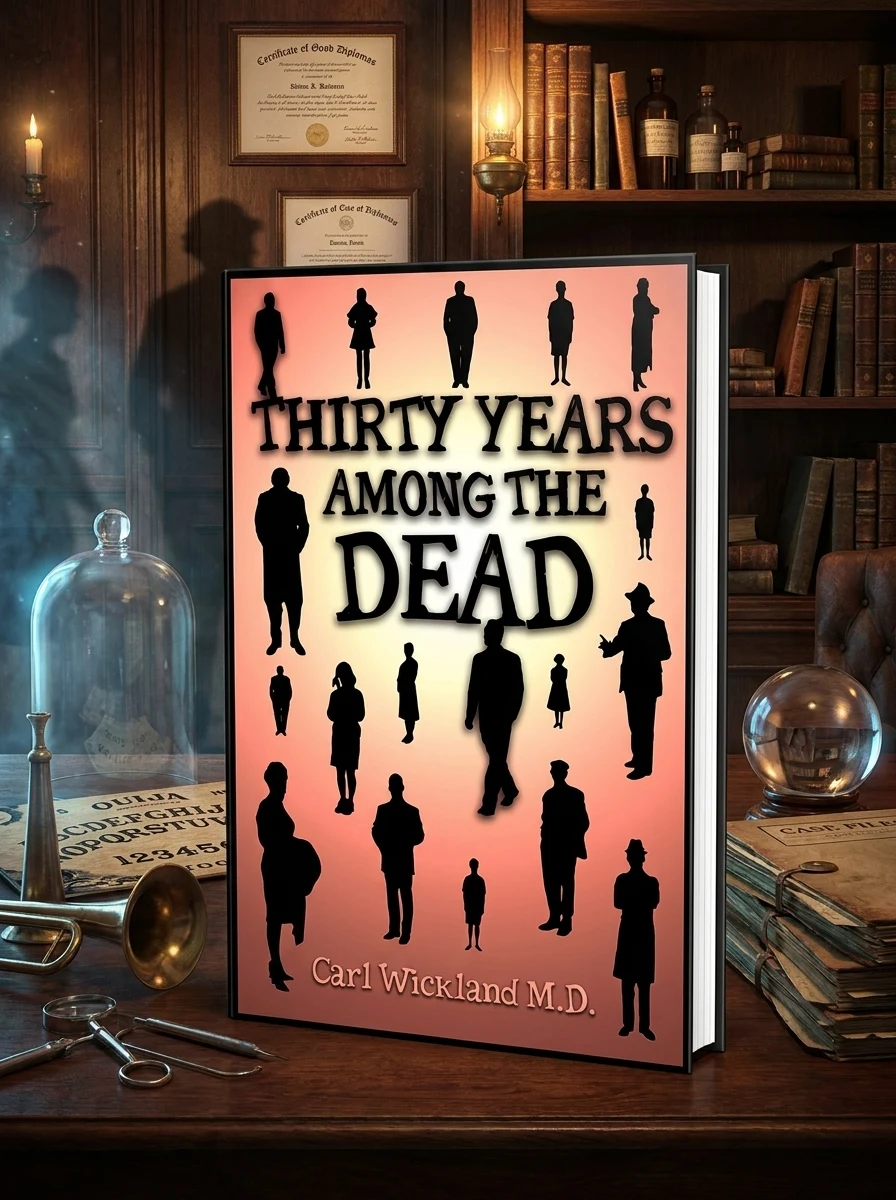
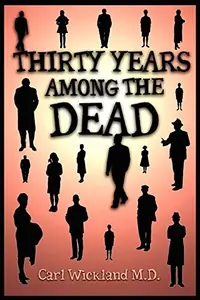
Thirty Years Among the Dead

Wickland, Carl
Reader rating
4.5
(1 reviews) 29 sold
In stock

Stock reported in the catalog; fulfillment is confirmed with your request.

📚 ABOUT THE BOOK

Uncover the radical theory that spirits, not just psyche, fuel mental anguish.

Dr. Carl Wickland, a respected physician and pioneering psychiatrist, details his astonishing conclusions drawn from decades of clinical practice. Working alongside his wife, a gifted trance medium, Wickland posited that many severe mental health conditions, from schizophrenia to addiction, were in fact caused by discarnate entities attaching themselves to unsuspecting individuals. This book chronicles his unique diagnostic methods and therapeutic interventions, presenting a compelling, if controversial, argument for a spiritual dimension to psychological suffering that challenges conventional medical understanding.

Key themes
Spirit Obsession Explained Mediumship as Diagnosis Challenging Psychiatric Norms
Historical context

This text sits at the intersection of early twentieth-century psychiatry and spiritualist mediumship, reflecting a period when medical professionals occasionally explored metaphysical explanations for mental illness. It bridges the gap between clinical observation and esoteric belief systems regarding the afterlife.

Difficulty
●● Moderate
Fans will love it
William James · Sir Arthur Conan Doyle · Charles Dickens' 'The Signal-Man' · Dion Fortune
🌠 Dreams & Astral
🏛 White Crow Books 📅 2011 📖 480 pages 📔 Paperback 📐 Paperback ISBN: 9781907661723
Fun fact
Wickland's 'Thirty Years Among the Dead' stands as a fascinating, if challenging, historical artifact in the annals of psychical research and alternative medicine. It excels in presenting a detailed, consistent theory of spirit attachment with numerous case studies, pushing the boundaries of what was considered 'medical' at the time. Those seeking purely scientific or mainstream psychiatric validation will be disappointed. However, for readers interested in the history of spiritualism, the paranormal, and the esoteric dimensions of human suffering, this book remains a foundational and thought-provoking text, a testament to a doctor who dared to look beyond the material.

📝 Description: Thirty Years Among the Dead

Dr. Carl A. Wickland, (1861-1945) was a member of the Chicago Medical Society, the American Association for the Advancement of Science, and the chief psychiatrist at the National Psychopathic Institute of Chicago. Wickland specialized in cases of schizophrenia, paranoia, depression, addiction, manic-depression, criminal behavior and other phobias. After moving to Los Angeles in 1918, he founded the National Psychological Institute of Los Angeles with his wife Anna Wickland, who was a trance medium. Wickland treated many patients suffering from mental illness of all kinds, and after many years experience came to the conclusion that a number of patients he treated had 'attachments;' by that he meant that spiritual entities had attached themselves to unwitting mortals and influenced them (often) in the worst kind of way-leading them to alcoholism, madness, and occasionally murder. Wickland stated at the time; Spirit obsession is a fact - a perversion of a natural law - and is amply demonstrable. This has been proven hundreds of times by causing the supposed insanity or aberration to be temporarily transferred from the victim to a psychic sensitive who is trained for the purpose, and by this method ascertain the cause of the psychosis to be an ignorant or mischievous spirit, whose identity may frequently be verified. Having come to the 'spirit obsession' conclusion, Wickland and his wife set up a rescue circle, with Mrs. Wickland acting as the medium, and they set about communicating with lost souls who had passed away and were unaware of their post physical death condition and often in denial due to dogmatic religious and equally dogmatic atheist beliefs. In the introduction of the book the author writes, The change called death, the word is a misnomer-universally regarded with gloomy fear, occurs so naturally and simply that the greater number, after passing out of the physical are not aware that the transition has been made, and having no knowledge of a spiritual life they are totally unconscious of having passed into another state of being. Deprived of their physical sense organs, they are shut out from the physical light, and lacking, a mental perception of the high purpose of existence, these individuals are spiritually blind and find themselves in a twilight condition-the outer darkness mentioned in the Bible - and linger in the realm known as the Earth sphere. The book documents a number of cases of both anonymous and well-known communicators such as Helena Blavatsky; cofounder of the Theosophy movement, and Mary Baker-Eddy, the founder of Christian Science. A number of subjects are discussed including crime, suicide, materialism, selfishness, and narcotics.

💎 Expert review

💎
Esoterica Books editorial team
Occult literature desk
Wickland presents a bold thesis that may alienate skeptics, but his clinical background lends a unique credibility to his extraordinary claims. The book is essential for historians of esotericism and those studying the evolution of psychiatric thought. However, it will likely frustrate readers seeking conventional scientific validation or those firmly entrenched in materialist psychology. It is not a light read for the faint of heart, nor a guide for modern therapeutic practice. Instead, it stands as a fascinating historical artifact that forces readers to confront uncomfortable questions about the nature of reality and the mind’s vulnerability.
✓ EDITOR'S REVIEW

📖 Why choose it

📖

Why this book is worth reading

Readers fascinated by the historical intersection of medicine and mysticism will find this book invaluable. It offers a rare glimpse into how early psychiatrists navigated the unknown, providing case studies that challenge modern assumptions about the mind's boundaries. Those interested in spiritualism, the history of mental health treatments, or the concept of discarnate entities will appreciate Wickland’s systematic approach to a controversial diagnosis. It serves as a compelling narrative for anyone curious about alternative theories of psychological suffering and the enduring human quest to understand consciousness beyond the physical realm.

⭐ Reader reviews

The starting rating comes from the team Esoterica Books —
⭐ Esoterica editorial review Editorial rating 4.6/5
★★★★
If you are drawn to the intersections of spiritualism, parapsychology, and historical medical thought, or if you seek alternative explanations for mental distress, this profound and challenging work will resonate deeply with your curiosities. It offers a unique historical lens on human suffering.

Reader rating

4.5
Based on 1 reviews
5
0
4
1
3
0
2
0
1
0
E
Esoterica Books editorial team

Wickland presents a bold thesis that may alienate skeptics, but his clinical background lends a unique credibility to his extraordinary claims. The book is essential for historians of esotericism and those studying the evolution of psychiatric thought. However, it will likely frustrate readers seeking conventional scientific validation or those firmly entrenched in materialist psychology. It is not a light read for the faint of heart, nor a guide for modern therapeutic practice. Instead, it stands as a fascinating historical artifact that forces readers to confront uncomfortable questions about the nature of reality and the mind’s vulnerability.

❓ Frequently asked questions

Wickland, a medical doctor, considered his methods scientific within his framework. While not adhering to modern double-blind studies, he meticulously documented hundreds of cases, presenting his findings as empirical evidence for spirit obsession and its resolution, rooted in observation and repeatable outcomes through his unique therapeutic process.
While it doesn't provide a step-by-step guide for self-treatment, the book details Wickland's therapeutic approach through his wife's mediumship. Readers gain insight into the mechanisms of attachment and detachment, offering a conceptual framework that might inform personal understanding or guide those seeking similar unconventional forms of spiritual and psychological assistance.

📖 Who should read this

If you are drawn to the intersections of spiritualism, parapsychology, and historical medical thought, or if you seek alternative explanations for mental distress, this profound and challenging work will resonate deeply with your curiosities. It offers a unique historical lens on human suffering.

🎯 Key themes and symbolism

Spirit Obsession Explained

Wickland meticulously outlines his theory of spirit attachment, suggesting that unseen entities can influence or even possess living individuals. He provides detailed case studies illustrating how these unseen forces, often disoriented or malevolent, contribute to mental distress, behavioral abnormalities, and chronic illness, proposing a spiritual etiology for psychopathology that extends beyond purely biological or psychological frameworks.

Mediumship as Diagnosis

The book highlights the indispensable role of Anna Wickland's mediumistic abilities in identifying and communicating with these alleged discarnate entities. Her trance states served as a therapeutic conduit, allowing the 'obsessing' spirits to be temporarily transferred and then enlightened or guided away, offering a unique diagnostic and therapeutic paradigm that blended psychic phenomena with medical practice in a groundbreaking way.

Challenging Psychiatric Norms

Wickland's work directly confronts the prevailing psychiatric views of his era, which largely dismissed spiritual or paranormal influences on mental health. He argues for a more expansive understanding of consciousness and its vulnerabilities, presenting his findings as evidence that many forms of 'insanity' could be understood, and potentially treated, through the lens of spirit interaction rather than solely through material pathology.

💬 Quotes from the book

“The supposed insanity or aberration can indeed be temporarily transferred, demonstrating the external influence at play.”

“Through patient communication with the attached entity, understanding and release can be achieved for both the living and the discarnate.”

📜 Historical context

Published in the early 20th century, Wickland’s work emerged during a vibrant period of psychical research and spiritualist movements, simultaneously with the nascent fields of psychology and psychiatry grappling with mental illness. It represents a bold attempt to bridge scientific inquiry with spiritual phenomena, offering a radical departure from the purely materialistic explanations that were gaining dominance in medical science.

📚 Glossary

Spirit Obsession
Trance Medium
Discarnate Entity

📔 Questions to reflect on

  1. How might a spiritual or energetic understanding of mental illness reshape our current approaches to therapy and healing?
  2. Reflect on a personal experience or observation where conventional explanations for behavior or mood felt insufficient. Could an 'unseen influence' offer an alternative perspective?
  3. Consider the ethical implications of a diagnostic process involving mediumship. What challenges and opportunities would such an approach present?

🏛 Books from this publisher White Crow Books

All books from this publisher →
You might also like

See more →