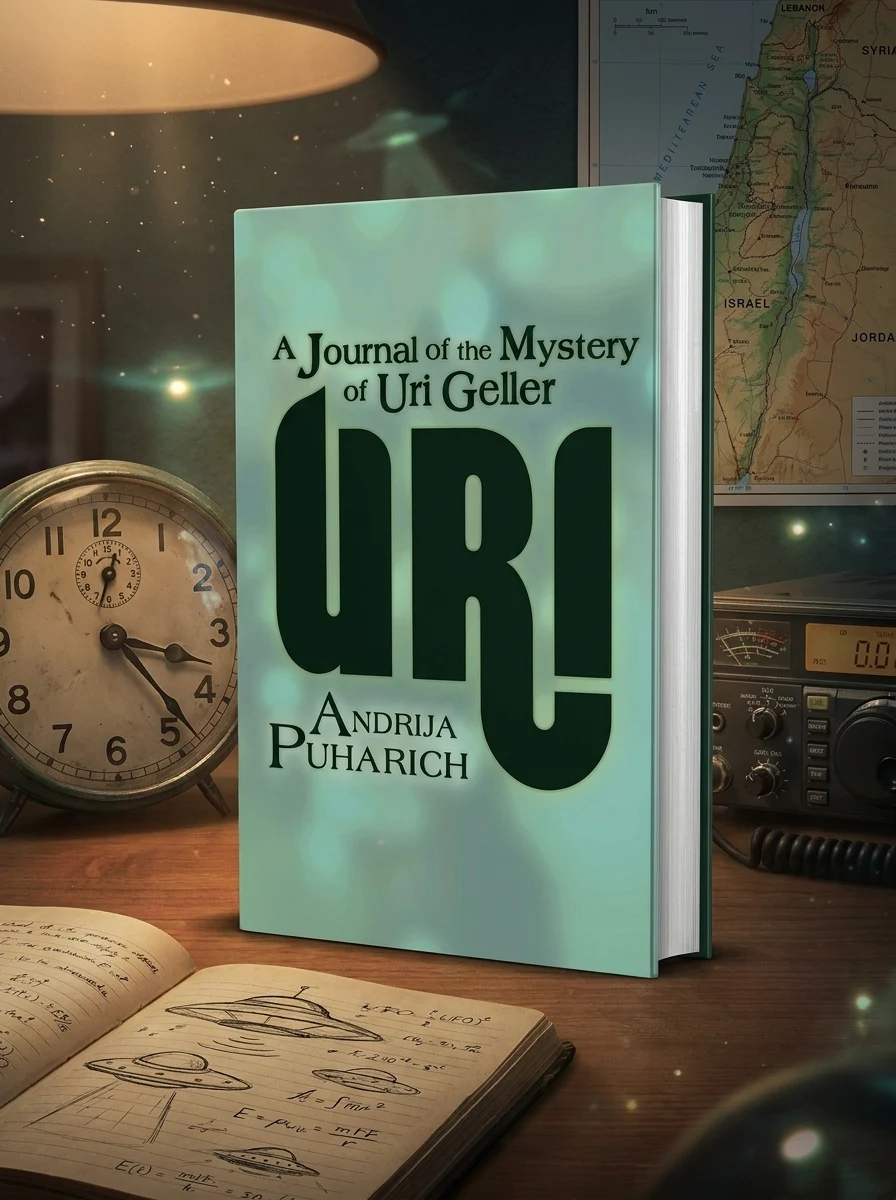
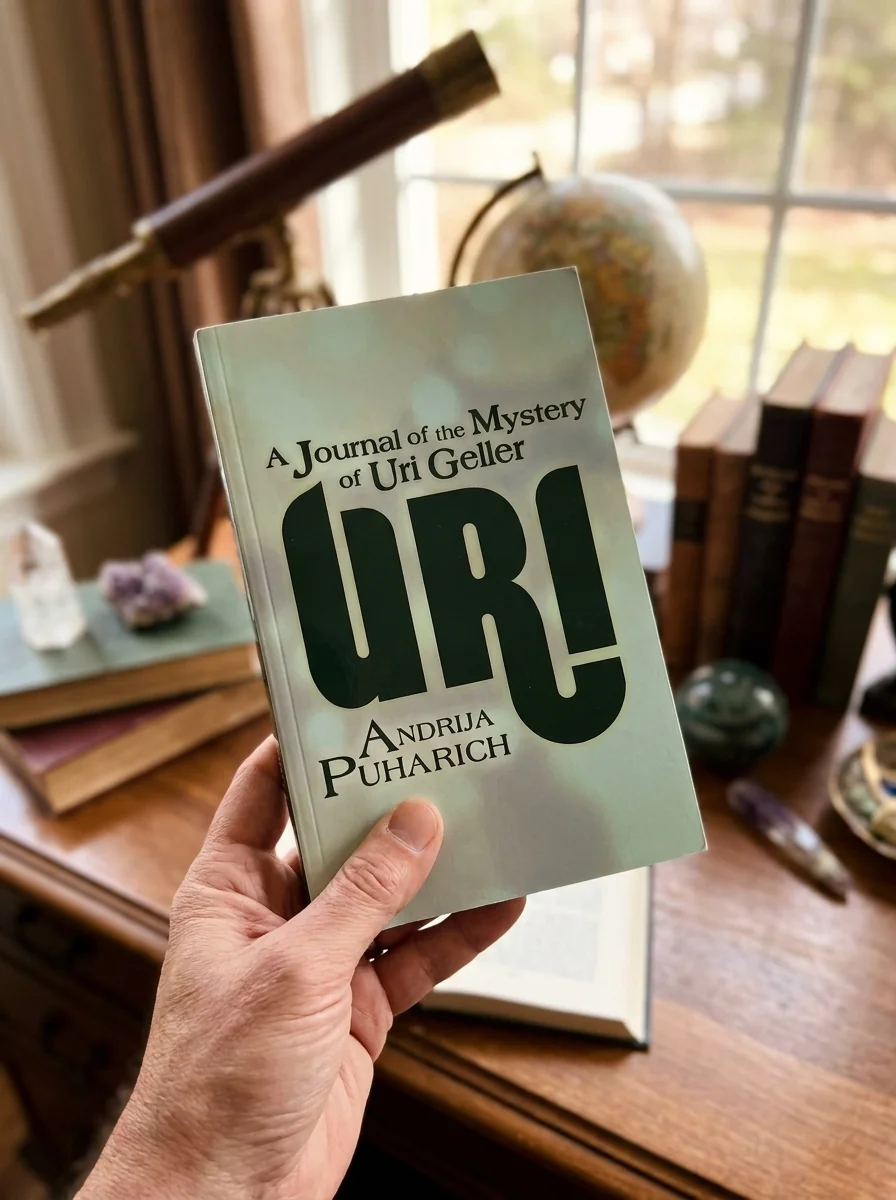

Uri: A Journal of the Mystery of Uri Geller
✍️ Puharich, AndrijaThis compelling journal by physician and researcher Andrija Puharich chronicles his intense investigation into the extraordinary abilities of Uri Geller, the Israeli psychic. Beginning in 1970, Puharich, already a seasoned explorer of parapsychology, documents Geller's astonishing telepathy and psychokinesis. The narrative quickly escalates into alleged communications with advanced non-human entities from a civilization called "Hoova," entities Puharich recognized from his own past experiences with channeling. It's a profound dive into the nature of reality, the paranormal, and humanity's place in the cosmos.


📝 Description: Uri: A Journal of the Mystery of Uri Geller
💎 Expert review
📖 Why choose it
Why this book is worth reading
This book offers a unique, insider perspective for those fascinated by the intersection of medical science and paranormal investigation. Readers who enjoy deep dives into alternative realities and cosmic connections will find Puharich’s chronicle compelling. It is ideal for those curious about how a physician approached psychic powers like telepathy and psychokinesis with academic rigor. The narrative appeals to anyone intrigued by the concept of advanced civilizations communicating through human channels. If you are drawn to mind-bending explorations of reality and the historical context of Uri Geller’s rise, this journal provides a profound look at humanity's place in the cosmos through a serious, investigative lens.
⭐ Reader reviews
Reader rating
Puharich presents a dense, intense account that demands patience from its audience. The narrative shifts rapidly from clinical observation to metaphysical channeling, which may alienate readers seeking straightforward journalistic reporting or purely skeptical analysis. Those expecting a lighthearted biography of Geller’s spoon-bending tricks will find this text overly abstract and esoteric. However, for those willing to engage with the alleged Hoova communications and the philosophical implications of psychic phenomena, the work offers a serious, albeit controversial, exploration of consciousness. It is not for the faint of heart or the strictly materialist-minded, but it remains a significant artifact of its specific occult niche.
❓ Frequently asked questions
📖 Who should read this
If you're drawn to accounts of genuine psychic investigation, the tantalizing possibility of extraterrestrial communication, or personal journeys into the outer limits of human perception, this book is essential. It's for those unafraid to question conventional reality and ponder humanity's place in a universe brimming with unexplained phenomena.
🎯 Key themes and symbolism
Extraterrestrial Contact & Channeling
The narrative pivots dramatically when Geller, under Puharich's observation, seemingly establishes communication with non-earthly intelligences known as "Hoova." This theme explores the mechanisms and implications of such alleged contact, drawing parallels to Puharich's earlier experiences with "The Nine" through other mediums.
Redefining Reality's Boundaries
Beyond mere psychic feats, the book probes fundamental questions about consciousness, the fabric of existence, and the potential for human interaction with forces currently beyond scientific understanding. It challenges conventional worldviews, inviting readers to consider a universe far more expansive and mysterious than commonly perceived.
📜 Historical context
📚 Glossary
- PSI Phenomena
- Channeling
- Psychokinesis
📔 Questions to reflect on
- Considering Puharich's scientific background, how might his approach to investigating psychic phenomena differ from a purely spiritual or anecdotal perspective, and what are the strengths and weaknesses of each?
- If non-human intelligences like 'Hoova' or 'The Nine' exist and communicate, what implications would this have for our understanding of human consciousness and the future direction of humanity?
- Reflect on times in your own life when you've encountered phenomena that defied conventional explanation. How did you process these experiences, and how might Puharich's narrative influence your perspective?