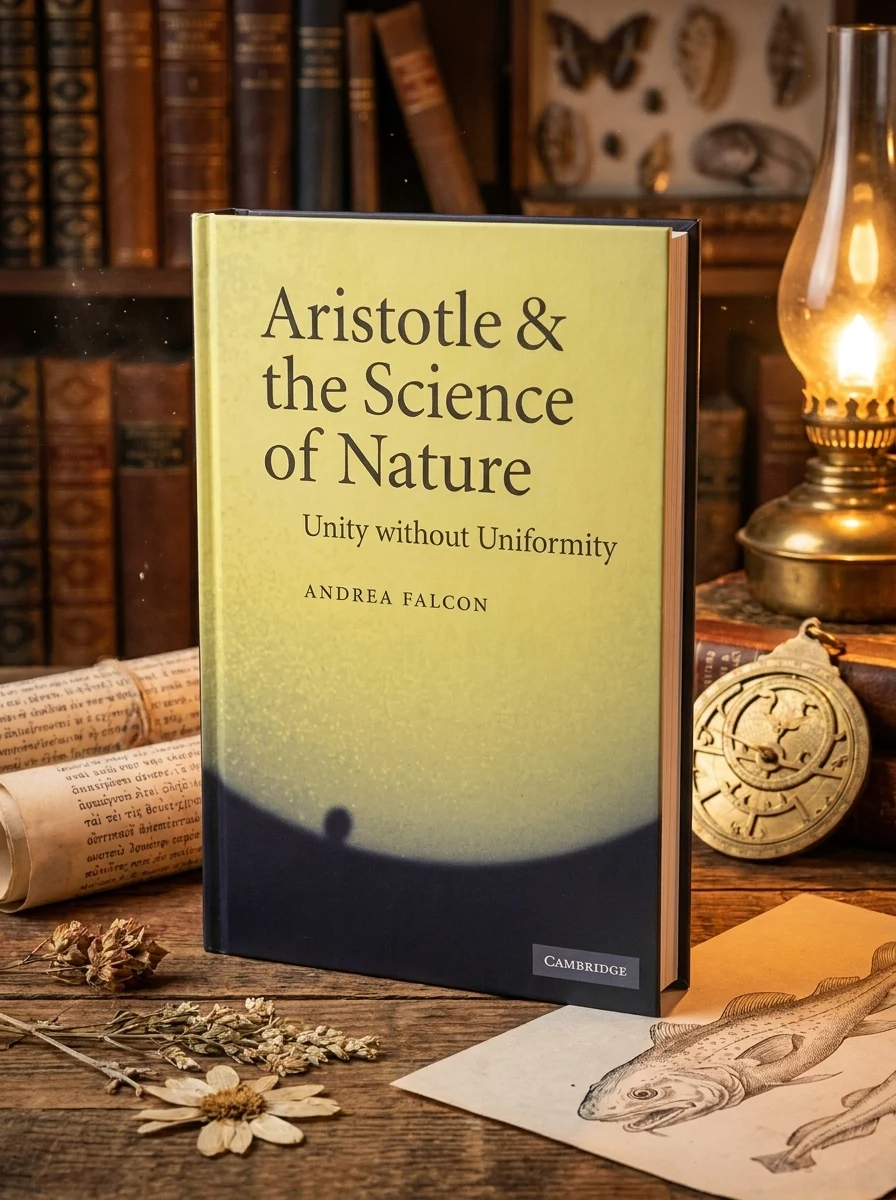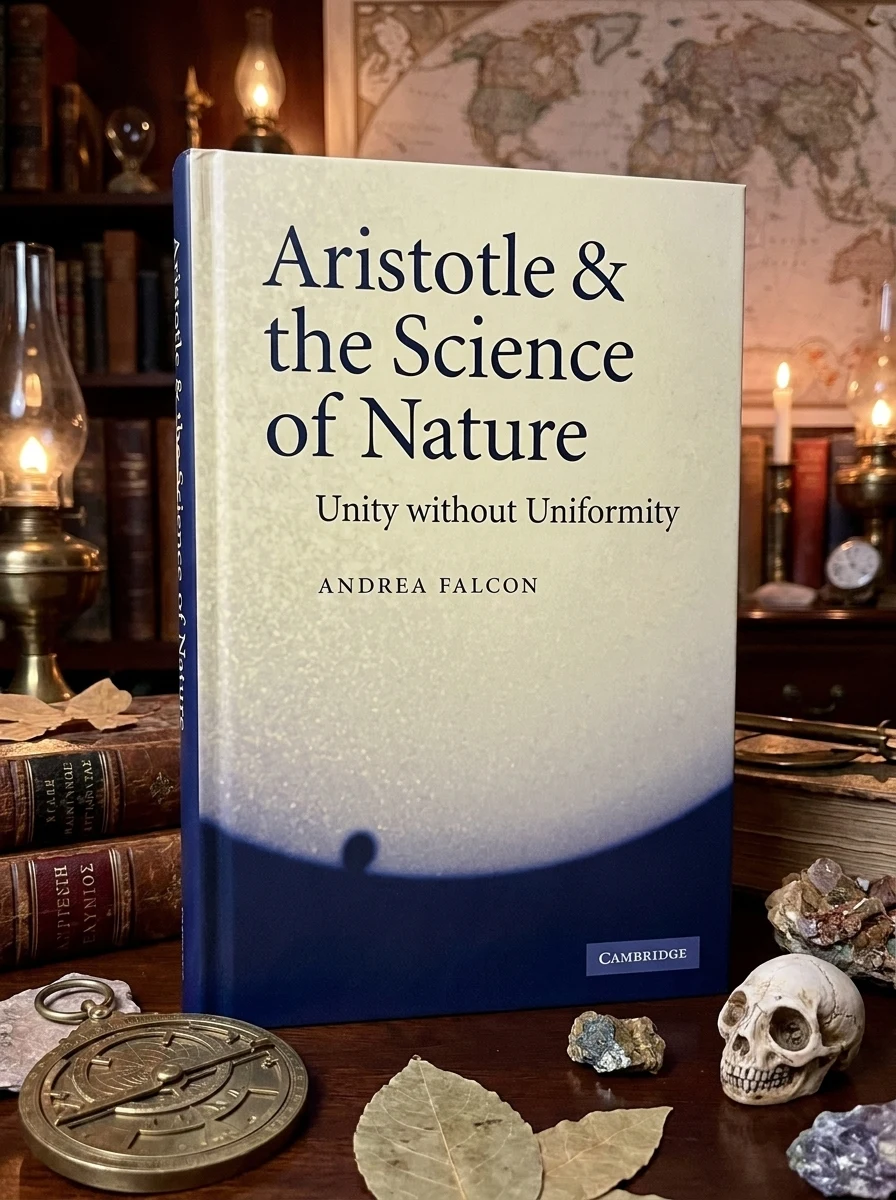
Aristotle and the Science of Nature: Unity Without Uniformity
Falcon, AndreaStock reported in the catalog; fulfillment is confirmed with your request.
Unravel Aristotle's profound vision of nature's harmonious complexity.
This profound study re-examines Aristotle's unique perspective on the natural world, arguing that he perceived its structure as fundamentally unified yet far from uniform. It challenges conventional interpretations by asserting that while all of nature shares a common essence, its diverse phenomena adhere to their own distinct principles. Readers will discover how Aristotle navigated the complexities of ancient science, reconciling overarching coherence with the myriad specificities of life and matter. It offers a fresh, nuanced lens on the Stagirite's foundational philosophical and scientific inquiries.
This work sits at the intersection of classical antiquity and modern philosophical inquiry, bridging ancient Greek natural philosophy with contemporary academic discourse on the history of science. It engages deeply with the foundational texts that shaped Western metaphysical thought regarding the structure of reality.


📝 Description: Aristotle and the Science of Nature: Unity Without Uniformity
💎 Expert review
📖 Why choose it
Why this book is worth reading
Scholars and students of ancient philosophy will find immense value in this nuanced exploration, as it dismantles reductive readings of Aristotle’s naturalism. Readers seeking to understand the subtle interplay between universal essence and particular diversity in pre-modern thought will appreciate the rigorous argumentation. It is particularly rewarding for those interested in how ancient thinkers reconciled coherence with complexity, offering a fresh lens on foundational inquiries that remain relevant to contemporary debates in metaphysics and the philosophy of science. This book provides essential context for anyone wishing to grasp the depth of Aristotelian unity without uniformity.
⭐ Reader reviews
Reader rating
Falcon delivers a sophisticated re-examination of Aristotle’s natural world, challenging conventional interpretations with precision. While intellectually stimulating for specialists in classical philosophy and history of science, this volume is not suited for casual readers or those seeking accessible introductions to ancient thought. The dense academic prose and specific focus on structural unity may alienate general audiences looking for broader historical narratives. It is a rigorous scholarly contribution rather than a popular overview, demanding patience and prior familiarity with Aristotelian concepts to fully appreciate its nuanced arguments regarding the harmonious complexity of nature.
❓ Frequently asked questions
📖 Who should read this
If you're a student of ancient philosophy, a history of science enthusiast, or simply curious about fresh perspectives on seminal thinkers, this book offers a compelling re-evaluation. It's perfect for those who appreciate rigorous scholarship that breathes new life into classical ideas.
🎯 Key themes and symbolism
Aristotle's Unique Nature View
This book meticulously dissects Aristotle's distinct approach to understanding the natural world. It moves beyond simplistic readings, revealing a philosopher who recognized the inherent structure of nature, distinct from purely abstract philosophical constructs. Readers will gain insight into how his observations and logic shaped his comprehensive system of natural philosophy.
Unified Yet Diverse Nature
The central argument posits that Aristotle saw a fundamental unity underpinning all natural phenomena, yet this unity did not necessitate uniformity. Each aspect of nature, from biological processes to celestial motions, possesses its own unique organizational principles, contributing to a harmonious cosmos without being reducible to a single, monolithic law.
Reinterpreting Ancient Science
This work offers a fresh perspective on the history of ancient scientific thought, specifically Aristotle's profound contributions. It highlights how his inquiries into the natural world laid crucial groundwork for later scientific endeavors, demonstrating a sophisticated, empirical approach often overlooked or misunderstood in modern interpretations of classical philosophy.
💬 Quotes from the book
“Aristotle’s natural philosophy, far from presenting a monolithic structure, reveals a profound respect for the inherent diversity within nature’s overarching coherence.”
“To truly grasp the Stagirite's scientific method, one must acknowledge how his inquiry consistently adapts its principles to the unique character of each natural phenomenon.”
📜 Historical context
📚 Glossary
- Stagirite
- Natural Philosophy
- Empiricism
📔 Questions to reflect on
- How might Aristotle's concept of "unity without uniformity" challenge or confirm your existing understanding of the natural world, both ancient and modern?
- If different aspects of nature possess their own unique structures, how does this affect our search for universal laws, and what are the implications for interdisciplinary scientific research?
- Consider a field of study you are familiar with. Can you identify instances where distinct methodologies or principles coexist under a broader, unified disciplinary umbrella, much like Aristotle envisioned?
✍️ More books by this author Falcon, Andrea
All books by this author →
🏛 Books from this publisher Cambridge University Press
All books from this publisher →


 75
75



You might also like
See more →