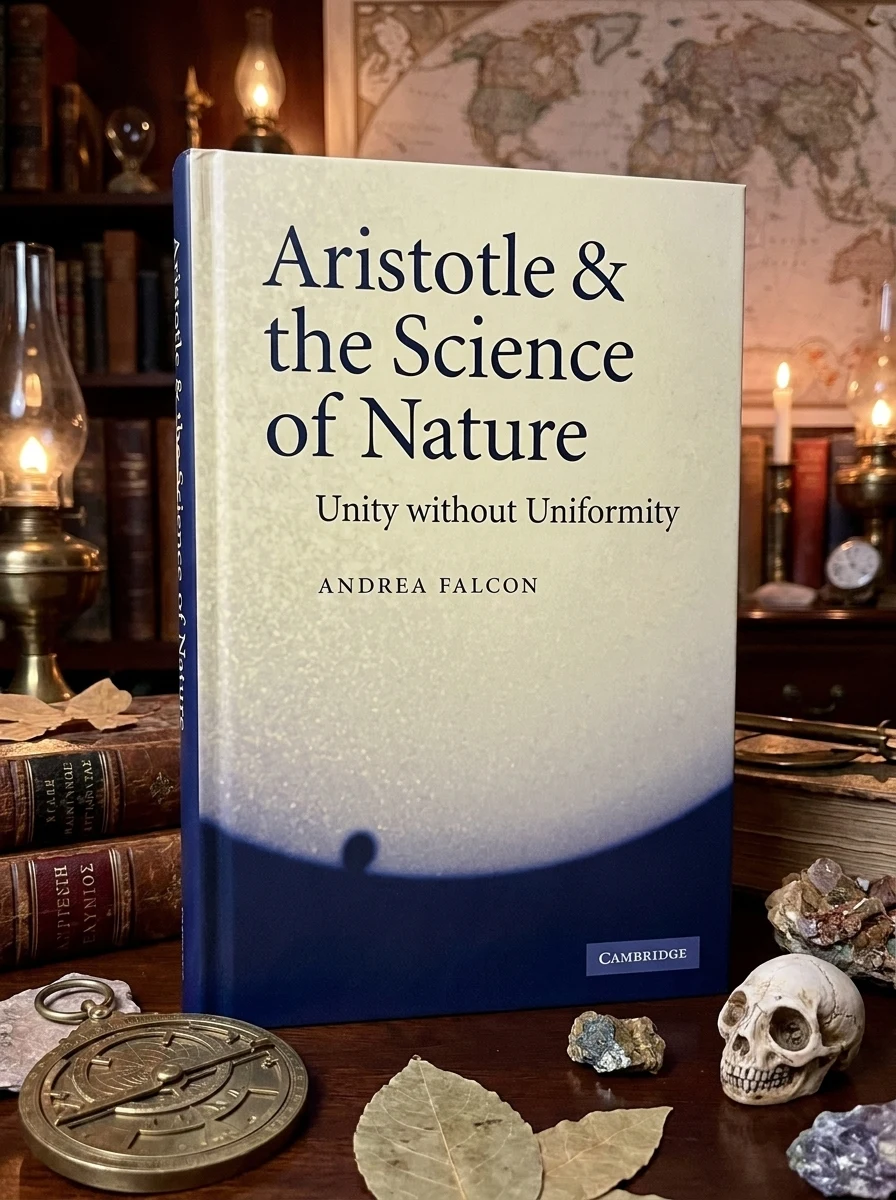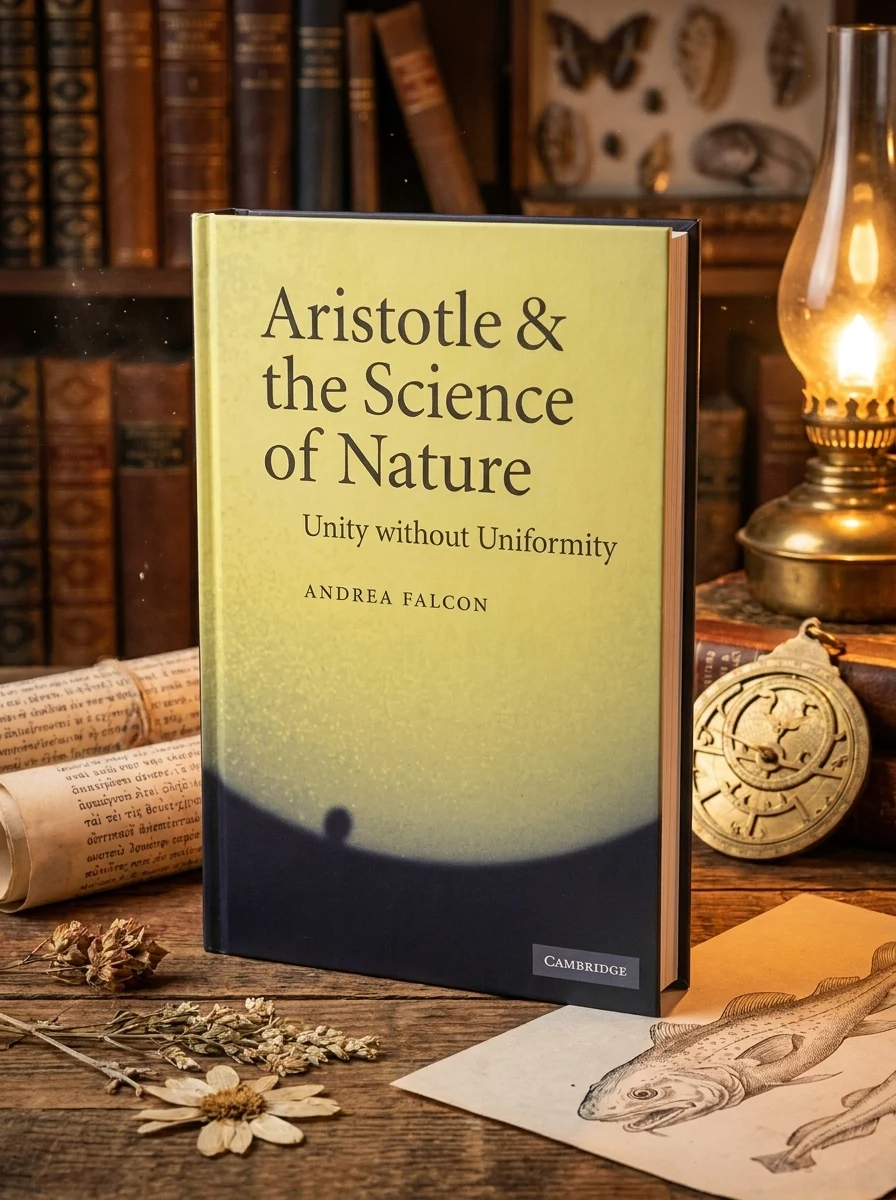

Aristotle and the Science of Nature: Unity Without Uniformity
Falcon, Andrea 80
80
 Editorial score
How we rate
Editorial score
How we rate
Stock reported in the catalog; fulfillment is confirmed with your request.
Explore Aristotle's profound vision of nature's inherent order.
Andrea Falcon's insightful work delves into Aristotle's unique understanding of the natural world. It meticulously unpacks the philosopher's assertion that nature, while diverse in its manifestations, possesses an underlying coherence. This study illuminates how Aristotle perceived a fundamental unity across all phenomena, yet without imposing a rigid, monolithic structure. Readers will find a compelling argument for a nuanced view of ancient science, revealing the sophisticated framework through which Aristotle approached the study of existence itself, bridging disparate elements into a cohesive whole.
This scholarly text situates itself within the rigorous tradition of academic philosophy and ancient science, published by Cambridge University Press for serious intellectual inquiry. It explores Aristotle's foundational vision of nature's inherent order, bridging ancient metaphysical thought with modern understandings of scientific coherence.


📝 Description: Aristotle and the Science of Nature: Unity Without Uniformity
💎 Expert review
📖 Why choose it
Why this book is worth reading
This book is essential for scholars and dedicated students of ancient philosophy who seek to move beyond superficial summaries of Aristotelian thought. Falcon offers a meticulous unpacking of the philosopher’s assertion that nature possesses an underlying coherence without imposing a rigid structure. Readers will find a compelling argument for a nuanced view of ancient science, revealing the sophisticated framework through which Aristotle approached existence. It bridges disparate elements into a cohesive whole, providing deep insight into how diversity in manifestations can still reflect fundamental unity. If you value intellectual rigor and wish to understand the profound vision of nature’s inherent order, this work provides the necessary depth and clarity for your studies.
⭐ Reader reviews
Reader rating
Andrea Falcon delivers an insightful but dense examination of Aristotle’s natural philosophy, emphasizing coherence over uniformity. While academically robust, this volume is not suited for casual readers or those seeking accessible primers on classical antiquity. It may frustrate individuals looking for straightforward narratives or practical applications of ancient wisdom, as it demands sustained engagement with complex philosophical arguments about existence and structure. The text excels in illuminating the sophisticated framework Aristotle used to approach the study of existence, yet its academic tone and theoretical focus will likely alienate general audiences. It is a niche work for those specifically interested in the intersection of metaphysics and ancient scientific methodology.
❓ Frequently asked questions
📖 Who should read this
If you are drawn to the origins of scientific thought, the deep philosophical underpinnings of reality, or seek a deeper understanding of ancient wisdom traditions, this book offers profound insights. It's for those who appreciate intellectual rigor applied to the natural world.
🎯 Key themes and symbolism
Aristotle's Natural Philosophy
This theme explores how Aristotle conceptualized the study of the natural world, moving beyond simple observation to develop a systematic framework. Falcon highlights the unique methodological and epistemological foundations that underpinned his inquiries into physics, biology, and cosmology, demonstrating their distinct intellectual architecture.
Unity in Diversity
Central to the book is the concept that all natural phenomena, despite their apparent differences, are interconnected by a singular, overarching principle. Falcon elucidates how Aristotle saw this inherent coherence, allowing for vast variation and individual characteristics within a unified, intelligible cosmos, rather than a uniform, undifferentiated reality.
Historical Scientific Roots
The book places Aristotle's contributions within the broader history of scientific thought, positioning him as a pivotal figure whose ideas shaped subsequent millennia. It examines how his unique approach to natural inquiry laid foundational groundwork for future empirical and philosophical investigations, influencing Western intellectual traditions profoundly.
💬 Quotes from the book
“Aristotle's nuanced perspective reveals a cosmos where every particular reflects a universal truth, yet retains its irreducible individuality, defying simplistic categorization.”
“The inherent structure of natural entities, as articulated by Aristotle, offers a profound methodological blueprint for understanding the world’s dynamic and diverse processes.”
📜 Historical context
📚 Glossary
- Natural Philosophy
- Unity Without Uniformity
- Peripatetic School
📔 Questions to reflect on
- How might an understanding of "unity without uniformity" change your perception of diversity in the natural world today?
- Consider a modern scientific discipline. How do its foundational assumptions echo or diverge from Aristotle's natural philosophical approach?
- In what ways could integrating ancient philosophical insights enrich contemporary scientific or spiritual inquiries into nature?
✍️ More books by this author Falcon, Andrea
All books by this author →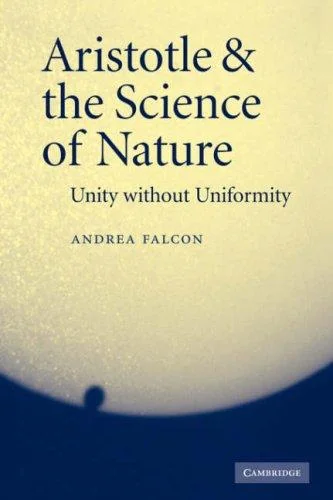
🏛 Books from this publisher Cambridge University Press
All books from this publisher →


 75
75



You might also like
See more →