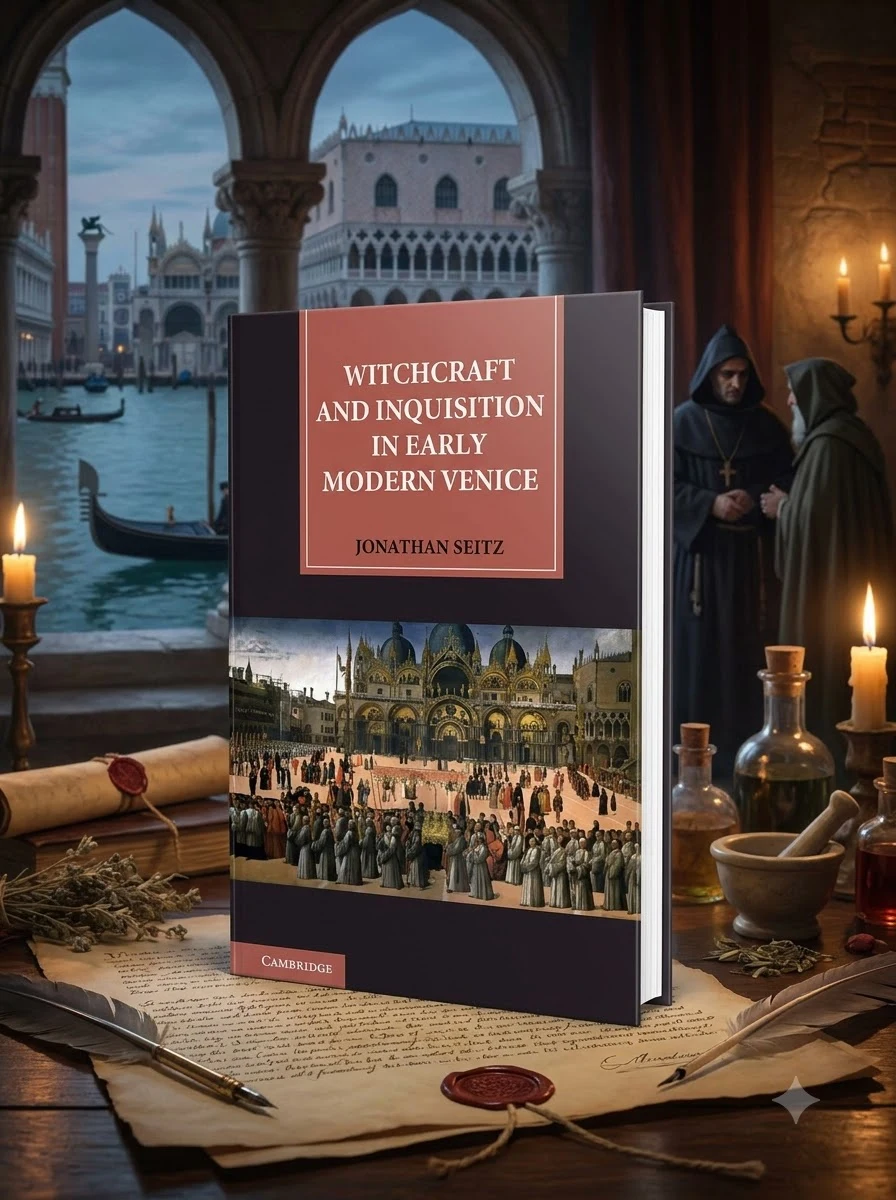
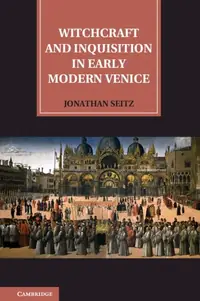
Witchcraft and Inquisition in Early Modern Venice
 87
87
 Editorial score
How we rate
Editorial score
How we rate
Stock reported in the catalog; fulfillment is confirmed with your request.
Unravel the tangled threads of magic and reason in early modern Venice.
Jonathan Seitz offers a profound exploration into how early modern Venetians, from the humblest servants to the most esteemed aristocrats, grappled with the elusive boundaries between natural phenomena and supernatural forces. Drawing extensively from Venetian Inquisition trial records, this work meticulously uncovers a society where ideas of God, demons, and occult powers were intrinsically linked. Unlike previous studies that often compartmentalized these subjects, Seitz skillfully integrates religious history, scientific thought, and witchcraft studies, providing a comprehensive and nuanced understanding of a complex era's belief systems.
This work situates itself within the rigorous intersection of religious history, scientific thought, and witchcraft studies during the early modern period in Venice. It explores how society navigated the elusive boundaries between natural phenomena and supernatural forces through the lens of the Inquisition.


📝 Description: Witchcraft and Inquisition in Early Modern Venice
💎 Expert review
📖 Why choose it
Why this book is worth reading
Scholars and enthusiasts of early modern European history will find this text indispensable for its innovative synthesis of disparate fields. By drawing extensively on Venetian Inquisition trial records, Seitz reveals how even the humblest servants and highest aristocrats grappled with the definitions of God, demons, and occult powers. Readers seeking to understand the intricate link between religious belief and scientific inquiry in this specific era will gain a comprehensive view that transcends traditional compartmentalization. It offers a nuanced perspective on how magic and reason were not opposing forces but intertwined threads in the social fabric of Venice, providing a vital resource for those studying the complexity of historical belief systems.
⭐ Reader reviews
Reader rating
Seitz delivers a meticulous and profound analysis that challenges previous scholarly boundaries by integrating religious history with scientific thought. However, this academic rigor means the book is not suited for casual readers seeking accessible narratives or simple moral tales about witchcraft. Those looking for sensationalist accounts of magical practices will likely find the dense integration of trial records and theoretical frameworks too heavy. It is a serious work intended for those willing to engage with complex historical data. While it excels in its nuanced approach, it demands patience and a strong interest in the intellectual history of early modern Venice rather than offering light entertainment.
❓ Frequently asked questions
📖 Who should read this
If you are fascinated by the complex interplay of history, religion, and magic, and seek a rigorous, source-driven exploration of early modern belief, this book is for you. It challenges simplistic views of witchcraft and offers deep insights into intellectual history.
🎯 Key themes and symbolism
Nature and the Supernatural
The book delves into the fluid and often debated concepts of nature and the supernatural in early modern Europe. It illustrates how these categories were not fixed but constantly negotiated, influencing daily life, intellectual discourse, and the very fabric of societal understanding regarding inexplicable events and perceived magical interventions.
Venetian Inquisition Records
A cornerstone of this study is its innovative use of primary sources. Seitz meticulously analyzes the archival records of witchcraft trials conducted by the Venetian Inquisition. These unique documents offer intimate glimpses into the accusations, defenses, and testimonies, providing unparalleled access to individual and collective beliefs of the period.
Societal Belief Systems
This work comprehensively demonstrates how beliefs concerning witchcraft, divine intervention, and demonic influence permeated all strata of early modern Venetian society. It reveals that such convictions were not confined to the uneducated but were integral to the worldviews of both commoners and elite figures, shaping their interactions and understanding of reality.
💬 Quotes from the book
“The boundaries between divine providence, natural law, and demonic intervention were not fixed lines, but rather a spectrum of interpretation keenly debated in every corner of Venetian society.”
“Through the testimonies extracted during the Inquisition's rigorous proceedings, we gain unparalleled access to the lived experience of metaphysical uncertainty among commoners and elites alike.”
📜 Historical context
📚 Glossary
- Inquisition
- Early Modern
- Occult Forces
📔 Questions to reflect on
- How do modern societies draw lines between the 'natural' and 'supernatural,' and what parallels or divergences can you identify with the early modern Venetian context?
- Consider how historical records, like those from the Inquisition, can both illuminate and potentially distort the lived experiences of individuals. What ethical considerations arise when interpreting such sources?
- Reflect on how dominant intellectual frameworks (religious, scientific, philosophical) of any era shape individual and collective understandings of unexplained phenomena and 'occult forces.'
🏛 Books from this publisher Cambridge University Press
All books from this publisher →
 75
75

You might also like
See more →
 90
90



 89
89