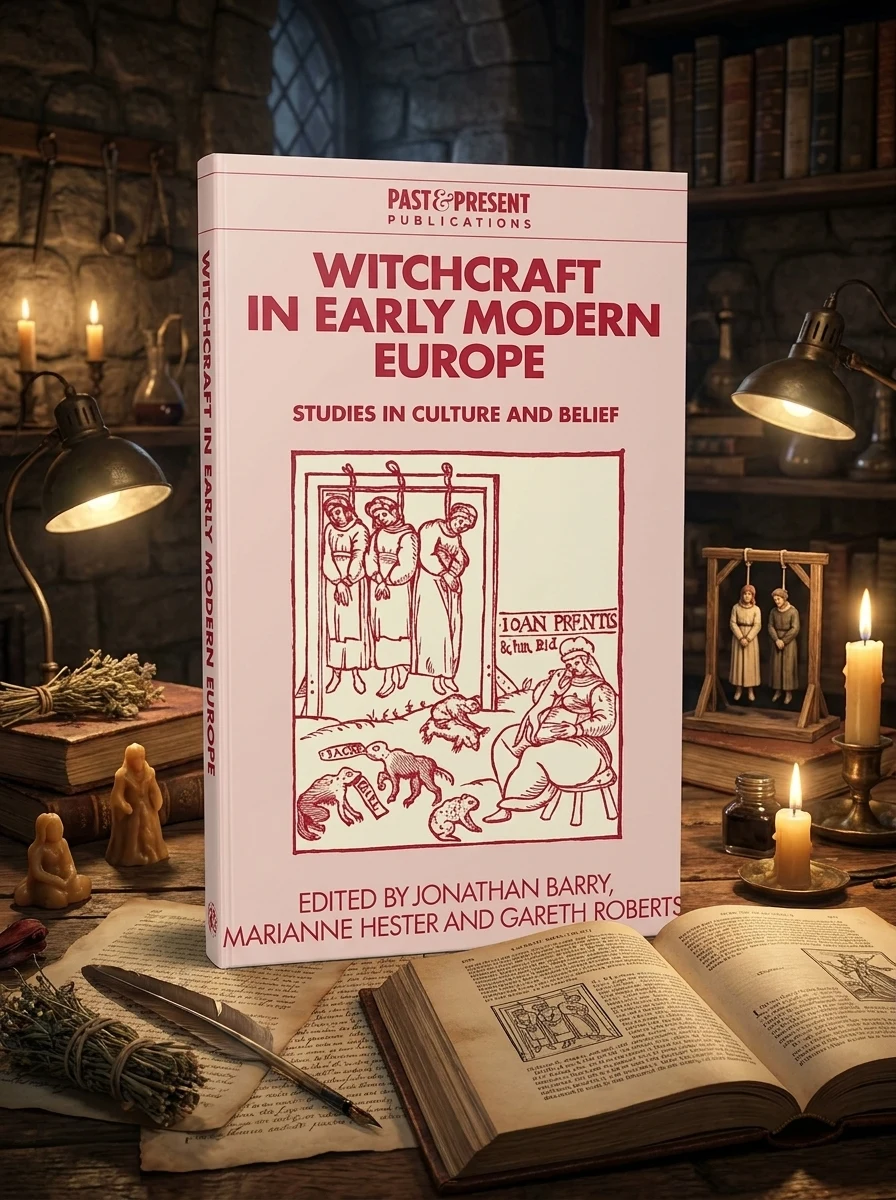

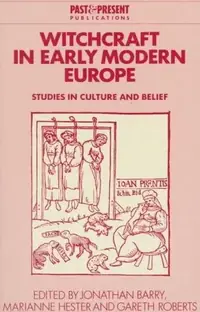
Witchcraft in Early Modern Europe: Studies in Culture and Belief Barry, Jonathan
Stock reported in the catalog; fulfillment is confirmed with your request.
Uncover the tangled roots of witchcraft through fresh cultural and power dynamics perspectives.
Jonathan Barry curates a vital anthology that challenges traditional narratives of early modern European witchcraft. Building upon Keith Thomas’s foundational work, this collection integrates insights from veteran scholars and emerging voices to reveal how witchcraft accusations functioned as complex power struggles. The text examines gender, ideology, and social hierarchy, arguing that witchcraft was a contested cultural concept rather than a settled fact. By analyzing cases from England, France, Germany, and the Spanish New World, the contributors demonstrate how these beliefs were difficult to dislodge from the collective consciousness, offering a nuanced view of belief and practice in a turbulent era.
This anthology situates itself within the historiography of early modern Europe, challenging traditional narratives by examining witchcraft accusations through the lenses of power dynamics, gender, and social hierarchy. It expands upon foundational scholarship to reveal how these beliefs functioned as contested cultural concepts rather than settled facts across diverse regions.


📝 Description: Witchcraft in Early Modern Europe: Studies in Culture and Belief Barry, Jonathan
💎 Expert review
📖 Why choose it
Why this book is worth reading
Scholars, students of religious history, and enthusiasts of esoteric cultural dynamics will find profound value in this text. It offers a nuanced perspective on how witchcraft was not merely a superstition but a complex mechanism of social control and ideological struggle. Readers interested in the intersection of gender studies and legal history will appreciate the detailed analysis of cases from England, France, Germany, and the Spanish New World. The book is essential for those seeking to understand the tangled roots of these beliefs and how they were deeply embedded in the collective consciousness of a turbulent era, providing fresh insights into the cultural and power structures of early modern Europe.
⭐ Reader reviews
Reader rating
Finally got around to ordering this. I appreciated how the argument builds steadily from first principles. A keeper.
Barry’s anthology serves as a rigorous academic intervention, dismantling simplistic views of witchcraft by framing accusations as intricate power struggles involving ideology and hierarchy. However, this work is strictly for those with an appetite for dense historical analysis and theoretical frameworks. It will likely frustrate readers seeking narrative-driven storytelling, practical magical instruction, or accessible pop-history summaries. The text demands patience and a willingness to engage with complex scholarly arguments regarding belief systems and social structures. While intellectually stimulating for the right audience, it lacks the narrative warmth or practical utility that general occult practitioners might desire, making it unsuitable for casual readers or those looking for direct engagement with esoteric practice rather than its historical context.
❓ Frequently asked questions
📖 Who should read this
Scholars of early modern history, students of gender studies, and occultists seeking to ground their practice in rigorous historical analysis rather than myth. It appeals to those interested in the sociology of belief.
🎯 Key themes and symbolism
Power and Gender Dynamics
The essays analyze witchcraft trials not merely as religious phenomena but as intense social conflicts. They reveal how accusations were weaponized to negotiate power, particularly targeting women and marginalized figures within community structures.
Cultural Contestation
Witchcraft is presented as an unstable category, constantly debated and reshaped by conflicting ideologies. The contributors show how alternative representations of the supernatural resisted easy categorization or elimination in early modern society.
Transnational European Scope
The volume moves beyond isolated national histories to compare English, French, German, and Spanish contexts. This broad lens highlights how the Spanish expansion influenced New World beliefs while maintaining distinct European cultural threads.
💬 Quotes from the book
“Witchcraft was always a contested idea, never fully established in early modern culture but much harder to dislodge than has usually been assumed.”
“Witchcraft cases must be understood as power struggles, over gender and ideology as well as social relationships.”
📜 Historical context
📚 Glossary
- Cultural Dimensions
- Alternative Representations
- Ideological Power Struggles
📔 Questions to reflect on
- How did the concept of 'power' manifest in the accusations you have studied, and who held the most leverage?
- In what ways do the cultural dimensions of witchcraft in this text mirror modern societal fears or scapegoating mechanisms?
- How did the geographical spread of these beliefs from Europe to the New World alter their expression or intensity?
🏛 Books from this publisher Cambridge University Press
All books from this publisher →
 75
75

You might also like
See more →
 90
90
 89
89
