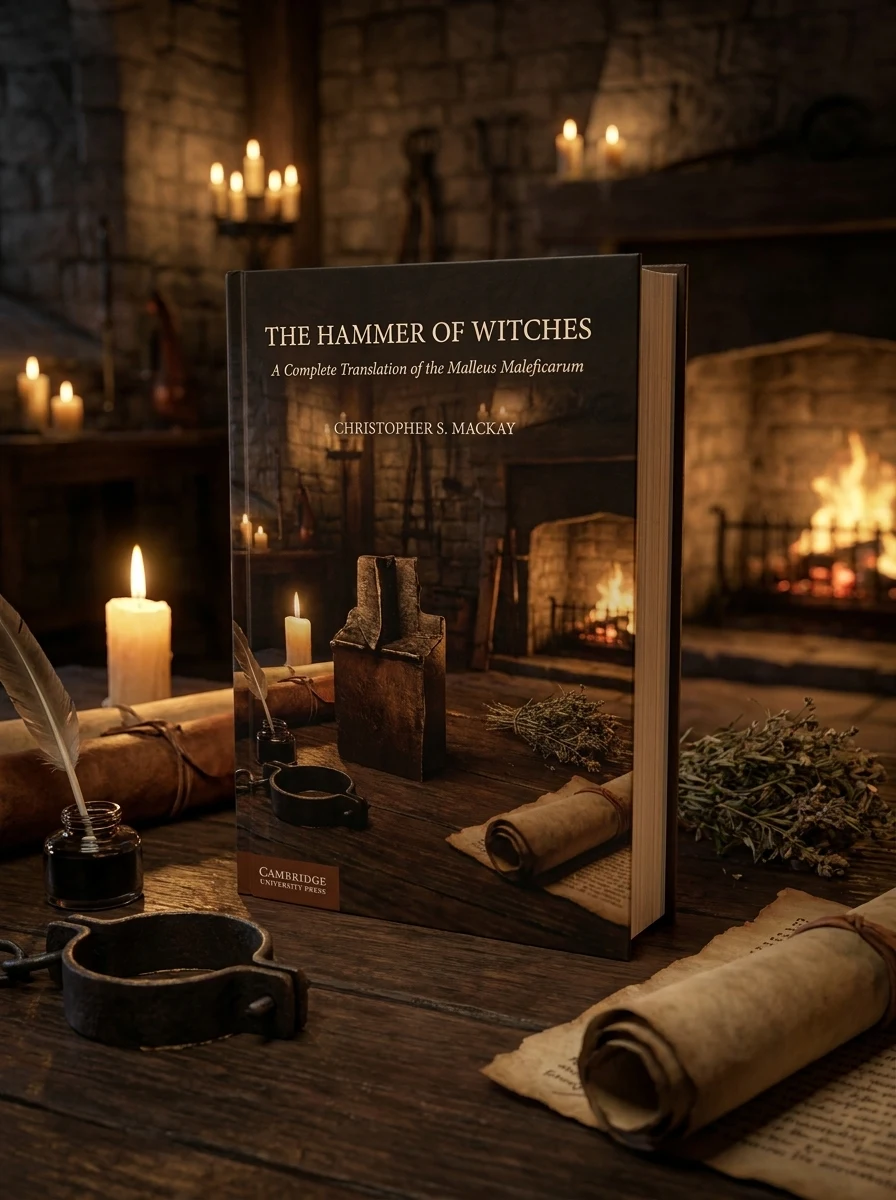
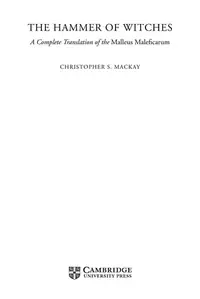
The Hammer of Witches
MacKay, Christopher SStock reported in the catalog; fulfillment is confirmed with your request.
Uncover the dark heart of medieval fear and its brutal methods against perceived evil.
This definitive edition presents the infamous "Malleus Maleficarum," or "Hammer of Witches," a foundational text in the history of European witchcraft persecution. Originally penned in the late 15th century, its influence on legal, religious, and societal views of magic and heresy persisted for centuries. Christopher S. MacKay's meticulous translation offers the sole complete and most accurate English version available, illuminating the grim realities of early modern justice and the pervasive dread of sorcery. Accompanied by scholarly notes and further reading, this volume is an essential resource for understanding a pivotal, terrifying era.
This text serves as a foundational document in the history of European witchcraft persecution, reflecting the intense legal and religious anxieties regarding magic and heresy that defined the early modern period.


📝 Description: The Hammer of Witches
💎 Expert review
📖 Why choose it
Why this book is worth reading
This volume is an essential resource for scholars, historians, and serious students of esoteric history who seek to understand the pivotal and terrifying era of early modern justice. Christopher S. MacKay’s meticulous translation provides the sole complete and most accurate English version of this infamous foundational text, illuminating the grim realities of societal dread. Readers will gain profound insight into how legal, religious, and cultural views of magic were shaped by brutal methods against perceived evil. Accompanied by scholarly notes and further reading, it offers a definitive edition that is indispensable for anyone wishing to uncover the dark heart of medieval fear without encountering fragmented or inferior translations.
⭐ Reader reviews
Reader rating
MacKay’s definitive edition is a vital contribution to the study of European witchcraft persecution, offering the only complete and accurate English translation of this influential yet horrifying text. The inclusion of scholarly notes enhances its value for academic inquiry into early modern justice and religious anxiety. However, this book is not suitable for casual readers seeking entertainment or those uncomfortable with graphic depictions of historical brutality and systemic oppression. It is a dense, serious work intended for those prepared to engage with the grim realities of the past. While intellectually robust, it lacks narrative flair, making it inaccessible to anyone preferring light reading over rigorous historical analysis.
❓ Frequently asked questions
📖 Who should read this
If you seek an unflinching look into the darkest corners of medieval thought and the origins of witchcraft hysteria, this translation is indispensable. Scholars, students, and anyone fascinated by the history of occultism, law, and religious persecution will find profound, albeit disturbing, insights within these pages.
🎯 Key themes and symbolism
Witchcraft Extermination Methods
This text meticulously details the perceived malevolent actions of witches, from pacts with devils to casting spells, alongside comprehensive instructions for their identification, interrogation, and ultimate eradication. It served as a chilling manual for authorities, outlining legal and theological justifications for severe punishment, reflecting a society obsessed with rooting out perceived spiritual corruption.
Medieval Legal & Religious Doctrine
The "Malleus" synthesizes prevailing theological beliefs and legal frameworks of the 15th century, presenting a systematic argument for the reality and inherent evil of witchcraft. It offers profound insight into the era's understanding of sin, divine justice, and the role of the Church and secular law in maintaining moral order through extreme retribution against perceived heretics.
Fear and Social Control
Beyond its practical applications, the book reveals the pervasive anxieties of the medieval mind, particularly regarding unknown forces and challenges to established power. It exemplifies how fear of the supernatural was weaponized to control populations, reinforce religious conformity, and justify violence, painting a stark picture of a society grappling with its own vulnerabilities and superstitions.
💬 Quotes from the book
“A witch, by her very nature and through the devil's aid, is capable of inflicting countless evils upon man, beast, and crop, for her malice knows no bounds.”
“Therefore, let no judge hesitate to apply the severest torments, for only through such means can the truth of their abominable pacts be brought to light and justice served.”
📜 Historical context
📚 Glossary
- Malleus Maleficarum
- Early Modern Period
- Witchcraft
📔 Questions to reflect on
- How did the "Malleus Maleficarum" shape societal fears and legal practices regarding perceived deviance, and what parallels, if any, can be drawn to modern anxieties?
- Reflect on the power of authoritative texts to justify violence and persecution. What ethical responsibilities fall upon those who translate and disseminate such historical documents today?
- Consider the role of "sin, punishment, and retribution" in the 15th-century mind as depicted in this work. How do these concepts differ from or align with contemporary ethical frameworks?
🏛 Books from this publisher Cambridge University Press
All books from this publisher →

 75
75

You might also like
See more →
 90
90


 89
89
