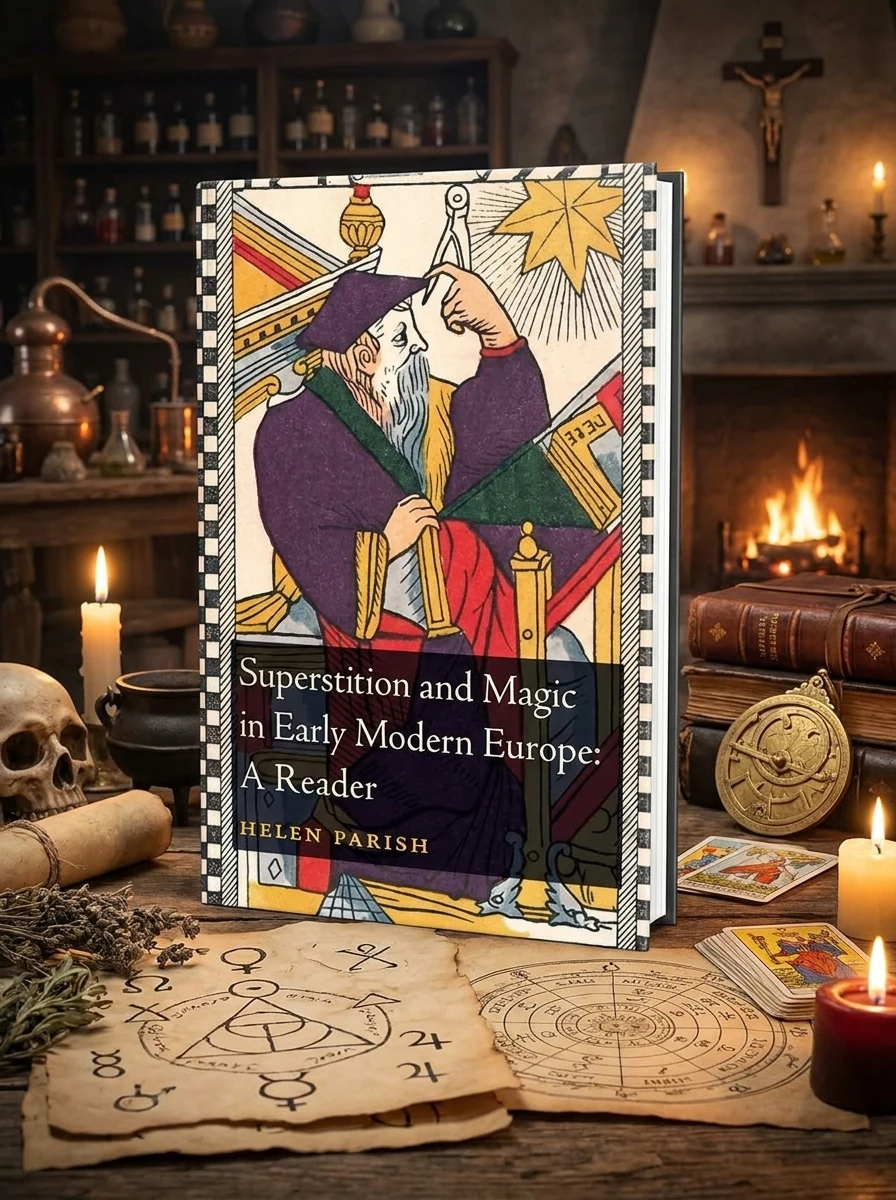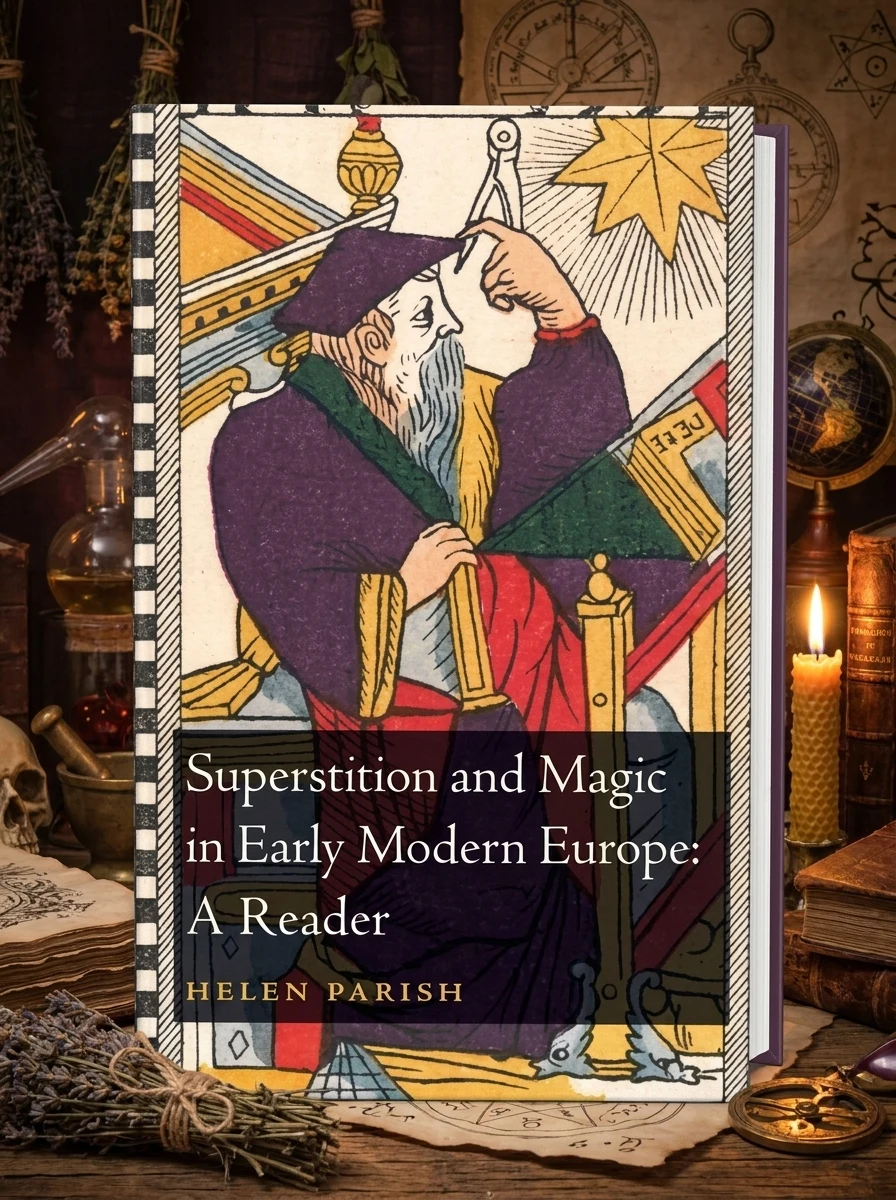

Superstition and Magic in Early Modern Europe: A Reader
A academic collection of historical essays exploring superstition, magic, and witchcraft in early modern Europe.
This reader brings together major historical scholarship tracing how early modern Europeans understood and debated the supernatural world. Helen Parish organizes essential academic essays to highlight how concepts of magic, miracles, and apparitions evolved alongside shifting societal views. Her contextual introductions frame each section to guide readers through complex historiographical debates and historical changes. The material focuses strictly on scholarly analysis rather than personal practice, helping readers trace the eventual decline of the magical worldview under scientific and religious pressure.
This material sits in early modern Europe, during a era of religious, scientific, and practical opposition to traditional beliefs. The collection focuses on the historical debates and changing ideas that eventually led to the gradual disintegration of the magical universe.


📝 Description: Superstition and Magic in Early Modern Europe: A Reader
💎 Expert review
📖 Why choose it
Why this book is worth reading
Scholars, students, and serious enthusiasts of esoteric history will find this anthology an indispensable resource for navigating the complex intellectual frameworks that defined early modern magical thought. By presenting a curated selection of seminal essays, the book offers crucial socio-political context and traces the evolution of scholarly understanding regarding witchcraft and the eventual decline of the 'magical universe.' It is particularly valuable for those seeking to move beyond surface-level myths and engage with rigorous academic analysis. The structured approach, organized around five pivotal themes and prefaced by contextual introductions, ensures that readers gain a comprehensive grasp of how religion and superstition intertwined. This collection illuminates the hidden currents of belief, making it essential for anyone wishing to deeply understand the historical forces that shaped European occultism and popular belief during this transformative period.
⭐ Reader reviews
Reader rating
This anthology serves as a robust academic tool, meticulously tracing scholarly thought on magic and superstition in early modern Europe through five key themes. It is an excellent resource for those seeking rigorous intellectual frameworks and historical context regarding witchcraft and the waning of magical beliefs. However, it does not suit casual readers or those looking for narrative storytelling or practical ritualistic guidance. The dense, scholarly nature of the curated essays may feel inaccessible to general audiences preferring lighter, more accessible popular history. Readers expecting a straightforward chronological account or engaging prose might find the analytical focus dry. It is strictly for those prepared to engage with complex socio-political frameworks and academic discourse rather than entertaining anecdotes. The value lies entirely in its scholarly depth, not in narrative flair or broad accessibility.
❓ Frequently asked questions
📖 Who should read this
If you're fascinated by the intersection of history, religion, and the supernatural, this collection is for you. It offers students and curious readers alike an unparalleled entry point into the scholarly debates surrounding magic, witchcraft, and popular belief in a transformative era.
🎯 Key themes and symbolism
Superstition's Shifting Sands
This section delves into the multifaceted concept of superstition in early modern society, exploring how it was defined, practiced, and often condemned. It examines the fine line between accepted religious practice and perceived heretical belief, revealing the anxieties and folkways that shaped everyday life.
The Witchcraft Phenomenon
Unpack the chilling history of witchcraft and the infamous trials that gripped Europe. This theme investigates the cultural, legal, and theological foundations of belief in malefic magic, revealing the profound societal fears and power dynamics that fueled these persecutions.
Decline of Magical World
Explore the gradual erosion of a worldview saturated with magical thinking. This part traces the emergence of new scientific principles and reformed religious doctrines, charting how these forces progressively challenged and ultimately diminished the pervasive belief in an enchanted cosmos.
📜 Historical context
📚 Glossary
- Historiography
- Early Modern Europe
- Malefic Magic
📔 Questions to reflect on
- How did the evolving definitions of 'superstition' reflect deeper societal anxieties or power struggles in early modern Europe?
- Consider the 'disintegration of the magical universe.' What parallels, if any, can you draw to contemporary shifts in belief systems or scientific understanding?
- If you lived in early modern Europe, how might your daily life and understanding of the world be shaped by the pervasive belief in magic and the supernatural?