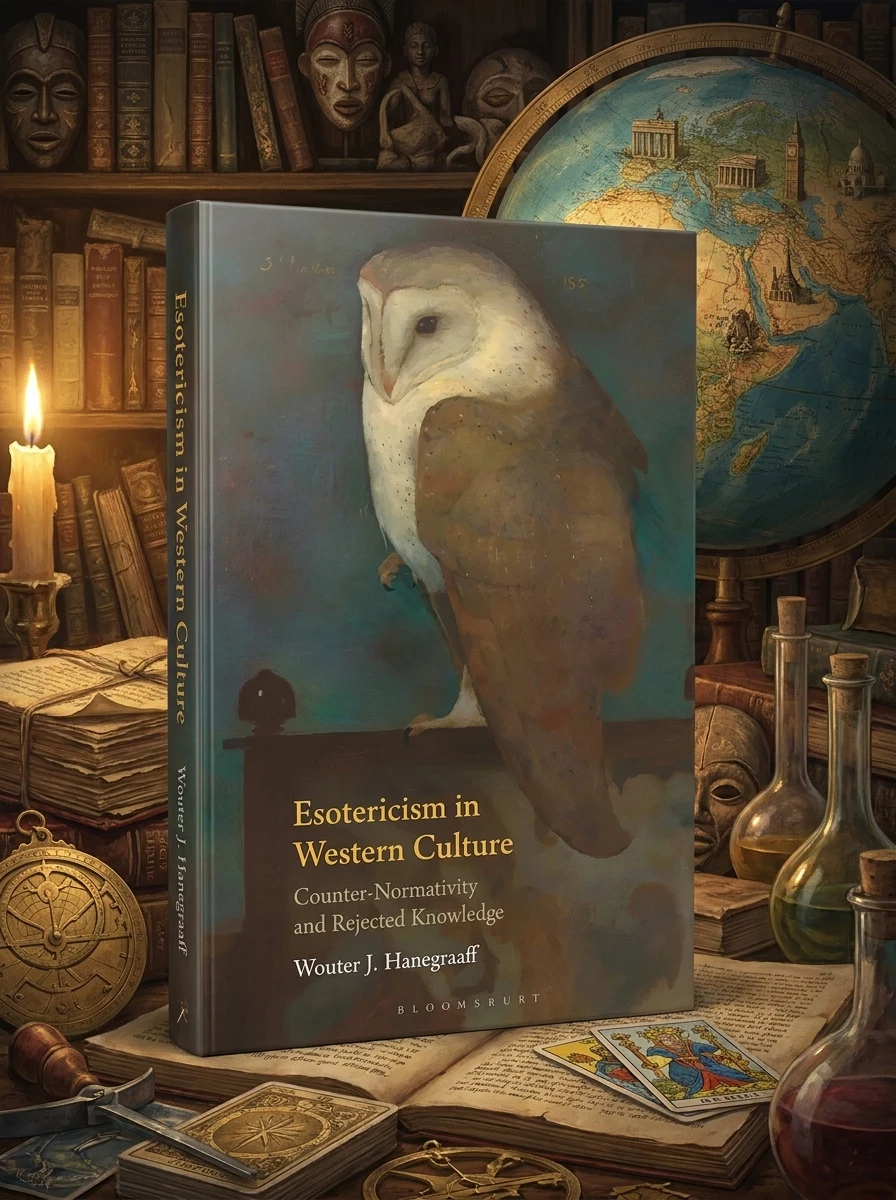

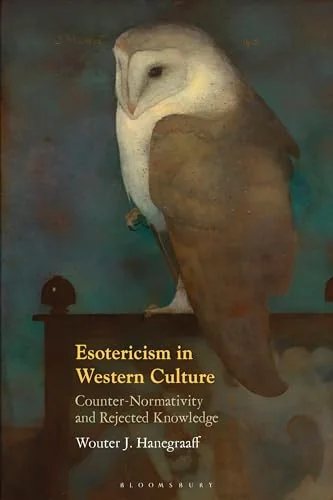
Esotericism in Western Culture: Counter-Normativity and Rejected Knowledge
✍️ Hanegraaff, Wouter JAn academic study examining how Western culture rejected and marginalized esoteric knowledge systems.
This volume analyzes the ideological mechanisms that marginalized esoteric traditions within Western humanities. Wouter J. Hanegraaff traces how colonial Eurocentric frameworks labeled specific spiritual practices as superstition from pagan antiquity through modern secularism. By systematically examining internal Eurocentrism, practice, knowledge, and worldviews, the text restores suppressed intellectual traditions to history. It provides scholarly context across Jewish, Christian, and Islamic cultures, challenging standard narratives of Western intellectual development.
This text sits within modern academic humanities research, examining Western cultural history from pagan antiquity through Jewish, Christian, and Islamic traditions up to secular modernity and the global colonial age.


Praise for this book
“[This book] establishes itself as an indispensable reference. It redefines the way of envisaging the history of Western thought, by reintegrating the occulted traditions and by unveiling the logics of exclusion that have shaped our modernity ... the work goes beyond the academic framework: it invites one to rethink Western culture in the light of what it has chosen to forget.”
“Esotericism in Western Culture is a repository of treasures. Around the encyclopedic history of esotericism that is central to the book lie fascinating discussions of related issues, exoteric as well as esoteric. Both a journey of exploration and a reference work, this book is clearly written and extremely readable.”
“Hanegraaff's introduction is almost encyclopedic in its comprehensiveness, and this book bids fair not just to supplant its earlier iteration but to function as an entrance gate for anyone interested in the study of esotericism as a 'highly pluralistic field of scholarly research'.”
📝 Description: Esotericism in Western Culture: Counter-Normativity and Rejected Knowledge
📑 What's inside
- Introduction
- 1 What do we mean by Esotericism?
- 2 A Short History of Rejected Knowledge
- 3 Internal Eurocentrism
- 4 Worldviews
- 5 Knowledge
- 6 Practice
- 7 Modernization
- 8 Esoteric Transdisciplinarity
- 9 The Importance of Esotericism
- Appendix 1: Glossary of Technical Terms
- Appendix 2: Sources and Resources
- Bibliography
- Index of Names
- Index of Subjects
💎 Expert review
📖 Why choose it
Why this book is worth reading
This book is essential for scholars, historians, and intellectually curious readers who wish to dismantle the biased narratives that have long dominated Western cultural heritage. Hanegraaff offers a profound re-evaluation by reclaiming overlooked traditions previously dismissed as fringe or invalid. Readers seeking to understand the deeper, counter-normative currents of thought will find this volume indispensable. It provides a radically inclusive perspective that connects antiquity to modern secular periods, revealing how the exclusion of 'rejected knowledge' served colonial and Eurocentric agendas. By tracing these hidden influences, the text empowers readers to appreciate a richer, more complex history that acknowledges the foundational role of esotericism in shaping our collective understanding.
⭐ Reader reviews
Reader rating
Hanegraaff presents a rigorous academic argument that successfully redefines esotericism as foundational rather than fringe. The text is intellectually stimulating for those willing to engage with dense theoretical frameworks regarding colonial history and epistemology. However, readers seeking accessible spiritual guides or practical magical instruction will find this volume dry and overly abstract. It is strictly an intellectual exercise in historiography, not a handbook for practice. Those uncomfortable with heavy criticism of Eurocentric narratives may also struggle with its dense scholarly tone. It demands patience and a willingness to confront uncomfortable truths about how knowledge is categorized and delegitimized within academic and cultural institutions.
❓ Frequently asked questions
📖 Who should read this
If you're a serious student of esotericism, a cultural historian, or someone who questions accepted narratives, this book is essential. Prepare to challenge your assumptions about what constitutes legitimate knowledge and its profound place in our collective past.
🎯 Key themes and symbolism
Counter-Normativity in History
The book illuminates how certain forms of knowledge and practices were deliberately excluded from mainstream historical accounts. It explores the mechanisms by which dominant narratives marginalized what didn't fit, revealing a persistent pattern of suppression against beliefs deemed "superstitious" or "irrational" by prevailing powers.
Reclaiming Rejected Knowledge
Hanegraaff champions the vital importance of re-evaluating and integrating these discarded insights back into our understanding of Western culture. This process isn't just academic; it's a critical step toward rectifying historical biases and acknowledging the profound influence of esoteric traditions on intellectual and spiritual development.
Eurocentrism and Colonialism
A crucial argument centers on how the systematic rejection of "other" knowledge served as a tool for Eurocentric ideology, particularly during the colonial expansion. It demonstrates how dismissing indigenous and non-Western spiritualities as "primitive" justified domination, highlighting the political implications of defining what counts as legitimate knowledge.
📜 Historical context
📚 Glossary
- Counter-Normativity
- Rejected Knowledge
- Eurocentrism
📔 Questions to reflect on
- What historical narratives have you accepted without question, and how might they differ if "rejected knowledge" were integrated?
- Consider a contemporary "fringe" belief or practice. How might its rejection today echo historical patterns discussed in the book?
- How does the concept of "Eurocentrism" influence your perception of spirituality or intellectual history, and what steps might you take to broaden that view?