US shipping Secure card payment Occult and esoteric books

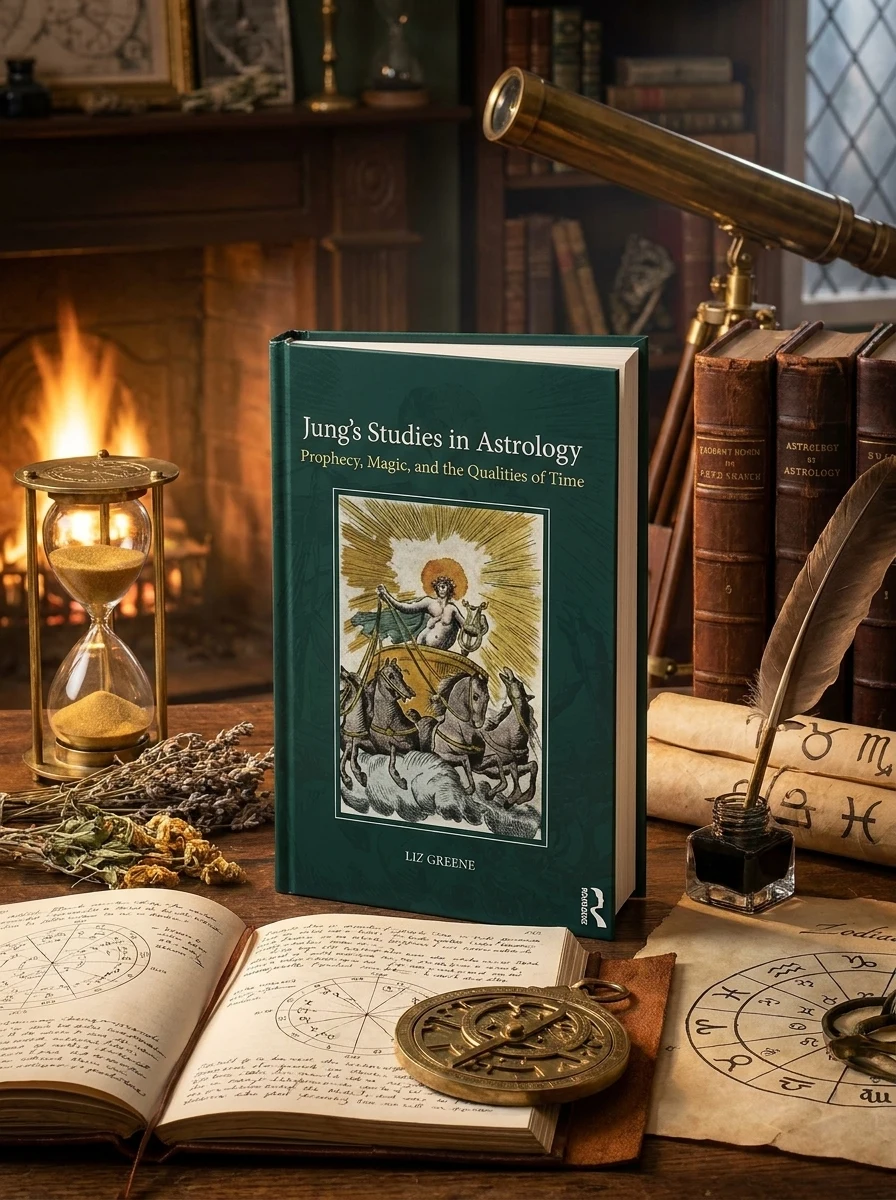
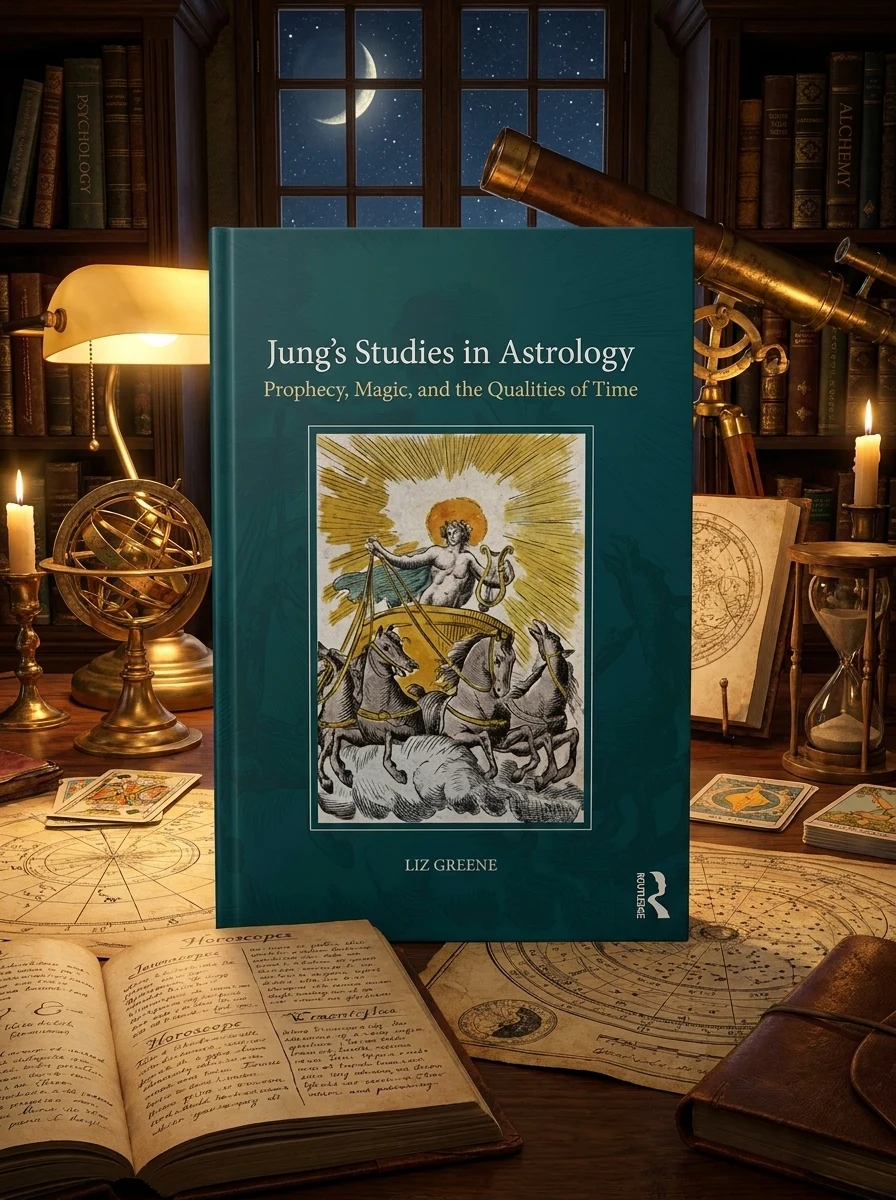
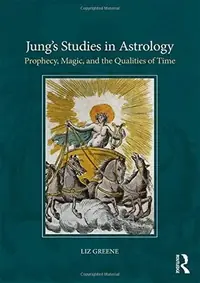
Jung's Studies in Astrology: Prophecy, Magic, and the Qualities of Time

Greene, Liz
Reader rating
4.6
(1 reviews) 64 sold
Availability to be confirmed

This edition can be ordered. No arrival date is confirmed.

📚 ABOUT THE BOOK

Liz Greene unveils Jung's hidden astrological archive, revealing how stars shaped his deepest psychological insights.

Liz Greene meticulously reconstructs Carl Jung’s lifelong engagement with astrology, drawing from rare archival letters and unpublished manuscripts. She traces his intellectual evolution through ancient, medieval, and modern esoteric traditions, demonstrating how celestial patterns informed his concepts of synchronicity and archetypes. This volume is not merely a biography but a critical examination of how Jung utilized astrological symbolism to navigate his own psyche and treat patients. By illuminating these previously obscured connections, Greene proves that astrology was not a side interest, but a foundational pillar of his revolutionary psychological framework.

Key themes
Synchronicity Archetypal Psychology Esoteric History
Historical context

This work sits at the intersection of analytical psychology and esoteric history, bridging the gap between modern depth psychology and ancient astrological traditions. It contextualizes Jung’s unique synthesis of psychological theory with celestial symbolism within the broader framework of Western occultism.


Difficulty
●●● Demanding
Fans will love it
Carl Jung's The Archetypes and the Collective Unconscious · Liz Greene's Psychological Astrology · Joseph Campbell's The Hero with a Thousand Faces
🪐 Astrology
🏛 Routledge 📖 244 pages 📔 Hardcover 📐 Hardcover ISBN: 9781138289116
Fun fact
Greene’s scholarship is impeccable, offering a vital corrective to the sanitized image of Jung. It excels in connecting private correspondence to public theory, revealing the depth of his astrological commitment. However, readers seeking a practical astrological guide will find it too academic. It sits firmly as a historical-critical text, essential for understanding the esoteric roots of analytical psychology, though it may disappoint those looking for immediate divinatory application.
📚 This book appears in Esoterica Books

📝 Description: Jung's Studies in Astrology: Prophecy, Magic, and the Qualities of Time

Winner of the IAJS award for best authored book of 2018! C. G. Jung had a profound interest in and involvement with astrology, which he made clear in virtually every volume of the Collected Works, as well as in many of his letters. This ancient symbolic system was of primary importance in his understanding of the nature of time, the archetypes, synchronicity, and human fate. Jung's Studies in Astrology is an historical survey of his astrological work from the time he began to study the subject. It is based not only on his published writings, but also on the correspondence and documents found in his private archives, many of which have never previously seen the light of day. Liz Greene addresses with thoroughness and detailed scholarship the nature of Jung's involvement with astrology: the ancient, medieval, and modern sources he drew on, the individuals from whom he learned, his ideas about how and why it worked, its religious and philosophical implications, and its applications in the treatment of his patients as well as in his own self-understanding. Greene clearly demonstrates that any serious effort to understand the development of Jung's psychological theories, as well as the nature of his world-view, needs to involve a thorough exploration of his astrological work. This thorough investigation of a central theme in Jung's work will appeal to analytical psychologists and Jungian psychotherapists, students and academics of Jungian and post-Jungian theory, the history of psychology, archetypal thought, mythology and folklore, the history of New Age movements, esotericism, and psychological astrology.

💎 Expert review

💎
Esoterica Books editorial team
Occult literature desk
Greene provides a meticulous reconstruction of Jung’s engagement with astrology, drawing on rare archives to demonstrate its foundational role in his psychology. The text is academically rigorous and thoroughly documented, appealing to those who appreciate detailed historical analysis over casual reading. However, readers seeking straightforward astrological advice or simple biographical anecdotes will likely find the dense theoretical examination tedious. It is not a guide for novice astrologers but a scholarly critique for established enthusiasts. Those uncomfortable with the intersection of occultism and academic psychology may feel alienated by its specific focus on unpublished manuscripts and intellectual evolution rather than practical application.
✓ EDITOR'S REVIEW

📖 Why choose it

📖

Why this book is worth reading

Readers deeply invested in the foundational theories of analytical psychology will find this volume indispensable for understanding the esoteric roots of Jung’s work. It is particularly valuable for astrologers seeking to ground their practice in rigorous psychological frameworks rather than mere prediction. By uncovering the hidden archival connections between celestial patterns and the development of concepts like synchronicity, Greene offers a compelling narrative for those who view astrology as a tool for self-knowledge. This book serves as a critical bridge for scholars and practitioners alike, revealing how Jung utilized these symbols to navigate his psyche, making it essential for anyone wishing to grasp the full depth of his revolutionary psychological framework.

⭐ Reader reviews

The starting rating comes from the team Esoterica Books —
⭐ Esoterica editorial review Editorial rating 4.6/5
★★★★
Readers seeking to bridge the gap between clinical Jungian analysis and esoteric tradition. Ideal for astrologers wanting historical depth and psychologists curious about the spiritual underpinnings of analytical psychology.

Reader rating

4.6
Based on 1 reviews
5
0
4
1
3
0
2
0
1
0
E
Esoterica Books editorial team

Greene provides a meticulous reconstruction of Jung’s engagement with astrology, drawing on rare archives to demonstrate its foundational role in his psychology. The text is academically rigorous and thoroughly documented, appealing to those who appreciate detailed historical analysis over casual reading. However, readers seeking straightforward astrological advice or simple biographical anecdotes will likely find the dense theoretical examination tedious. It is not a guide for novice astrologers but a scholarly critique for established enthusiasts. Those uncomfortable with the intersection of occultism and academic psychology may feel alienated by its specific focus on unpublished manuscripts and intellectual evolution rather than practical application.

❓ Frequently asked questions

No. It is a scholarly historical analysis of Jung’s theoretical use of astrology, not a practical manual for practitioners.
Greene provides a critical, balanced perspective, validating the historical evidence while maintaining scholarly distance from its metaphysical claims.

📖 Who should read this

Readers seeking to bridge the gap between clinical Jungian analysis and esoteric tradition. Ideal for astrologers wanting historical depth and psychologists curious about the spiritual underpinnings of analytical psychology.

🎯 Key themes and symbolism

Synchronicity

Archetypal Psychology

Esoteric History

💬 Quotes from the book

“The ancient symbolic system was of primary importance in his understanding of the nature of time.”

“Many documents have never previously seen the light of day.”

📜 Historical context

This work emerges during the late twentieth-century resurgence of interest in Jung’s esoteric side. While Jung’s published works often obscured his astrological practices, Greene’s scholarship corrects the historical record. It sits at the intersection of psychoanalytic theory and the history of magic, offering a rigorous academic counterpoint to both skeptical psychiatry and uncritical astrological fandom.

📚 Glossary

Synchronicity
Archetype
IAJS

📔 Questions to reflect on

  1. How might your personal sense of time shift if viewed through Jung’s lens of synchronicity rather than linear chronology?
  2. Identify a recurring pattern in your life that might be interpreted as an archetypal expression rather than random chance.
  3. In what ways does your current life phase reflect the tension between fate and free will as discussed in Jung’s studies?

🏛 Books from this publisher Routledge

All books from this publisher →
You might also like

See more →