

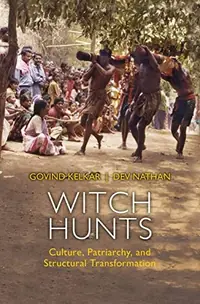
Witch Hunts: Culture, Patriarchy and Structural Transformation
 86
86
 Editorial score
How we rate
Editorial score
How we rate
Stock reported in the catalog; fulfillment is confirmed with your request.
Uncover the roots of witch hunts, revealing how power, gender, and societal shifts fueled their dark flames.
This groundbreaking study delves into the complex origins of historical witch hunts, moving beyond simplistic explanations. It argues these persecutions are deeply intertwined with periods of profound societal upheaval, particularly the emergence of gendered class structures and capitalist patriarchy. Through a unique blend of political economy and feminist analysis, the authors illuminate how shifts in power, economic systems, and cultural norms converged to target women, offering a nuanced understanding of these dark historical episodes. It challenges readers to reconsider the true forces behind such widespread persecution.
This academic work situates itself within the critical intersection of political economy and feminist theory, challenging traditional historical narratives through a structural lens. It belongs to the scholarly discourse on the social origins of persecution rather than folkloric or narrative accounts.


📝 Description: Witch Hunts: Culture, Patriarchy and Structural Transformation
💎 Expert review
📖 Why choose it
Why this book is worth reading
Readers seeking a rigorous, structural explanation for the historical phenomenon of witch hunts will find immense value in this text. It is ideal for those who wish to move beyond simplistic moral interpretations and understand how capitalist patriarchy and gendered class structures actively fueled persecution. The book offers a necessary corrective to mainstream histories, revealing the deep political economy behind the fear of women. It empowers readers with a nuanced framework that connects economic shifts directly to cultural violence, making it essential for scholars and activists interested in the roots of systemic oppression and societal transformation.
⭐ Reader reviews
Reader rating
This is a dense theoretical examination that may alienate casual readers or those seeking narrative-driven history. It does not suit individuals looking for practical Wiccan insights or entertaining folklore; this is strictly an analytical study of power dynamics. While intellectually robust, its focus on political economy and feminist analysis requires patience and academic interest. Readers expecting a straightforward recounting of events will likely find the abstract arguments dry and inaccessible. It is best reserved for those prepared to engage with complex sociological theories regarding the emergence of gendered class structures.
❓ Frequently asked questions
📖 Who should read this
For readers seeking a profound understanding of how historical witch hunts stemmed from complex societal forces, this book offers essential insights. If you're fascinated by the interplay of gender, economics, and power during drastic change, this vital work will deepen your grasp of social justice.
🎯 Key themes and symbolism
Gendered Class Structures
The book meticulously examines how the formation of stratified societies, particularly those organized along gender lines, created fertile ground for witch accusations. It reveals the mechanisms by which women, especially those outside conventional power structures, became targets during shifts in social hierarchy and power.
Patriarchal Capitalism
This work argues that the development of patriarchal capitalism significantly catalyzed witch hunts. It explores how new economic systems and the reinforcement of male dominance intersected, leading to the marginalization and persecution of women who challenged or existed outside these emerging societal norms.
Societal Upheaval's Consequences
The authors meticulously connect witch hunts to periods of acute structural change within societies. They demonstrate how major economic and social transformations, often accompanied by widespread instability, exacerbated existing gender inequalities and led to the scapegoating of women as a means of societal control.
💬 Quotes from the book
“The scapegoating of women during periods of profound economic restructuring was not incidental, but integral to the consolidation of new power hierarchies.”
“Understanding witch hunts requires moving beyond individual malice to analyze the collective anxieties and structural shifts that enable such widespread violence.”
📜 Historical context
📚 Glossary
- Structural Transformation
- Gendered Class Societies
- Patriarchal Capitalism
📔 Questions to reflect on
- How do modern economic or social transformations mirror the structural shifts that contributed to historical witch hunts?
- In what ways do contemporary gendered power dynamics echo the patriarchal structures that fueled past persecutions?
- Consider a current social issue; how might an analysis combining political economy and gender studies illuminate its deeper roots, similar to this book's approach?
🏛 Books from this publisher Cambridge University Press
All books from this publisher →


 75
75



You might also like
See more →


 90
90




 89
89
