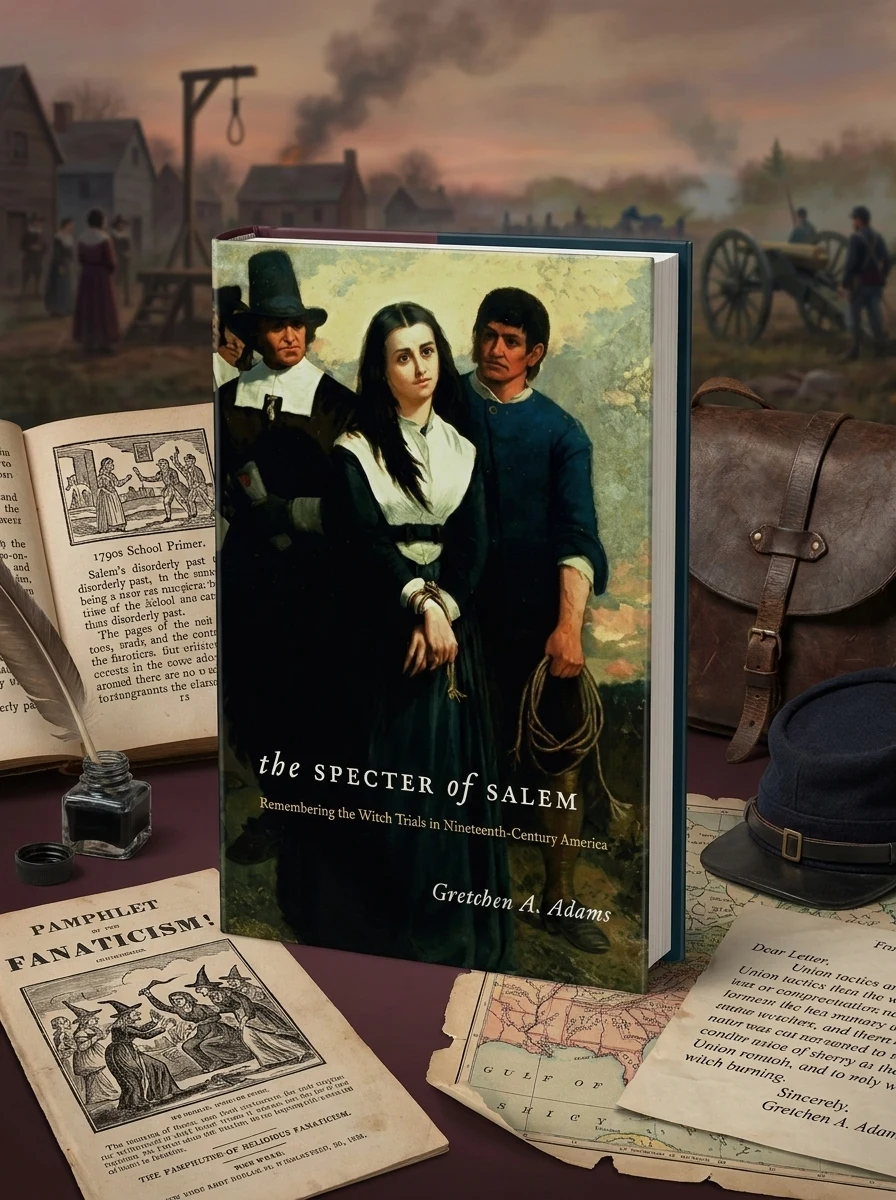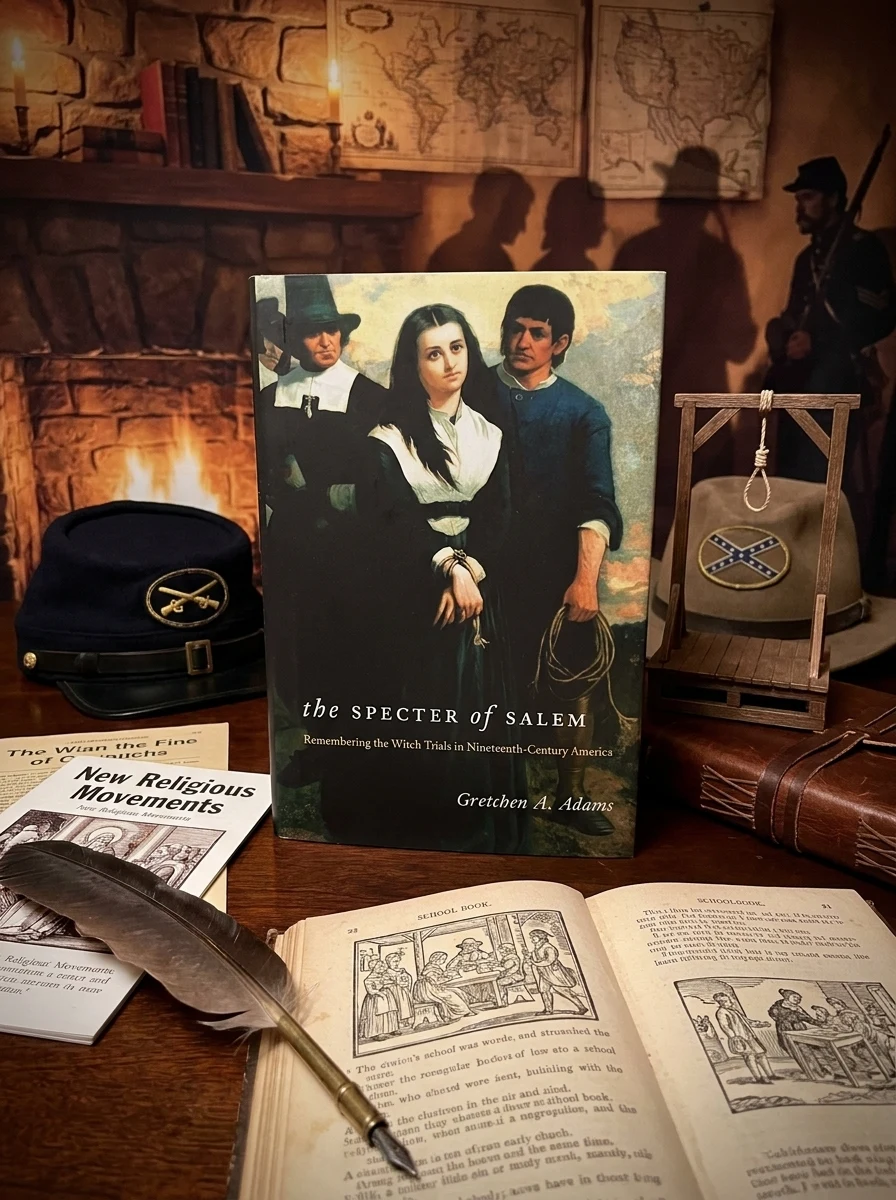
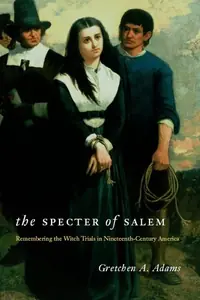
The Specter of Salem: Remembering the Witch Trials in Nineteenth-Century America
Adams, Gretchen AStock reported in the catalog; fulfillment is confirmed with your request.
Discover how Salem's shadow shaped a young nation's identity and fueled its fiercest debates.
Gretchen A. Adams masterfully unveils how the Salem witch trials, far from being a forgotten footnote, profoundly haunted American collective memory from the Revolution to the Civil War. This compelling work illustrates how the trials became a versatile cultural touchstone, invoked to champion national progress, denounce religious zealotry, or even criticize wartime strategies. Adams sheds crucial light on the diverse ways Americans appropriated this historical event, ultimately revealing the dynamic power of shared memories in shaping a nation's evolving self-perception and political discourse.
This work situates itself within the tradition of cultural history and memory studies, examining how historical trauma permeates national identity. It bridges the gap between academic historiography and public discourse in nineteenth-century America.


📝 Description: The Specter of Salem: Remembering the Witch Trials in Nineteenth-Century America
💎 Expert review
📖 Why choose it
Why this book is worth reading
This book is an essential read for anyone fascinated by the invisible threads that bind historical events to contemporary political and social identities. Readers who enjoy understanding how past traumas are repurposed to serve modern agendas will find Adams' analysis deeply illuminating. It offers a nuanced look at how a single, horrific event can become a versatile tool for various ideological battles. If you are interested in the mechanics of collective memory and how nations construct their self-perception through shared narratives, this text provides a compelling framework. It is particularly valuable for those seeking to understand the roots of American cultural debates regarding religion, progress, and authority. Adams makes the abstract concept of 'memory' tangible by showing its real-world impact on fierce national debates.
⭐ Reader reviews
Reader rating
Adams delivers a rigorous intellectual tour through the nineteenth century, demonstrating how the Salem witch trials were constantly reinvented to fit current political needs. However, readers looking for a narrative-driven historical account or a focus on the actual victims of 1692 may find this work dry and overly abstract. It is not suitable for those who prefer immediate, visceral storytelling over analytical dissection of cultural appropriation. The book assumes a high level of interest in historiography and memory studies, which might alienate casual history buffs seeking entertainment rather than scholarly insight into the construction of national mythos.
❓ Frequently asked questions
📖 Who should read this
If you're fascinated by the cultural afterlife of history, how nations forge identity through their past, or the powerful echoes of foundational events in American discourse, this scholarly yet engaging work awaits you. It’s perfect for those who ponder how collective memory shapes our present.
🎯 Key themes and symbolism
National Self-Perception
This book explores how the memory of Salem served as a crucial mirror for Americans, allowing them to define their own progress and perceived rationality against what they considered a 'dark' and disorderly past. It reveals how a young nation grappled with its foundational myths and moral compass.
Rhetorical Weaponry
Adams meticulously details how various factions, from critics of new religious movements to Civil War-era polemicists, skillfully wielded the Salem narrative. It became a powerful rhetorical tool, used to condemn perceived excesses, justify political stances, or critique societal trends throughout the 19th century.
Enduring Cultural Legacy
The work delves into the persistent presence of the Salem trials in the American consciousness, demonstrating how historical events resonate and are continuously reinterpreted across generations. It illustrates how an event from the late 17th century profoundly influenced national identity for nearly two centuries thereafter.
💬 Quotes from the book
“The specter of Salem was not a static ghost, but a malleable spirit, readily conjured to champion progress or condemn regression, depending on the orator's political winds.”
“From the schoolroom moralizing of the early Republic to the fiery polemics of Civil War-era pamphlets, Salem became a rhetorical weapon, a shorthand for fanaticism or enlightenment, wielded with striking frequency.”
📜 Historical context
📚 Glossary
- Collective Memory
- Public Historiography
- Specter
📔 Questions to reflect on
- Consider a contemporary historical event that continues to be invoked in political or social debates. How is its memory being shaped and used today?
- Beyond Salem, what other 'specters' from America's past continue to exert a powerful, often shifting, influence on national identity and public discourse?
- How do collective memories, particularly of controversial events, contribute to both national unity and division? Reflect on specific examples.
✍️ More books by this author Adams, Gretchen A
All books by this author →
🏛 Books from this publisher University of Chicago Press
All books from this publisher →
 86
86



You might also like
See more →