
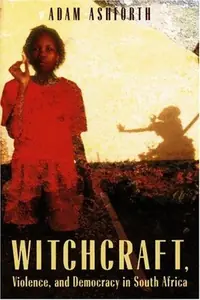
Witchcraft, Violence, and Democracy in South Africa
Ashforth, AdamStock reported in the catalog; fulfillment is confirmed with your request.
Can democracy truly thrive when its people live in fear of active witchcraft?
Ashforth meticulously unpacks the complex interplay of witchcraft beliefs, escalating crime, economic disparities, and the AIDS crisis in post-apartheid South Africa, particularly Soweto. He investigates how citizens grapple with pervasive insecurity rooted in the perceived threat of 'evil forces' and occult violence. The book critically examines the unique challenge this presents to a democratic government striving to address its people's needs without legitimizing supernatural fears, ultimately proposing "spiritual insecurity" as a framework for understanding these profound societal anxieties.
This work sits at the intersection of anthropological studies on South African society and contemporary political theory regarding post-apartheid democracy. It contributes to esoteric literature by examining how traditional occult beliefs intersect with modern state governance and social instability.


📝 Description: Witchcraft, Violence, and Democracy in South Africa
💎 Expert review
📖 Why choose it
Why this book is worth reading
This book is essential for readers seeking to understand the profound psychological undercurrents shaping modern South African society. It offers a critical lens through which to view how economic disparity and health crises fuel deep-seated anxieties about occult violence. By introducing the concept of 'spiritual insecurity,' Ashforth provides a framework that explains why democratic institutions struggle to address tangible needs when citizens live in fear of invisible threats. It is particularly valuable for sociologists, political scientists, and those interested in the complex relationship between traditional beliefs and modern statecraft. The text illuminates how pervasive insecurity undermines social cohesion, making it a vital resource for anyone studying the real-world impacts of esoteric fears on political stability and daily life in post-apartheid contexts.
⭐ Reader reviews
Reader rating
Ashforth delivers a meticulous unpacking of the interplay between witchcraft beliefs and escalating crime in Soweto. The text is rigorous and dense, offering a compelling critique of how a democratic government navigates supernatural fears without legitimizing them. However, this academic depth may alienate casual readers seeking narrative flair or simplistic solutions to complex societal issues. It does not suit those looking for practical occult guidance or light reading; instead, it demands serious engagement with difficult sociological concepts. Readers must be prepared for a scholarly examination of 'spiritual insecurity' rather than an exploration of magical practice itself. The focus remains firmly on the political and social ramifications of these beliefs.
❓ Frequently asked questions
📖 Who should read this
For those intrigued by the potent intersection of belief, politics, and social anxiety, this book offers a profound exploration. If you seek to understand how ancient fears of the occult manifest in contemporary democratic societies, particularly in the unique context of post-apartheid South Africa, this study is essential.
🎯 Key themes and symbolism
Spiritual Insecurity & Occult Violence
This book introduces "spiritual insecurity" as a vital lens through which to understand the profound anxieties gripping post-apartheid South Africa. It delves into how the belief in malevolent witchcraft, combined with societal ills, creates a pervasive fear, attributing agency to unseen forces and shaping daily life in unsettling ways.
Witchcraft and Governance
Ashforth expertly navigates the peculiar dilemma faced by a democratic state whose populace genuinely believes in active witchcraft. He scrutinizes how a government attempts to maintain legitimacy and address its citizens' profound fears and perceived needs, especially when those needs stem from supernatural threats it cannot officially acknowledge or combat.
Post-Apartheid Societal Tensions
The work meticulously unpacks the confluence of factors creating widespread instability in Soweto during the early 2000s. It reveals how the shadows of violent crime, growing economic disparities, the AIDS epidemic, and deep-seated fears of witchcraft intertwine, fostering a complex environment of insecurity that demands a unique understanding.
💬 Quotes from the book
“The paradox of democratic governance in a society deeply convinced of active witchcraft forces a profound re-evaluation of what constitutes 'rational' public policy.”
“Spiritual insecurity, far from being a mere superstitious relic, emerges as a fundamental framework for understanding the lived experience of vulnerability in contemporary Soweto.”
📜 Historical context
📚 Glossary
- Witchcraft
- Spiritual Insecurity
- Post-Apartheid
📔 Questions to reflect on
- How do societies reconcile traditional spiritual beliefs with the demands of modern democratic governance?
- In what ways might pervasive societal insecurity, whether spiritual or material, influence political stability and individual well-being?
- Consider how the concept of "spiritual insecurity" could be applied to other cultural contexts or historical periods beyond South Africa.
✍️ More books by this author Ashforth, Adam
All books by this author →

🏛 Books from this publisher University of Chicago Press
All books from this publisher →

 86
86



You might also like
See more →