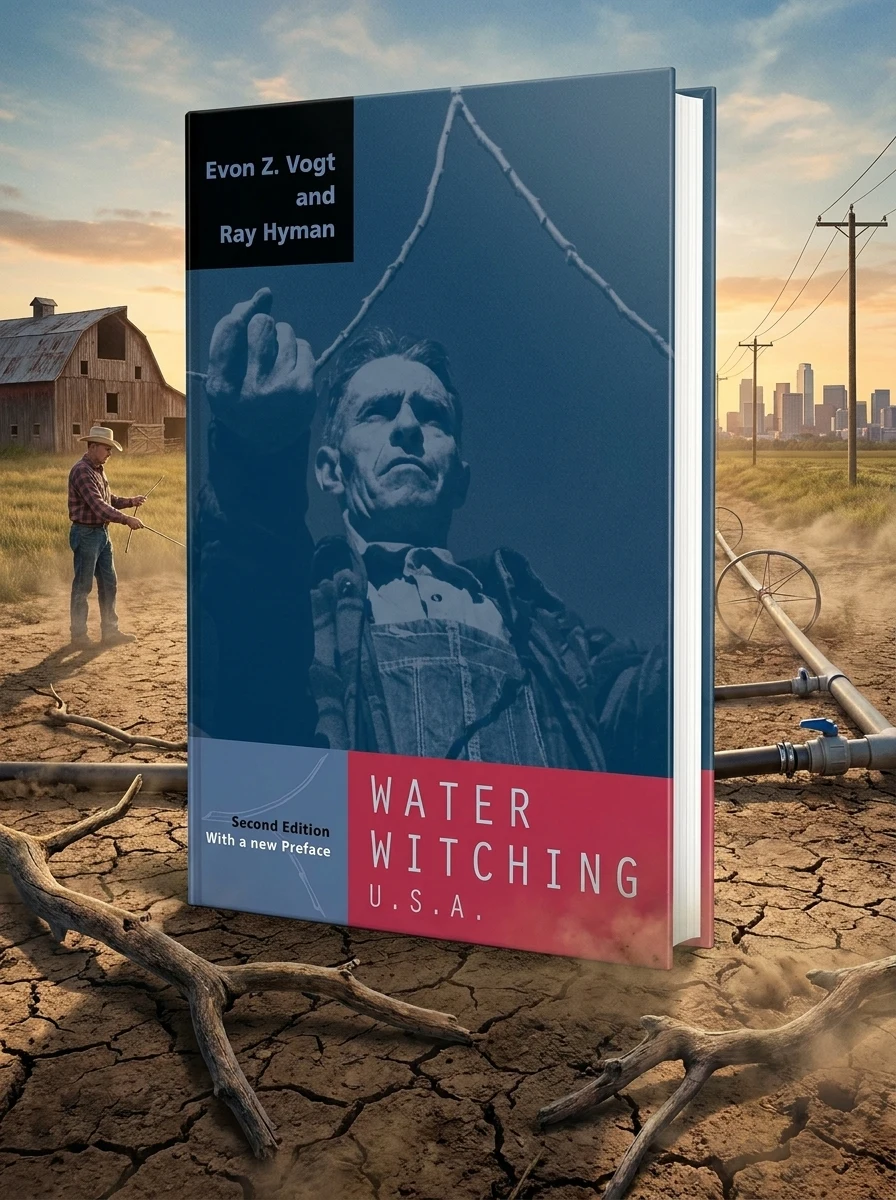

Water Witching U.S.A.
Stock reported in the catalog; fulfillment is confirmed with your request.
Uncover the enduring mystery of finding hidden springs with a simple branch and intuition.
Delve into the fascinating world of dowsing, a timeless method of locating subterranean water using nothing more than a divining rod. This insightful volume explores how 'water witching' continues to thrive, not just in remote, rural settings, but even amidst our technologically advanced urban landscapes. Through a collection of engaging personal narratives, readers gain a vibrant perspective on this enigmatic practice, examining its techniques, controversies, and the deeply human experiences that surround the search for hidden currents beneath the earth.
This work sits within the intersection of American folk practices and academic ethnography, documenting the persistence of traditional divining methods in modern society. It reflects a period where scholarly inquiry began to seriously engage with the lived experiences of those practicing water witching across diverse landscapes.


📝 Description: Water Witching U.S.A.
💎 Expert review
📖 Why choose it
Why this book is worth reading
Readers fascinated by the tangible intersection of intuition and geography will find this volume deeply rewarding. It offers a rare, grounded look at how ordinary people navigate uncertainty using ancient tools in contemporary settings. Those interested in the sociology of belief, or simply the psychology of hope and discovery, will appreciate the human stories woven throughout. It is ideal for those who question why technology cannot replace instinct, providing a respectful, narrative-driven exploration that validates the practitioner's experience without needing to prove the science.
⭐ Reader reviews
Reader rating
While engaging for those interested in folk traditions, this book may frustrate readers seeking definitive scientific proof or technical manuals on dowsing mechanics. It is not suitable for skeptics demanding empirical validation of divining rods' efficacy, as it focuses on narrative and cultural persistence rather than experimental data. Academics looking for rigorous statistical analysis might find the personal anecdotes too anecdotal. However, for those open to understanding the human element behind esoteric practices, it provides a compelling, if somewhat abstract, look at why these methods endure.
❓ Frequently asked questions
📖 Who should read this
If you're fascinated by human perception, the intersection of folklore and natural science, or curious about age-old methods for finding water, this book is for you. It's a journey into an enduring practice that defies easy explanation, appealing to both skeptics and seekers alike.
🎯 Key themes and symbolism
Intuitive Water Divining
This book offers a compelling examination of dowsing as a form of divination, exploring the intuitive connection individuals claim to have with subterranean water sources. It delves into the methodology and personal experiences of those who believe they can sense hidden flows, presenting a nuanced view of this ancient practice as more than mere superstition.
Enduring Practical Magic
Despite the proliferation of advanced scientific instruments, "Water Witching U.S.A." highlights the remarkable persistence of dowsing across diverse environments. It investigates why this age-old method of locating water remains a trusted practice for many, even in contemporary society, challenging assumptions about its relevance in a technological age.
Hydrology and Human Perception
The text navigates the intriguing intersection between scientific hydrology and folk practices like water witching. It presents diverse perspectives on how dowsers perceive their craft in relation to geological realities, offering a unique lens through which to consider the interplay between empirical observation and the often-unexplained phenomena of human sensitivity and intuition.
💬 Quotes from the book
“The moment that oak branch dipped violently in my hands, I knew. It wasn't science, not exactly, but a deep, undeniable pull from the earth itself.”
“Even with all our modern drills and sensors, sometimes the simplest forked stick, guided by an old timer's wisdom, still finds the sweetest water.”
📜 Historical context
📚 Glossary
- Water Witching
- Dowsing
- Divining Rod
📔 Questions to reflect on
- How do you reconcile the persistence of practices like dowsing with our modern scientific understanding of the world?
- Consider a time in your life when intuition guided you to a 'hidden' truth or resource. How did that experience feel?
- What role do you believe anecdotal evidence and personal testimony play in understanding phenomena that science currently cannot fully explain?
🏛 Books from this publisher University of Chicago Press
All books from this publisher →

 86
86




You might also like
See more →