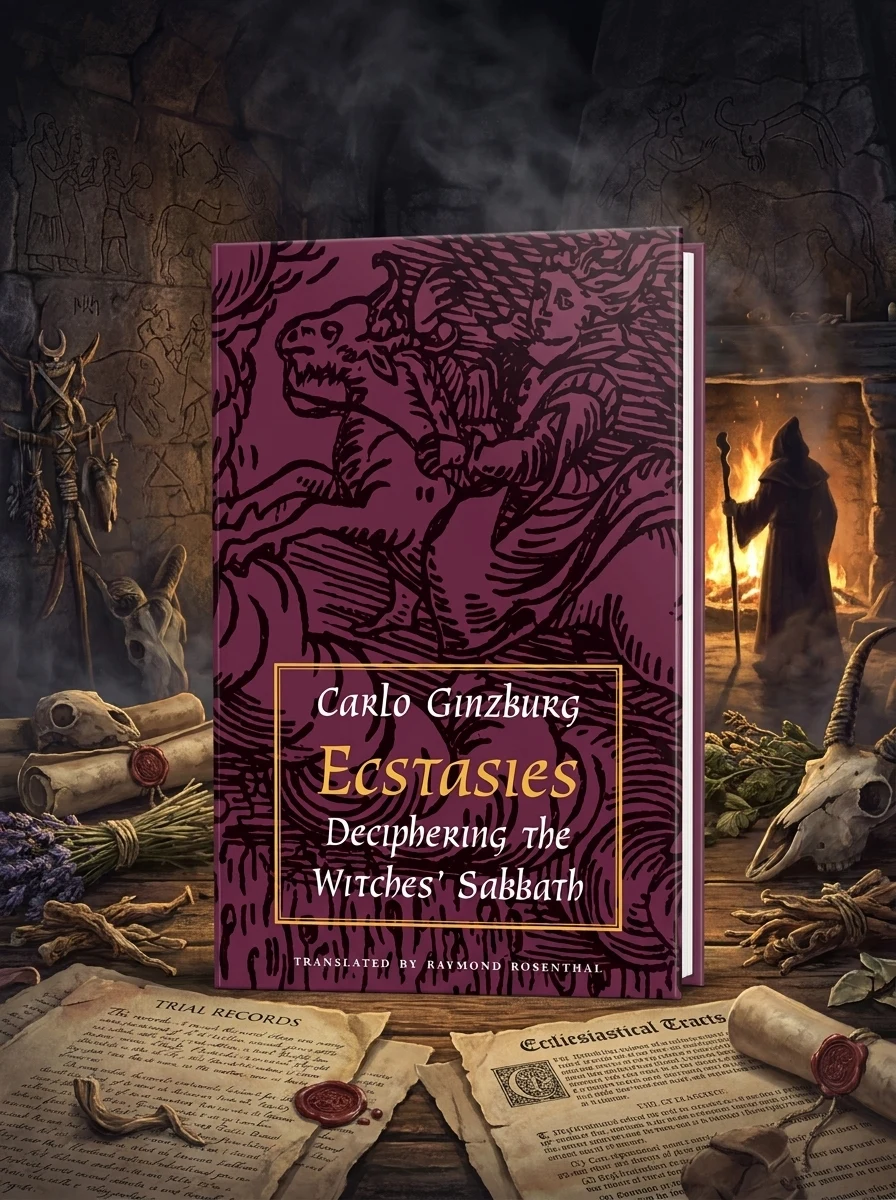

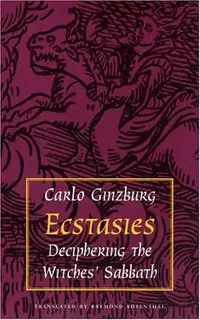
Ecstasies: Deciphering the Witches' Sabbath
Stock reported in the catalog; fulfillment is confirmed with your request.
Ginzburg reveals the shamanic roots of witchcraft, tracing a hidden lineage of ecstatic flight across Europe.
Carlo Ginzburg dismantles the myth of the satanic witch by excavating pre-Christian folk traditions from trial records and ecclesiastical texts. He argues that the stereotypical Sabbath was not a devil-worshipping conspiracy, but a distorted memory of an ancient, widespread shamanic culture. Through meticulous analysis of folklore and iconography, Ginzburg reconstructs the lives of women who believed they flew on herbs and insects to join nocturnal gatherings. This work challenges the Church’s narrative, positing that the 'witch' was actually a healer or wise woman whose practices were misinterpreted as heresy. It is a profound study of how power shapes the definition of the sacred and the profane.
This work sits firmly within the historiography of European witchcraft and the study of pre-Christian folk traditions. It bridges anthropology, religious history, and esoteric studies by examining how ecclesiastical power distorted indigenous shamanic practices into heresy.


📝 Description: Ecstasies: Deciphering the Witches' Sabbath
💎 Expert review
📖 Why choose it
Why this book is worth reading
Readers fascinated by the intersection of history, religion, and power dynamics will find this book profoundly illuminating. It offers a compelling counter-narrative to popular witchcraft myths, revealing the human reality behind the hysteria. Those interested in how societies define the sacred versus the profane will appreciate Ginzburg’s meticulous excavation of trial records. It is essential for understanding the cultural mechanics that labeled healers as heretics. The book provides deep insight into the shamanic roots often ignored by mainstream Wiccan or historical accounts, offering a scholarly yet accessible reconstruction of ecstatic flight traditions across Europe.
⭐ Reader reviews
Reader rating
Arrived faster than expected and well packaged. I appreciated how the argument builds steadily from first principles. It pairs well with more modern commentaries on the same tradition. If you're drawn to this subject, don't hesitate.
This edition finally does the material justice. The material is presented clearly and the structure makes it easy to revisit key passages.
As someone who reads a lot in this field, I can be picky. Some chapters demand a slow, careful read, and that's exactly the point. The ideas are old but land with surprising force today. Highly recommend to serious students.
I collect works on this subject and this is a worthy addition. The print is clean and easy on the eyes for long sessions. Great value for what you get.
Been hunting for a decent copy of this text for ages. The historical context alone makes it worth the price. Already eyeing my next order.
I've read excerpts online before, but having the full text is different. It pairs well with more modern commentaries on the same tradition. Highly recommend to serious students.
Ginzburg’s scholarship is rigorous and transformative, dismantling long-held myths about the Satanic witch. However, readers seeking romanticized magical lore or practical ritual instruction will be disappointed. This is a dense academic study requiring patience with historical analysis and ecclesiastical text interpretation. It does not suit those looking for easy affirmations of modern pagan identity or quick reads. The tone is analytical rather than inspirational, focusing on the distortion of culture by power structures. Those uninterested in historiography or the mechanics of religious persecution may find the detailed tracing of folklore tedious and overly specialized.
❓ Frequently asked questions
📖 Who should read this
Readers fascinated by the intersection of anthropology, history, and theology will find this essential. It appeals to those interested in the sociology of belief, the history of gender, and anyone seeking to understand the roots of modern witchcraft beyond popular mythology.
🎯 Key themes and symbolism
Shamanic Origins of Witchcraft
Ginzburg posits that the witch’s sabbath is a distorted echo of ancient shamanic rituals. He traces how local folk beliefs about flight and spirit journeys were co-opted by inquisitors to fit a demonological framework, erasing the original spiritual context of these ecstatic experiences.
Inquisitorial Construction of Heresy
The book details how ecclesiastical authorities actively constructed the image of the witch. By forcing confessions through torture, inquisitors imposed a uniform, malevolent narrative onto diverse, fragmented local practices, turning harmless folk customs into evidence of a vast, organized conspiracy against Christ.
Gender and the Female Spirit
Ginzburg highlights the predominance of female accused witches, linking this to the suppression of female-centered folk healing and divination. The narrative suggests that the persecution of women was partly a mechanism to eliminate alternative sources of spiritual authority and communal knowledge outside the Church.
💬 Quotes from the book
“The witch is a product of the imagination of the inquisitors.”
“A world of invisible forces, of good and evil spirits.”
📜 Historical context
📚 Glossary
- Sabbat
- Benandanti
- Confessio
📔 Questions to reflect on
- How might your understanding of 'madness' or 'spiritual experience' change if viewed through a shamanic lens rather than a medical or theological one?
- Consider the role of language in shaping reality. How did the specific words used by inquisitors create the 'witch' where none existed?
- Reflect on the intersection of gender and power. Why do societies often target female figures for accusations of supernatural corruption?
🏛 Books from this publisher University of Chicago Press
All books from this publisher →

 86
86




You might also like
See more →