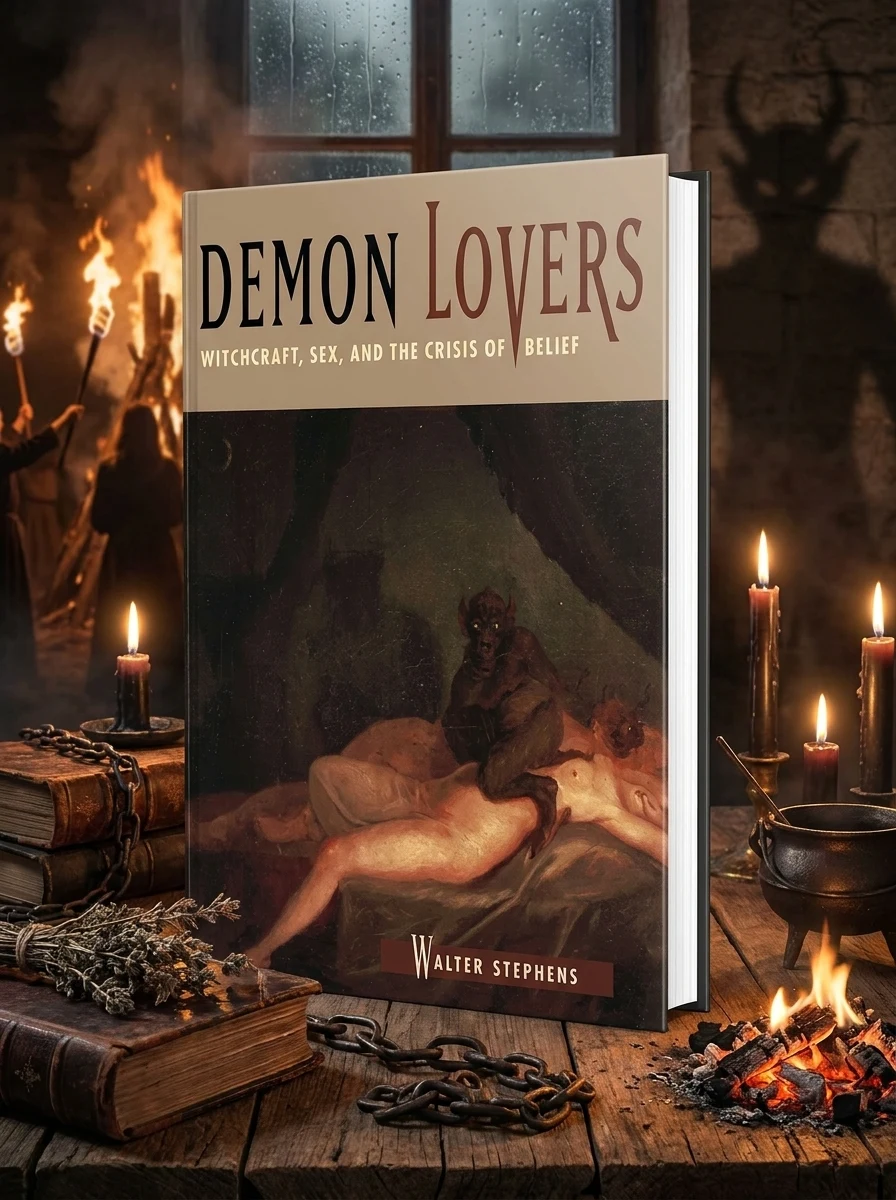
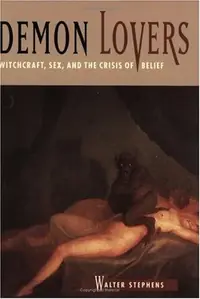
Demon Lovers: Witchcraft, Sex, and the Crisis of Belief
Stock reported in the catalog; fulfillment is confirmed with your request.
Witch trials were less about women and more about the theologians' own twisted erotic obsessions.
Walter Stephens dismantles the myth of the witch-craze as a simple persecution of women. By examining foundational texts like the Malleus Maleficarum, he reveals that the obsession with demonic sex stemmed from the authors' own repressed desires and theological anxieties. The book argues that inquisitors projected their own illicit fantasies onto their victims, creating a self-fulfilling prophecy of heresy. This is a rigorous sociological and historical analysis that shifts the blame from the accused to the accusers, exposing the psychological mechanisms behind the hysteria.
This work sits firmly within the historiography of European witchcraft studies, challenging traditional narratives by applying modern psychological and sociological frameworks to early modern theological texts. It recontextualizes the era's persecution mechanisms through the lens of inquisitorial anxiety rather than simple misogyny.


📝 Description: Demon Lovers: Witchcraft, Sex, and the Crisis of Belief
💎 Expert review
📖 Why choose it
Why this book is worth reading
Readers fascinated by the intersection of theology, psychology, and history will find this book profoundly illuminating. It offers a rigorous intellectual shift, moving away from simplistic gender-based interpretations to expose the complex psychological projections of the accusers. Those interested in how power dynamics manifest through sexual anxiety and religious hysteria will appreciate Stephens' detailed dismantling of foundational texts. It is essential for scholars and serious enthusiasts who wish to understand the true mechanisms behind the witch trials, providing a nuanced view that places responsibility squarely on the theological frameworks of the time rather than the victims.
⭐ Reader reviews
Reader rating
I collect works on this subject and this is a worthy addition. The text itself is dense but rewarding — you get out what you put in. It rewards patience more than any book I've bought this year. My only regret is not ordering it sooner.
Was skeptical at first. I found myself reading passages aloud just to sit with them.
Ordered this after seeing it referenced in another book I was studying. Some chapters demand a slow, careful read, and that's exactly the point. Highly recommend to serious students.
Added this to my reference shelf. It rewards patience more than any book I've bought this year. Deserves a place on any esoteric bookshelf.
Arrived faster than expected and well packaged. The text itself is dense but rewarding — you get out what you put in. Solid binding, decent paper — holds up to heavy use. Five stars from me.
Bought this as a gift for my sister and ended up ordering a second copy for myself. A text you study rather than simply read. Great value for what you get.
As someone who reads a lot in this field, I can be picky. It reads better in small doses — a chapter at a time with notes. The material is presented clearly and the structure makes it easy to revisit key passages. A keeper.
Stephens delivers a compelling, albeit dense, argument that may alienate readers seeking a straightforward narrative or those attached to traditional feminist readings of witchcraft history. The book is not for casual readers expecting accessible prose; it demands engagement with complex sociological analysis. While intellectually robust, its focus on the inquisitors' psyche over the accused's experience might feel unbalanced to some. It is best suited for academic audiences or dedicated historians willing to navigate rigorous textual analysis without the comfort of familiar moral binaries.
❓ Frequently asked questions
📖 Who should read this
Readers fascinated by the intersection of psychology and history, those skeptical of traditional witch-hunt narratives, and scholars of early modern European religion seeking a nuanced, evidence-based reinterpretation of the period.
🎯 Key themes and symbolism
Demonic Projection
Theological Anxiety
Gender Politics
💬 Quotes from the book
“The accusers were not hunting witches; they were hunting their own shadows.”
“Devout theologians displayed an uncanny preoccupation with demonic sex.”
📜 Historical context
📚 Glossary
- Maleficia
- Witch Craze
- Fornication
📔 Questions to reflect on
- How might your own biases shape the stories you tell about others?
- What historical events are currently being misinterpreted through a modern lens?
- How does repression manifest in cultural narratives and collective fears?
🏛 Books from this publisher University of Chicago Press
All books from this publisher →

 86
86



You might also like
See more →