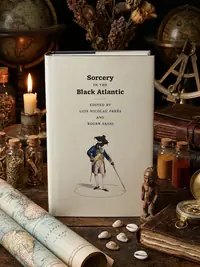

Sorcery in the Black Atlantic
This edition can be ordered. No arrival date is confirmed.
Sorcery is not a relic, but a living thread woven into the global capitalist tapestry.
This collection upends traditional academic boundaries by tracing witchcraft not as an isolated premodern artifact, but as a dynamic Atlantic phenomenon. Contributors analyze how accusations and practices migrated across Brazil, Cuba, South Africa, and Angola. The text argues that sorcery is inextricably linked to the rise of global capitalism and modernity. It reveals a continuous, transnational dialogue of power and resistance that spans centuries, offering a fresh lens on how spiritual beliefs shape and are shaped by economic and social structures in the diaspora.
This volume sits at the intersection of Atlantic history and esoteric anthropology, challenging conventional academic boundaries by treating witchcraft as a dynamic, living phenomenon rather than a static premodern artifact. It bridges the gap between spiritual practice and socio-economic theory within the context of the Black Atlantic diaspora.


📝 Description: Sorcery in the Black Atlantic
💎 Expert review
📖 Why choose it
Why this book is worth reading
This book is essential for scholars and readers interested in the profound connections between spiritual beliefs, social structures, and economic forces within the diaspora. It offers a fresh lens on how sorcery functions not merely as superstition but as a continuous dialogue of power and resistance across centuries. Readers who seek to understand witchcraft as a living thread woven into the global capitalist tapestry will find this collection invaluable. It upends traditional views by tracing practices across Brazil, Cuba, South Africa, and Angola, revealing how these beliefs shape and are shaped by modernity. For those willing to engage with complex transnational narratives, this work provides a compelling argument that sorcery is integral to understanding the rise of global capitalism.
⭐ Reader reviews
Reader rating
Bought this as a gift for my sister and ended up ordering a second copy for myself. The print is clean and easy on the eyes for long sessions. I found myself reading passages aloud just to sit with them. If you're drawn to this subject, don't hesitate.
My book club chose this last month. There's real depth here that reveals itself on a second reading. The font runs small in the appendices.
Long-time student of the esoteric here. Not a light read, but far more accessible than I feared. Would buy from this store again.
Added this to my reference shelf. The typesetting is comfortable for study, with good margins for notes. Challenging in places, but never needlessly obscure. Delivery took a bit longer than quoted. Still worth having on the shelf.
I collect works on this subject and this is a worthy addition. The typesetting is comfortable for study, with good margins for notes. Shipping was quick too.
Grabbed this during a weekend order. Challenging in places, but never needlessly obscure. Delivery took a bit longer than quoted. Still worth having on the shelf.
Exactly what I was looking for. It pairs well with more modern commentaries on the same tradition. Plenty of passages worth underlining; my copy is already full of margin notes. One of my better finds this year.
Parés and contributors deliver a rigorous academic deconstruction of witchcraft as a dynamic Atlantic phenomenon, linking it inextricably to modernity and economic structures. The text successfully traces accusations and practices across Brazil, Cuba, South Africa, and Angola, offering a sophisticated transnational perspective on power dynamics. However, this work is strictly for the academically inclined; it will likely alienate casual occultists seeking practical spells or historical anecdotes without theoretical depth. Readers expecting traditional ceremonial magic manuals or accessible pop-history will find its dense focus on global capitalism and diaspora structures overly abstract. It demands a scholarly mindset to appreciate its argument that sorcery is a living, economic force rather than a relic.
❓ Frequently asked questions
📖 Who should read this
Readers interested in the intersection of anthropology, history, and magic. Ideal for those studying how spiritual practices evolve within the context of colonialism, slavery, and global economic systems across the African diaspora.
🎯 Key themes and symbolism
Atlantic Witchcraft
Capitalism and Magic
Diasporic Resistance
💬 Quotes from the book
“Sorcery is best understood as an Atlantic phenomenon with significant connections to modernity and globalization.”
“Creating an indelible link between sorcery and the rise of global capitalism.”
📜 Historical context
📚 Glossary
- Black Atlantic
- Modernity
- Diaspora
📔 Questions to reflect on
- How might your local spiritual practices be shaped by global economic forces?
- In what ways do you see 'magic' operating as a form of resistance or power in modern society?
- How does the concept of the 'Atlantic' change your understanding of traditional witchcraft?
🏛 Books from this publisher University of Chicago Press
All books from this publisher →


 86
86




You might also like
See more →
 91
91
 91
91