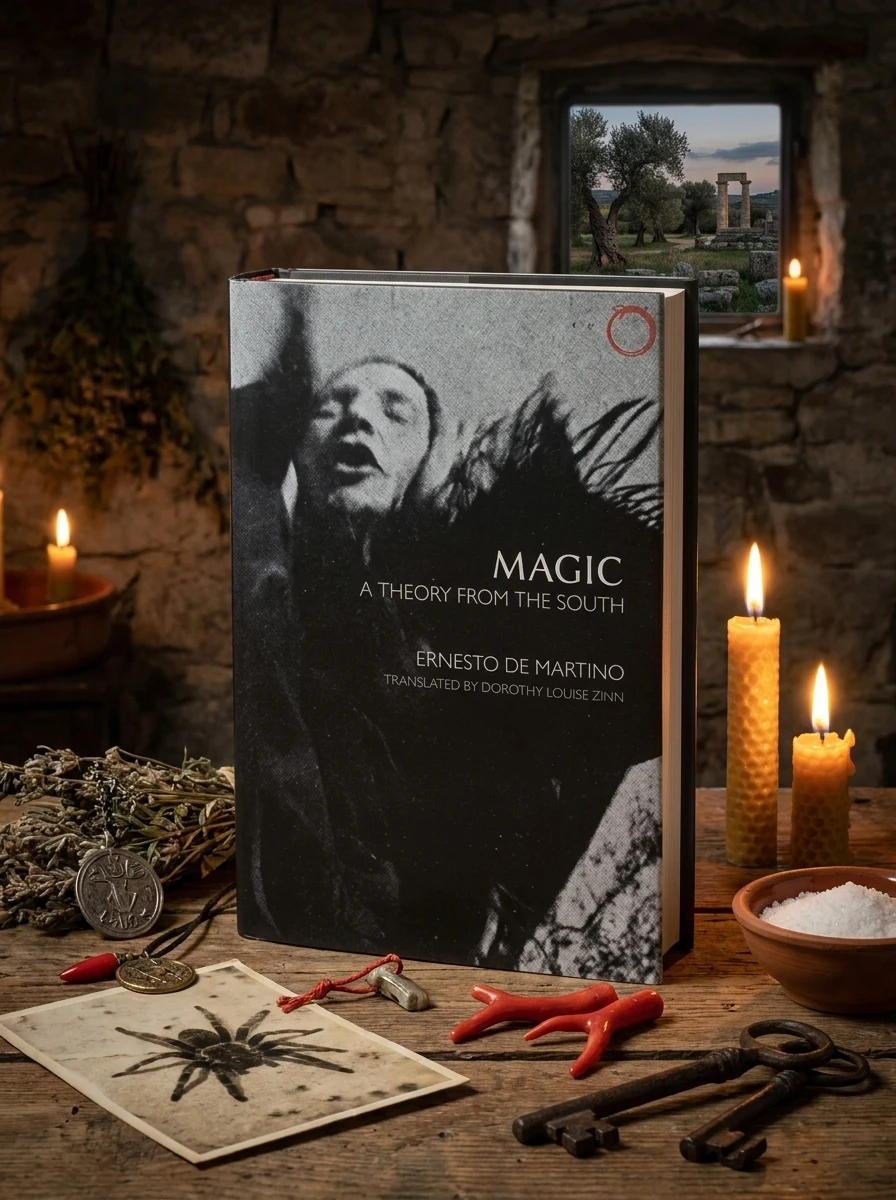
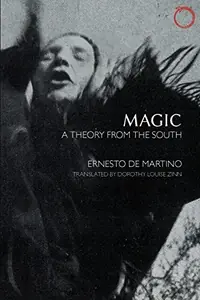
Magic: A Theory from the South
This edition can be ordered. No arrival date is confirmed.
Uncover magic's true power, not as belief, but as a critical lens on culture and modernity.
Ernesto de Martino, a visionary anthropologist, dissects the phenomenon of magic in southern Italy, moving beyond simplistic rational/irrational debates. His 1959 masterwork explores why magic became a "problem of knowledge" for Western thought, particularly within the context of Enlightenment Naples. De Martino frames ritual as a profound cultural response to historical pressures, illustrating the intricate interplay between dominant scientific paradigms and subaltern traditions. This groundbreaking study offers a powerful framework for understanding how magic functions as a crucial site of cultural encounter and contestation, still resonating with contemporary discussions on modernity and esoteric practices.
This work sits at the intersection of mid-twentieth-century anthropological theory and critical cultural studies, challenging traditional dichotomies between rationality and superstition. It emerges from a specific historical moment in Naples, reframing magic as a site of intellectual contestation rather than mere folk belief.


📝 Description: Magic: A Theory from the South
💎 Expert review
📖 Why choose it
Why this book is worth reading
Readers interested in the philosophical underpinnings of esotericism and the sociology of knowledge will find this text indispensable. It offers a sophisticated alternative to viewing magic through the lens of simple belief or error, instead presenting it as a vital cultural response to historical pressure. Scholars of modernity, anthropology, and critical theory will appreciate how de Martino dissects the 'problem of knowledge' in Western thought. For those studying the intersection of subaltern traditions and dominant scientific paradigms, this book provides a powerful framework for understanding how ritual functions as a site of cultural encounter. It is essential for anyone seeking to understand magic not as a primitive relic, but as a complex, critical lens on contemporary culture.
⭐ Reader reviews
Reader rating
De Martino’s masterwork is a rigorous intellectual exercise that demands patience and familiarity with anthropological discourse. While it brilliantly reframes magic as a critical lens on modernity, it may alienate readers seeking practical ceremonial instructions or accessible spiritual guides. The text is dense with theoretical nuance, focusing on the historical and epistemological dimensions of ritual in southern Italy rather than its mystical applications. Those expecting a straightforward defense of magical practice might find the academic tone distancing. However, for those willing to engage with its complex arguments about cultural contestation and Enlightenment thought, it offers profound insights into how subaltern traditions interact with dominant scientific paradigms.
❓ Frequently asked questions
📖 Who should read this
If you're drawn to the anthropology of belief, the historical interplay of science and esotericism, or the cultural significance of ritual, this book offers profound insights. It challenges preconceived notions, inviting you to reconsider magic's enduring relevance in a modern world grappling with its own mysteries.
🎯 Key themes and symbolism
Magic as Cognitive Challenge
De Martino reframes the discourse around magic, shifting the focus from its intrinsic validity to how and why Western Enlightenment thought systematically categorized it as an intellectual dilemma. He investigates the historical processes that led to magic being questioned and marginalized, rather than debating its efficacy, revealing deeper cultural anxieties.
Cultural Power Dynamics
The book meticulously unpacks the power imbalances inherent in the historical interaction between established Western scientific paradigms and the magical traditions of the global South, exemplified by Naples. It explores how dominant narratives influenced the perception and suppression of subaltern magical practices, highlighting the political dimensions of knowledge production.
Ritual as Cultural Theory
De Martino presents ritual not merely as a set of practices, but as a sophisticated theoretical response to existential and historical challenges. He argues that rituals provide a structured way for communities to navigate and make sense of their world, especially when confronted with external pressures or shifting cultural landscapes, offering a profound understanding of their function.
💬 Quotes from the book
“The true question concerning magic is not its veracity, but the cultural anxiety it provokes within the rationalist gaze.”
“In ritual, we find not mere superstition, but a profound strategy for collective agency in the face of historical rupture.”
📜 Historical context
📚 Glossary
- Hegelian Historicism
- Phenomenology
- Subaltern Cultures
📔 Questions to reflect on
- How does de Martino's approach to magic challenge your own preconceived notions about rationality and belief systems?
- Consider a modern-day "subaltern" practice or belief. How might de Martino's framework help analyze its relationship with dominant cultural narratives?
- In what ways do contemporary societies still struggle with categorizing or understanding phenomena that defy conventional scientific explanation?
🏛 Books from this publisher Hau
All books from this publisher →
You might also like
See more →

 91
91
 91
91

 91
91