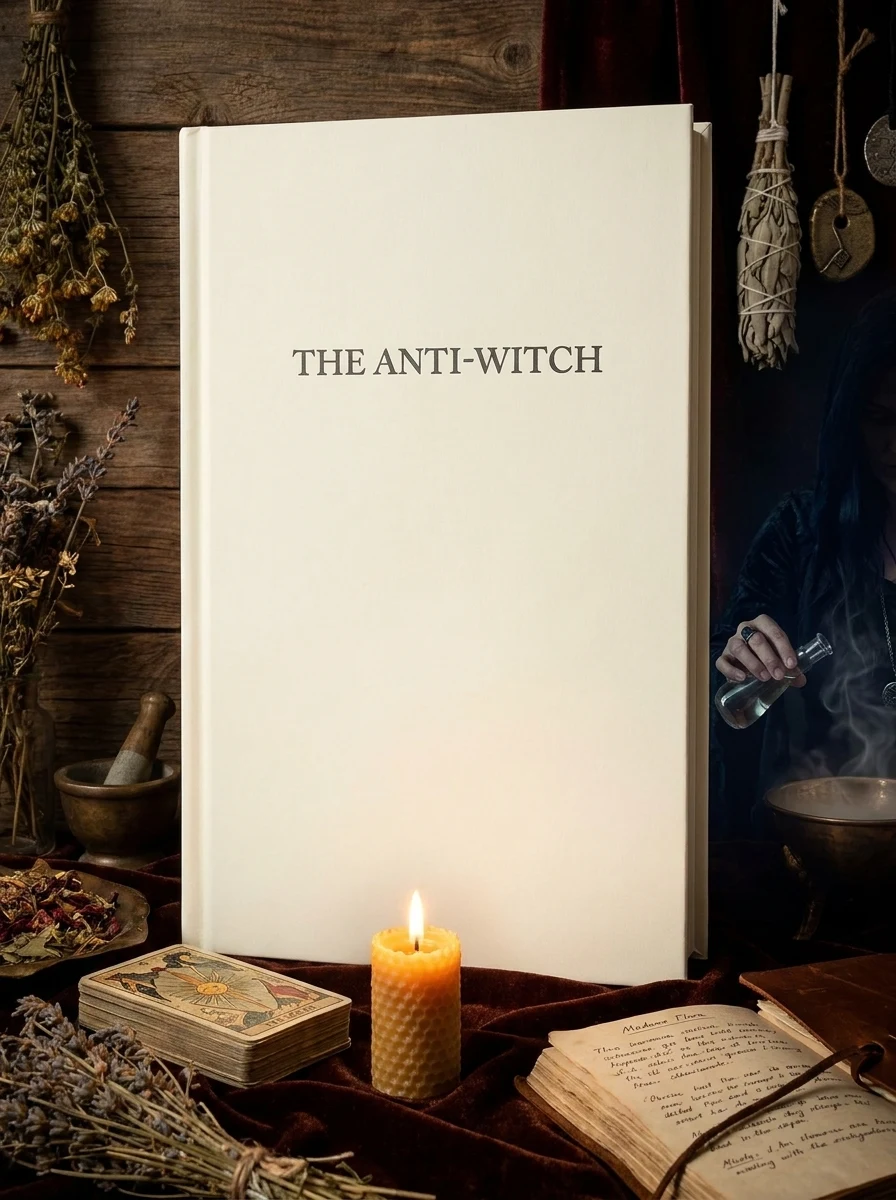
The Anti-Witch
This edition can be ordered. No arrival date is confirmed.
A brilliant anthropologist loses herself in the witchcraft she studies, blurring researcher and subject forever.
Jeanne Favret-Saada’s groundbreaking work dismantles the traditional distance between observer and observed. By immersing herself in the world of Madame Flora, a practitioner of anti-witchcraft, the author reveals how belief operates as a tangible force. This text is not merely an academic study but a visceral exploration of how curses and healing intersect with the human psyche. It challenges the very foundations of anthropological theory, offering a raw, psychoanalytic lens through which to view the mechanics of magic and the profound vulnerability inherent in seeking protection from unseen harms.
This text stands as a pivotal contribution to anthropological theory and the study of Western European esoteric practices, specifically within the context of French rural witchcraft beliefs.


📝 Description: The Anti-Witch
💎 Expert review
📖 Why choose it
Why this book is worth reading
Readers fascinated by the intersection of psychology, anthropology, and practical magic will find this work indispensable. It offers a rare, visceral glimpse into the mechanics of belief, demonstrating how curses operate as tangible forces within the human psyche. Those interested in the blurred lines between researcher and subject, or those seeking to understand the profound vulnerability inherent in anti-witchcraft practices, will gain deep insight here. It is essential for scholars and practitioners alike who wish to move beyond theoretical abstraction and engage with the raw, psychoanalytic reality of magical harm and healing.
⭐ Reader reviews
Reader rating
Was skeptical at first. It reads better in small doses — a chapter at a time with notes. Shipping was quick too.
As someone who reads a lot in this field, I can be picky. Not a light read, but far more accessible than I feared. A text you study rather than simply read. My only quibble is the cover feels thinner than expected. Solid, if not essential.
While groundbreaking, this book demands significant intellectual stamina from its audience. It is not suitable for casual readers seeking straightforward folklore or practical spell instructions. The dense academic framework and intense focus on the author’s personal immersion may alienate those preferring objective distance in scholarly work. However, for those willing to endure the discomfort of blurred boundaries, it provides an unparalleled look at how belief shapes reality. Avoid if you dislike psychoanalytic theory or complex ethnographic narratives that challenge traditional observational ethics.
❓ Frequently asked questions
📖 Who should read this
Readers fascinated by the intersection of rigorous academic theory and personal spiritual crisis will find this essential. It appeals to those interested in how belief systems shape reality, particularly those studying the anthropology of religion, psychoanalysis, or the sociological impacts of witchcraft accusations.
🎯 Key themes and symbolism
Ethnographic immersion
The mechanics of hexing
Psychoanalytic anthropology
💬 Quotes from the book
“The line between researcher and subject is blurred—if not erased.”
“A synthesis of ethnographic theory and psychoanalytic revelation.”
📜 Historical context
📚 Glossary
- Anti-Witchcraft
- Ethnographic Voice
- Madame Flora
📔 Questions to reflect on
- How does your own belief system influence your perception of 'reality' when under stress?
- In what ways do you engage in rituals to protect yourself from perceived social or spiritual harm?
- Where do you draw the line between psychological coping and magical thinking in your own life?
🏛 Books from this publisher Hau
All books from this publisher →
You might also like
See more →

 91
91


 91
91