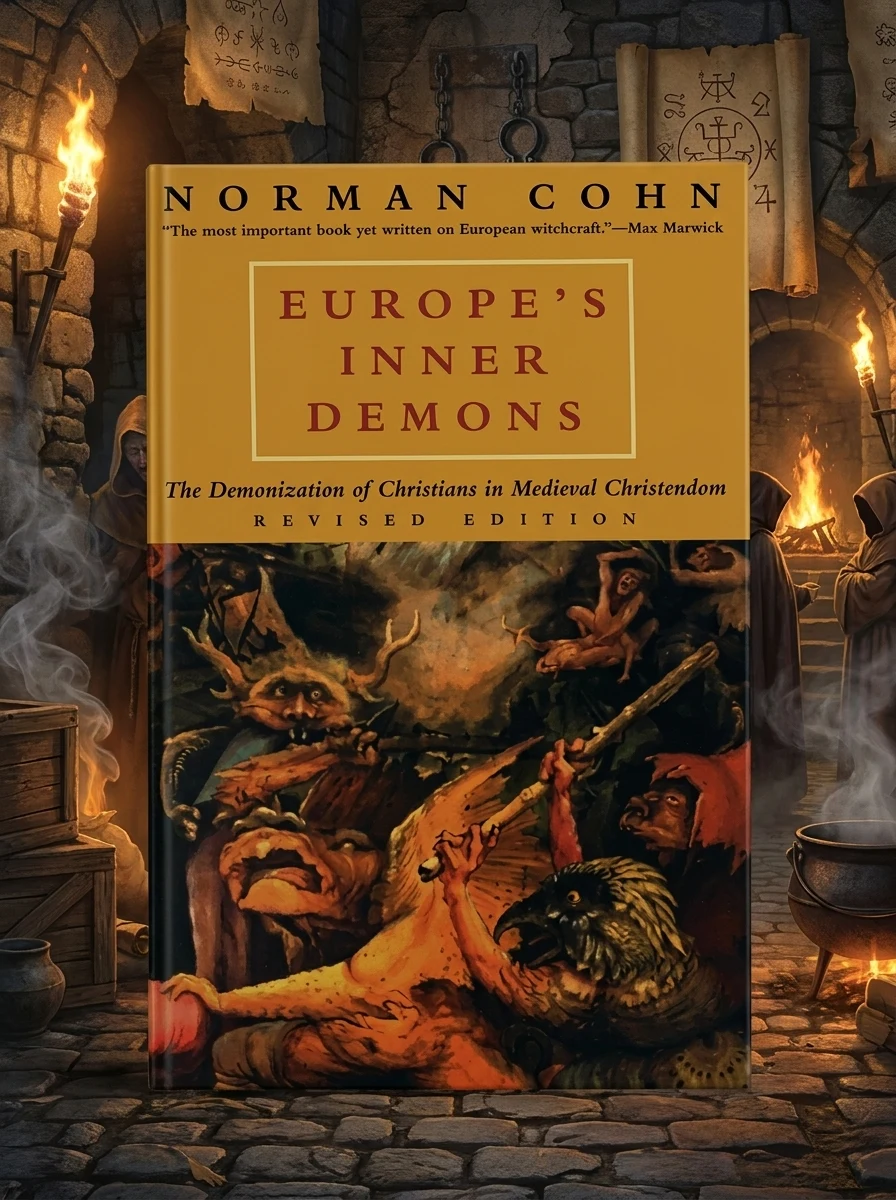
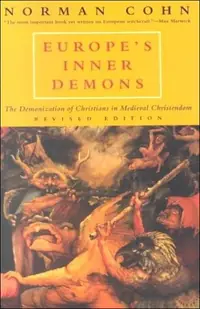
Europe's Inner Demons: The Demonization of Christians in Medieval Christendom (Revised)
Stock reported in the catalog; fulfillment is confirmed with your request.
Uncover the genesis of Europe's darkest fears and the devastating consequences of imagined evil.
Norman Cohn's seminal work dissects the unsettling psychological need that propelled medieval societies to conjure images of witches and devils. He meticulously chronicles how these deeply ingrained fantasies provided the chilling justification for widespread persecutions across Christendom. This revised edition illuminates the often-overlooked intellectual currents and influential texts that shaped public consciousness, turning suspicion into systemic terror. It’s a profound exploration of how internal anxieties manifest as external scapegoats, leading to centuries of suffering and the demonization of the innocent.
This work sits at the intersection of medieval history and the study of mass hysteria, challenging traditional narratives of witchcraft persecution by framing them as products of psychological projection rather than supernatural reality. It serves as a critical text for understanding the intellectual underpinnings of European demonization during the Middle Ages.


📝 Description: Europe's Inner Demons: The Demonization of Christians in Medieval Christendom (Revised)
💎 Expert review
📖 Why choose it
Why this book is worth reading
This book is essential for readers fascinated by the psychological mechanisms behind societal fear and the construction of evil. It offers a profound exploration of how internal anxieties manifest as external scapegoats, making it particularly valuable for historians, psychologists, and anyone interested in the roots of systemic terror. By uncovering the genesis of Europe's darkest fears, Cohn provides a chilling justification for understanding how suspicion turned into persecution. Readers who seek to comprehend the devastating consequences of imagined evil and the intellectual currents that shaped public consciousness will find this revised edition an indispensable guide to the demonization of Christians in medieval Christendom.
⭐ Reader reviews
Reader rating
Cohn’s seminal analysis is rigorous and unsettling, meticulously dissecting the psychological need that propelled medieval societies to conjure images of witches. While intellectually robust, this text may not suit readers seeking a straightforward narrative history or those uncomfortable with dense academic discourse on mass hysteria. It demands patience as it traces how fantasies justified persecution across Christendom. However, for those willing to engage with its complex arguments about internal anxieties and external scapegoats, it offers a profound revelation. The revised edition’s focus on influential texts adds depth, making it a vital, albeit demanding, read for serious students of European intellectual history and the origins of demonization.
❓ Frequently asked questions
📖 Who should read this
If you're drawn to the shadowy corners of history, intrigued by the power of collective delusion, or seek to understand the origins of societal scapegoating, this book is an essential journey. It offers profound insights into human nature and the dark potential of unchecked belief.
🎯 Key themes and symbolism
Psychology of Fear
This work delves into the intrinsic human propensity to project internal anxieties and societal stresses onto an external, demonic 'other.' Cohn illuminates the subconscious mechanisms that transform abstract fears into tangible, persecutable figures, revealing how such psychological processes are foundational to the emergence of witch-beliefs and their subsequent brutal enforcement throughout the Middle Ages.
Origins of Persecution
Cohn meticulously traces the historical trajectory of how medieval Christian communities came to believe in and actively hunt witches. He unpacks the gradual evolution of these beliefs, showing how early superstitions coalesced with theological doctrines and legal frameworks to create an environment where systematic persecution became not only possible but, in the eyes of many, divinely sanctioned and fiercely pursued.
Influential Narratives
The book explores the critical role played by specific texts and influential thinkers in shaping the prevailing narratives about witchcraft. Cohn reveals how certain interpretations and influential treatises, often misrepresenting earlier traditions and folklore, were instrumental in codifying the image of the malevolent witch and legitimizing the brutal methods employed in their identification, torture, and punishment.
💬 Quotes from the book
“The invention of the witch was not a mere aberration but a profound psychological necessity, a mirror reflecting the deepest anxieties of a society grappling with its own shadows.”
“History reveals that the most monstrous persecutions are often born not of malice alone, but from the insidious cultivation of fear and the fabrication of an existential enemy within.”
📜 Historical context
📚 Glossary
- Demonization
- Witch Hunts
- Scapegoating
📔 Questions to reflect on
- In what ways do contemporary societies still 'demonize' certain groups or ideas, and what are the potential consequences of such collective actions?
- How might understanding the psychological roots of medieval witch hunts inform our approach to modern conspiracy theories or moral panics?
- Reflect on a time when an 'irrational fantasy' held sway over a community or group you observed. What factors contributed to its power and longevity?
🏛 Books from this publisher University of Chicago Press
All books from this publisher →


 86
86




You might also like
See more → 89
89

 91
91
 91
91

 91
91