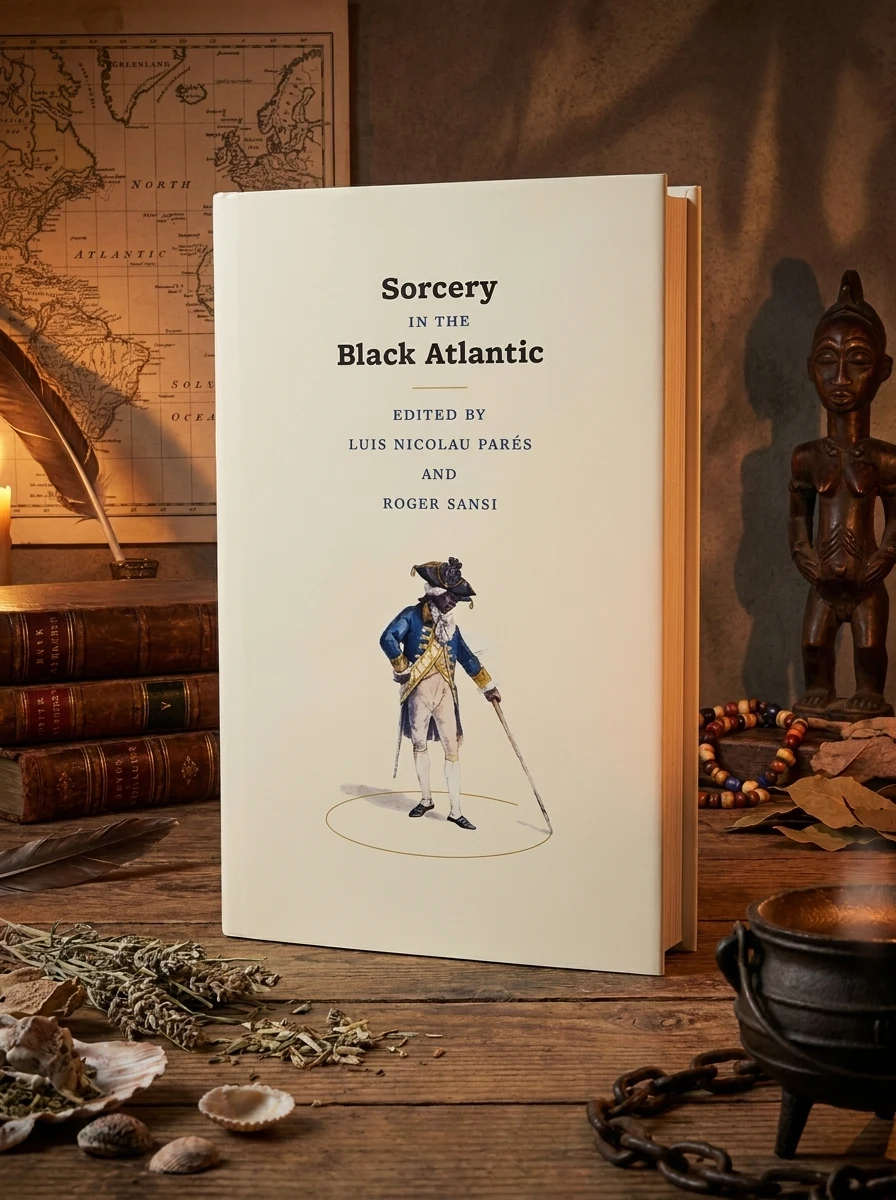


Sorcery in the Black Atlantic
 90
90
 Editorial score
How we rate
Editorial score
How we rate
This edition can be ordered. No arrival date is confirmed.
Unearth the hidden currents of power and magic flowing across the Black Atlantic.
This groundbreaking volume fundamentally redefines sorcery studies, moving beyond the familiar confines of early modern Europe or 20th-century Africa. Instead, it offers a sweeping, interconnected analysis of magical practices across the vast Black Atlantic, from its African origins to its diverse manifestations in the Americas. Authors Parés and Sansi compellingly argue against viewing sorcery as a mere relic, presenting it instead as a dynamic, evolving cultural force that has continuously adapted, transformed, and persisted through centuries of colonial encounters and modern societal shifts, revealing its complex spiritual and social significance.
This work sits at the intersection of anthropological sorcery studies and Atlantic history, challenging Eurocentric narratives by centering African diasporic magical practices. It bridges the gap between early modern European occultism and contemporary African spiritual traditions through a transatlantic lens.


📝 Description: Sorcery in the Black Atlantic
💎 Expert review
📖 Why choose it
Why this book is worth reading
Scholars and enthusiasts of transatlantic history will find this volume indispensable for its rigorous dismantling of traditional sorcery studies. By tracing the dynamic evolution of magical practices from African origins through colonial encounters to their diverse manifestations in the Americas, Parés and Sansi reveal sorcery as a vital, adaptive cultural force rather than a static relic. Readers interested in how spiritual beliefs persist and transform under societal pressure will gain profound insights into the complex social significance of these traditions. This book is essential for anyone seeking to understand the hidden currents of power that have shaped the Black Atlantic world, offering a sweeping analysis that redefines our understanding of magic across centuries.
⭐ Reader reviews
Reader rating
Parés and Sansi deliver a groundbreaking redefinition of sorcery studies, moving beyond early modern European confines to explore the vast Black Atlantic. Their interconnected analysis reveals magic as a dynamic cultural force adapted through colonial shifts. However, this academic rigor may alienate casual readers seeking simple folklore or practical spellcasting guides. It is not suited for those expecting a narrative history or personal anecdotes; rather, it demands engagement with dense theoretical frameworks regarding spiritual persistence and transformation. The work is vital for specialists but may feel overly abstract to general audiences uninterested in anthropological depth.
❓ Frequently asked questions
📖 Who should read this
If you're drawn to the intricate history of magic, crave scholarship that challenges Eurocentric perspectives, or seek to understand the enduring spiritual legacies of the African diaspora, this book is essential reading. Prepare to have your perceptions of sorcery profoundly broadened.
🎯 Key themes and symbolism
Transatlantic Connections
This volume meticulously traces the intricate web of sorcerous practices that transcended geographical boundaries, linking African traditions with their adaptations and evolutions throughout the Americas. It highlights the enduring spiritual exchanges and transformations forged across the vast expanse of the Black Atlantic, revealing a shared yet diverse magical heritage.
Challenging Orthodoxy
The authors boldly confront established academic paradigms that often confine sorcery studies to specific, limited historical periods or regions. They critique the tendency to dismiss magical beliefs as primitive remnants, advocating instead for a nuanced understanding of their ongoing relevance and complex social functions across diverse cultures.
Sorcery Reimagined
Far from being a static, archaic phenomenon, sorcery is presented here as a vibrant, adaptive force that continually reinvents itself. The book examines how these practices persist and transform within contemporary societies, offering insights into their dynamic nature and their role in shaping identity, power, and community in the modern world.
💬 Quotes from the book
“The sorcerous currents of the Black Atlantic are not isolated streams, but a powerful, interconnected river, shaped by the ebb and flow of human migration and spiritual adaptation.”
“To dismiss sorcery as a 'premodern remnant' is to ignore its profound and persistent engagement with the very fabric of contemporary society, a living tradition deserving of rigorous intellectual inquiry.”
📜 Historical context
📚 Glossary
- Black Atlantic
- Sorcery
- Ethnocentrism
📔 Questions to reflect on
- How might our understanding of 'magic' shift if we consistently viewed it through a global, interconnected lens rather than through isolated cultural studies?
- Consider a modern cultural practice you are familiar with. How might it be misinterpreted or dismissed if viewed as a 'remnant' of an older tradition, rather than a dynamic, evolving phenomenon?
- Reflect on the power dynamics inherent in academic labels like 'sorcery' or 'witchcraft.' How do these terms shape our perception of the practices they describe?
🏛 Books from this publisher University of Chicago Press
All books from this publisher →
 86
86




You might also like
See more →