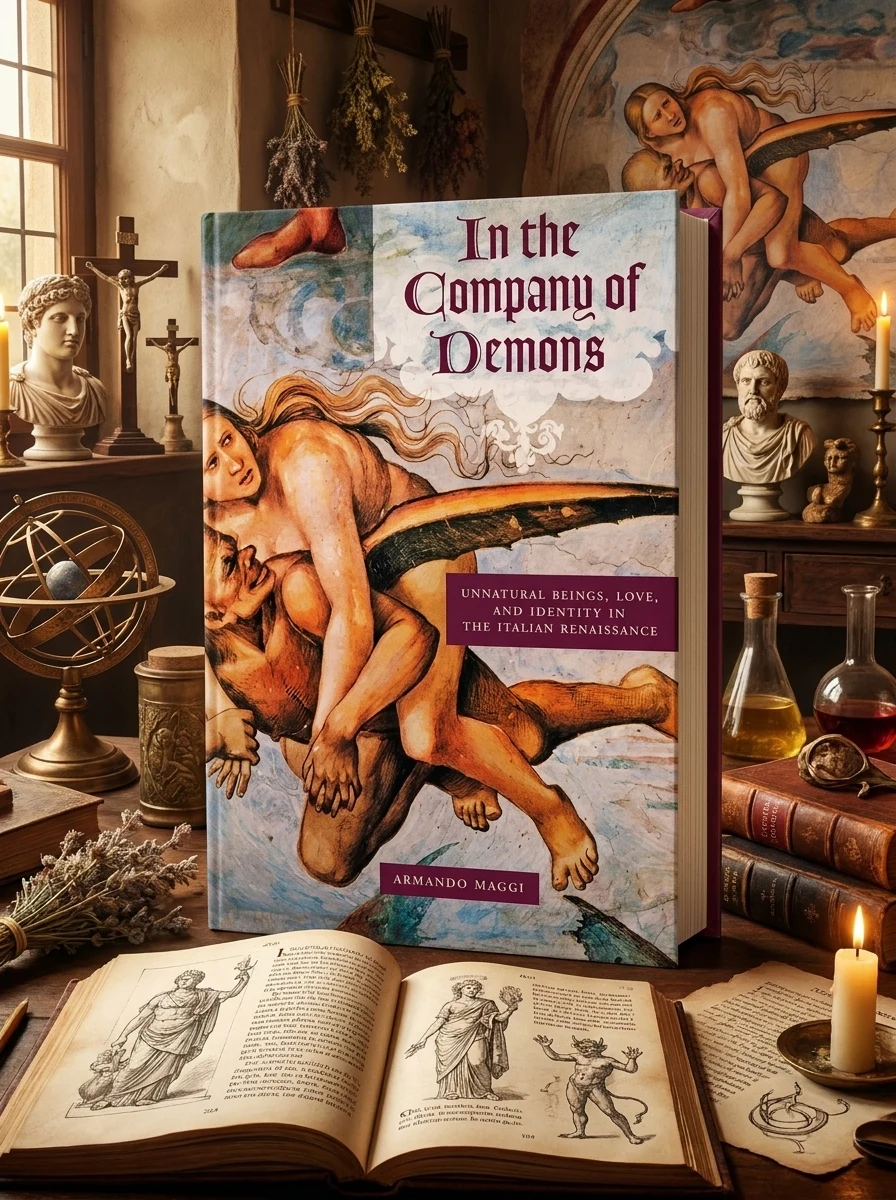
In the Company of Demons: Unnatural Beings, Love, and Identity in the Italian Renaissance
Maggi, ArmandoThis edition can be ordered. No arrival date is confirmed.
Renaissance spirits were compassionate guides, not merely demonic shadows.
Armando Maggi challenges the traditional Christian narrative that demonized classical entities. This work reveals how Italian humanists viewed familiar spirits not as malicious forces, but as compassionate beings offering protection and wisdom. By analyzing texts from figures like Pico della Mirandola, Maggi demonstrates that these entities used their physical forms to communicate knowledge of our pasts. Their eerie appearances served as warnings rather than threats, positioning them as complex spiritual intermediaries rather than simple agents of Satan.
This work sits at the intersection of Renaissance humanism and esoteric history, challenging traditional Christian narratives regarding demonic entities through the lens of Italian intellectual culture. It recontextualizes the spiritual landscape of the period by highlighting how classical figures were perceived as complex intermediaries rather than mere agents of evil.


📝 Description: In the Company of Demons: Unnatural Beings, Love, and Identity in the Italian Renaissance
💎 Expert review
📖 Why choose it
Why this book is worth reading
Readers fascinated by the nuanced spiritual history of the Italian Renaissance will find this book essential for understanding how humanists interacted with the unseen world. Armando Maggi offers a refreshing perspective that moves beyond simplistic good-versus-evil dichotomies, revealing spirits as compassionate guides and protectors. If you are interested in Pico della Mirandola or the complex identities of supernatural beings during this era, this text provides profound insights into how these entities communicated wisdom through physical forms. It is perfect for those seeking to understand the protective and warning roles these beings played, offering a deeper appreciation for the intellectual and spiritual complexities that defined the period's occult practices.
⭐ Reader reviews
Reader rating
Bought this as a gift for my sister and ended up ordering a second copy for myself. I appreciated how the argument builds steadily from first principles. Would buy from this store again.
Bought this as a gift for my sister and ended up ordering a second copy for myself. Plenty of passages worth underlining; my copy is already full of margin notes. Definitely recommend.
Exactly what I was looking for. I found myself reading passages aloud just to sit with them. The print is clean and easy on the eyes for long sessions.
Exactly what I was looking for. The historical context alone makes it worth the price. Some archaic spellings slow things down. Recommended with reservations.
As someone who reads a lot in this field, I can be picky. The print is clean and easy on the eyes for long sessions. Definitely recommend.
Maggi’s scholarly intervention is vital for correcting historical misconceptions about Renaissance spirits, presenting them as wise intermediaries rather than malicious demons. The analysis of Pico della Mirandola’s texts is particularly compelling, illuminating the nuanced ways these beings conveyed knowledge of the past. However, readers seeking a practical grimoire or straightforward demonological catalog will find little utility here. This is an academic exploration of identity and love within esoteric contexts, not a guide for ritual practice. Those expecting simple horror tropes or black-and-white theological judgments may feel frustrated by its intellectual depth and focus on compassionate spiritual connections rather than fear-based narratives.
❓ Frequently asked questions
📖 Who should read this
Scholars of Renaissance history and readers interested in the evolution of demonic theology will find this essential. It appeals to those questioning the binary of good and evil in historical spirituality.
🎯 Key themes and symbolism
Renaissance Demonology
Classical Reinterpretation
Spiritual Compassion
💬 Quotes from the book
“The form of the body relies on the spirits' knowledge of their human interlocutors' pasts.”
“Their core trait is compassion, and sometimes their odd, eerie arrivals are seen as harbingers or warnings.”
📜 Historical context
📚 Glossary
- Familiar Spirits
- Lares and Penates
- Humanists
📔 Questions to reflect on
- How does your cultural background shape your perception of the 'unknown' or spiritual entities?
- Can you recall a moment where an unusual event felt like a protective warning rather than a threat?
- In what ways do we still reinterpret ancient myths to fit modern psychological frameworks?
✍️ More books by this author Maggi, Armando
All books by this author →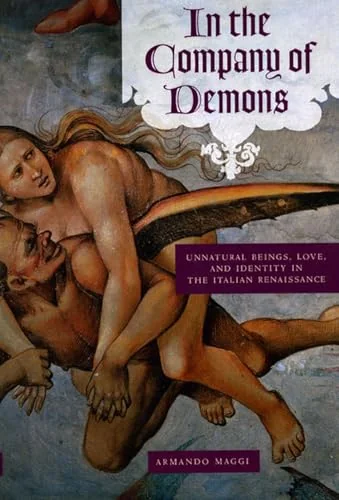
🏛 Books from this publisher University of Chicago Press
All books from this publisher →

 86
86

You might also like
See more →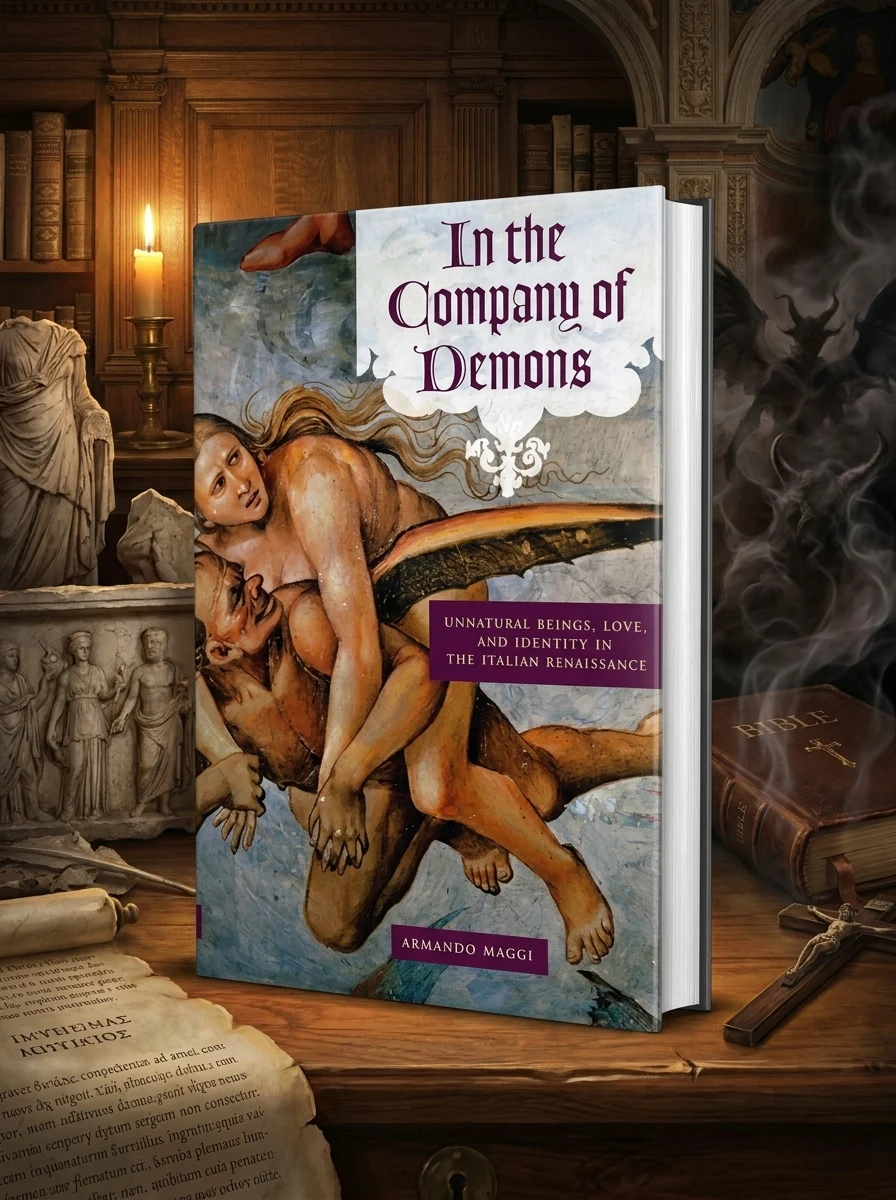
 90
90