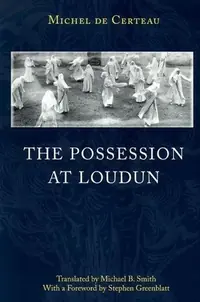
The Possession of Loudun
This edition can be ordered. No arrival date is confirmed.
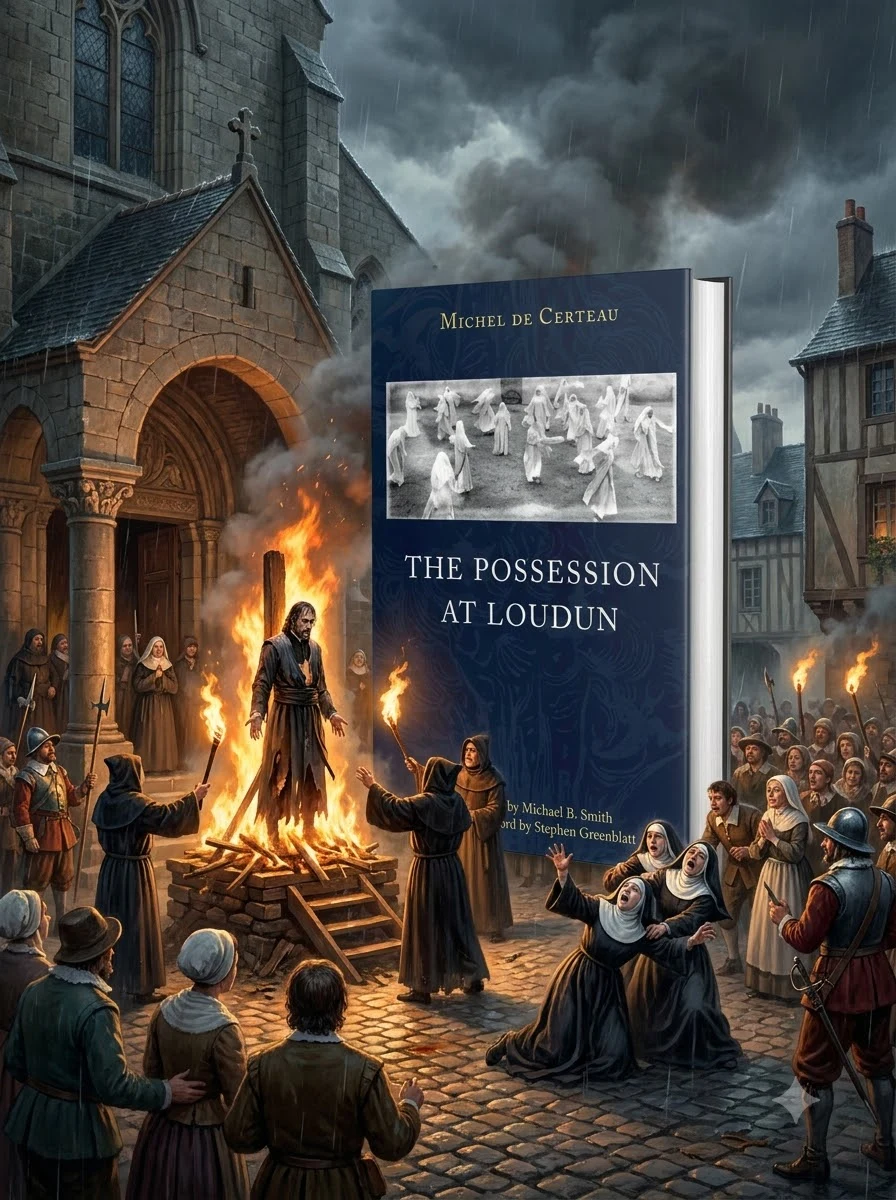
A haunting inquiry into the Loudun possessions, where faith, fear, and political power burned together in 1634.
Michel de Certeau meticulously reconstructs the infamous Loudun affair, examining how the demonic convulsions of Ursuline nuns served as a mirror for a society undergoing profound upheaval. By weaving primary documents with psychological insight, he reveals how the crisis exposed deep-seated anxieties about religious authority and the emerging rationality of the Enlightenment. This work stands as a masterful study of how collective hysteria can accelerate cultural transformation, offering a nuanced view of the tension between dogmatic control and the rise of scientific reason in early modern France.
This work sits at the intersection of historical analysis and cultural theory, exploring how early modern European society navigated the turbulent transition from dogmatic religious authority to emerging scientific rationality. It examines the specific moment when collective hysteria served as a catalyst for profound societal and intellectual transformation.


📝 Description: The Possession of Loudun
💎 Expert review
📖 Why choose it
Why this book is worth reading
Readers seeking a profound understanding of how societal fears shape historical narratives will find this text invaluable. It offers a nuanced view of the tension between dogmatic control and the rise of scientific reason in early modern France, revealing how the crisis exposed deep-seated anxieties about religious authority. By weaving primary documents with psychological insight, de Certeau shows how collective hysteria can accelerate cultural transformation. This book is ideal for those interested in the complex interplay between faith, fear, and political power, providing a masterful study of a pivotal moment where the demonic served as a mirror for societal upheaval.
⭐ Reader reviews
Reader rating
Needed this for my research. The print is clean and easy on the eyes for long sessions. Deserves a place on any esoteric bookshelf.
Not my usual area but wanted to branch out. The ideas are old but land with surprising force today. I'd have loved an index, but that's on the original text. Recommended with reservations.
My third book from this store and this one might be the best. The material is presented clearly and the structure makes it easy to revisit key passages. The font runs small in the appendices.
I've read excerpts online before, but having the full text is different. You can tell why this work has endured. Plenty of passages worth underlining; my copy is already full of margin notes.
Came across this title in a footnote and had to track it down. The ideas are old but land with surprising force today. A few pages arrived with light corner wear, though nothing serious. Solid, if not essential.
This edition finally does the material justice. It connects ideas I'd only seen treated separately elsewhere. One of my better finds this year.
Added this to my reference shelf. Some chapters demand a slow, careful read, and that's exactly the point. Challenging in places, but never needlessly obscure. My only quibble is the cover feels thinner than expected.
De Certeau delivers a meticulous reconstruction of the Loudun affair, exposing how demonic convulsions mirrored broader societal anxieties. The text is intellectually rigorous, demanding patience from readers who prefer accessible storytelling over dense theoretical analysis. It does not suit those seeking supernatural horror or simple historical chronicles; instead, it requires engagement with complex arguments about power and rationality. While some may find the academic tone dry, its contribution to understanding the shift toward Enlightenment thinking is significant. Readers must be prepared for a scholarly examination of cultural transformation rather than a narrative-driven account of possession.
❓ Frequently asked questions
📖 Who should read this
Readers fascinated by the intersection of psychology, theology, and politics during the 17th century. It appeals to those interested in how societal fears manifest through spiritual crises and the historical roots of our modern relationship with truth and belief.
🎯 Key themes and symbolism
Collective Hysteria
Religious Authority
Psychological History
💬 Quotes from the book
“The possession serves as a theater where the conflicts of the time are played out.”
“Faith and reason were locked in a violent struggle for the soul of the nation.”
📜 Historical context
📚 Glossary
- Ursuline Nuns
- Exorcism
- Centralized Authority
📔 Questions to reflect on
- When have you witnessed a group's fear shape its reality more powerfully than objective facts?
- How do modern institutions manage collective anxiety, and in what ways do they resemble the structures of 1634?
- Where do you see the boundary between genuine spiritual experience and social performance in your own life?
🏛 Books from this publisher University of Chicago Press
All books from this publisher →


 86
86




You might also like
See more → 90
90